


North Korea’s Policy Change and the Unification of Korea
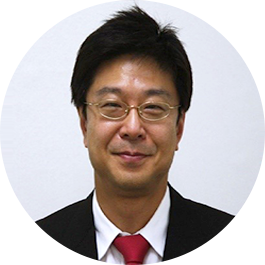
Jaechun Kim
Dean of Sogang GSIS
INTER-KOREAN RELATIONS: RELATIONS BETWEEN TWO HOSTILE STATES
In December 2023, North Korean Chairman Kim Jong-un made a statement saying, “The relationship between North and South Korea is no longer a relationship between the same nation, but has completely solidified into a hostile relationship between two countries at war.” He then mentioned that “we must completely remove the concepts of ‘unification’, ‘reconciliation’, and ‘nation’ from our republic’s national history.” In other words, two Koreas are not the same nation that should pursue unification, but merely two hostile warring states. This statement represents a tremendous change in North Korea’s policy.
The concept of the same nation has occupied a very important position in North Korea’s policy. Kim Il-sung and Kim Jung-il both stressed that South and North Korea are the same nation and therefore should reject foreign forces like the United States, walk an independent path, and achieve independent national unification. Surprisingly, Kim Jong-un has discarded the policy he inherited from his father and grandfather.
INTENTIONS OF NORTH KOREAN LEADER
What is Kim Jong-un’s intention in changing the policy? First of all, it could be because Kim fears a kind of unification where North Korea is absorbed by South Korea. Kim is well aware of the fact that North Korea has lost in the ‘system competition’ between South and North Korea. He recognizes that the unification led by North Korea is now practically impossible. In such a situation, if two Koreas start with the first step of unification, which is exchange and cooperation, North Korean residents’ loyalty to the North Korean regime may decrease.

Kim Jong Un, president of the State Affairs of North Korea, visited the flood-hit areas in the city of Sinuiju and Uiju County
of North Phyongan Province on July 28./KCNA
The North Korean regime is extremely wary of the situation where North Korean residents are exposed to the ‘Korean Wave,’ such as South Korean dramas and songs, i.e., K-dramas and K-pop. It is alleged that Kim regime is punishing North Korean residents who secretly listen to K-dramas and K-pop. In order to prevent the regime from shaking, the North Korean regime may have changed its policy to remove unification from national policy.
In addition, it is possible that Kim removed the concept of the same nation and unification to rationalize the North’s nuclear weapon and missile programs. If South Korea is just a hostile country not the same nation, Kim is in a position where he can justify his nukes and missiles both domestically and internationally. It is interesting to note that North Korean regime also publicly stated that “if a war breaks out on the Korean Peninsula, we will realize ‘territorial completion’ by unifying Korea by force.” Here, a big contradiction is found in the policy of two hostile states. The statement that it will realize territorial completion by unifying Koreas by force contradicts the statement that it will remove unification from North Korea’s policy. The term territorial completion originally means that South Korea is part of North Korean territory. It also means that South and North should be united territorially. In sum, North Korean regime has not given up a policy of unification by force, and this part clearly contradicts Kim Jong-un’s new policy of removing unification.
Korean Unification: Our Duty and Vision
How does South Korea respond to the policy change in North Korea? First, the more the North Korean regime denies unification and the same nationhood, the more South Korea should actively pursue policy of unification and emphasize that South and North are the same nation. Some people in South Korea argue that South Korea should also adopt the policy of two states. But, if we also go with the two-state theory, it’s in violation of South Korea’s constitution. Unification is a constitutional duty that we must pursue. Article 3 of the Constitution of the Republic of Korea stipulates, “The territory of the Republic of Korea is the Korean Peninsula and its adjacent islands.” That is to say, the constitution stipulates that North Korea belongs to the territory of the Republic of Korea. And if you look at Article 4 of the Constitution, it says, “The Republic of Korea seeks unification and establishes and implements a peaceful unification policy based on the free democratic order.”
The two-state theory also implies the risk of permanent division of the Korean Peninsula. It is giving up our rights to the North Korean region and also giving up our duties to North Korean residents. If we formalize the two-state theory, we have to delete the territorial clause through constitutional amendment. If we do that, our duty to protect North Korean residents will also disappear. The basis for protecting defectors in China will disappears as well. If the Chinese government forcibly repatriates North Korean defectors as it does now, South Korea has no justification to raise the issue because it is a problem of residents of another country.
If a contingent situation occurs in North Korea, we lose the basis to intervene and claim territorial rights because it is a matter of another country. If we accept the two-state theory, the Korean Peninsula may seem peaceful for a while, but it cannot guarantee lasting peace on the Korean Peninsula.
In order to build a sustainable peace on the Korean Peninsula, we have no option to pursue Korean unification. Then, what kind of unification should we pursue? Now, the Republic of Korea is on the path of an advanced civilization that our ancestors dreamed of. It is on the path of freedom, peace, and prosperity. Unfortunately, North Korea is on the opposite path. Therefore, first, we should pursue a unification that realizes the dream of freedom, peace, and prosperity that our ancestors pursued throughout the history. Unification is the expansion of the universal human values of freedom, peace, and prosperity throughout the Korean Peninsula. Second, when the North Korean regime denies unification, we must consistently pursue unification.
We must present a unification vision that allows North Korean residents to enjoy freedom, peace, and prosperity. Therefore, our unification policy should target North Korean residents, not the North Korean regime. In particular, we must pursue a unification that guarantees human rights for North Korean residents. Third, when the North Korean regime denies that two Koreas are the same nation, we must emphasize that South and North are the same nation. South and North are really the same nation. They are the same nation that shares the same language, the same customs, and the same history. But a unified Korea avoids ‘exclusive nationalism’. It aims for an open nationalism, a nation of international civil society that contributes greatly to the international community. Fourth, we must remind the international community that the free unification of the Korean Peninsula contributes to peace and prosperity not only on the Korean Peninsula but also in the world.
In recent years, it has become increasingly difficult to promote unification now. The unification discourse has lost its momentum domestically and not many people in South Korea are interested in Korean unification. Unification has become politically contested issue in South Korea. The relationship between South and North Korea is at its worst. The era of great power competition, i.e., the New Cold War, presents a challenging international environment to promote unification. The more it gets difficult to promote unification, the more we should put it unflagging efforts to promote unification.
The state of Polish nation had disappeared from the map for 123 years due to the power struggles of surrounding great powers, but Polish people had never given up their national aspirations of independent and unified statehood. When the World War I ended and a favorable international environment was presented, Polish people seized the opportunity and reconstructed a unified Poland. Polish people had a unfaltering purpose, and eventually a path opened for them.
-
PREV [Defectors' Podium]
-
NEXT [Defectors' Podium]