

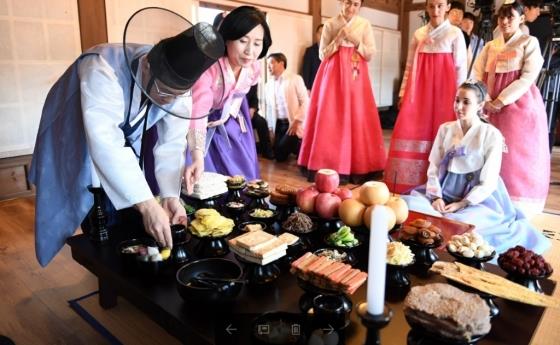
Differences in Chuseok between South and North Korea
Jeon Kyung-hee
North Korean defectors
Chuseok, a traditional holiday since the Three Kingdoms era, remains a key cultural event in both Koreas, though much has changed as their division has deepened over time.
In South Korea, Chuseok and Lunar New Year are major holidays, while in North Korea, they are secondary to politically significant “state holidays” like the birthdays of Kim Jong-il and Kim Jong-un, National Foundation Day, Party Foundation Day, Army Foundation Day, Victory Day in the Great Fatherland Liberation War, and Constitution Day.
In South Korea, Chuseok comes with a three-day break, while in North Korea, only the day itself is a holiday. At one point, Chuseok was removed from the calendar for clashing with socialist values but was reinstated in 1988.
During Chuseok in South Korea, a key tradition is the mass travel to hometowns, which often leads to heavy traffic. This stems from the custom of families gathering at the parents’ or eldest son’s home for ancestral rites, followed by visits to family gravesites.
In North Korea, ancestral rites and grave visits are also part of Chuseok traditions. However, with the underdeveloped transportation system and only one day off, many are unable to visit graves during the holiday.
Traveling back to one's hometown in North Korea requires government permission. Even with a travel pass, frequent power outages cause train delays that can stretch for days. Once people finally reach their destination, they must report their arrival to the local police station.
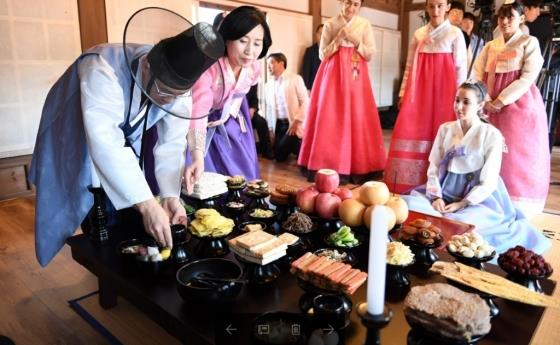
Chuseok memorial table in South Korea / Yonhap News Agency
Since the economic downturn of the 1990s, it has become rare for families to gather at relatives' homes, even if it means walking. It's also difficult to prepare enough food to share, as most households barely manage to gather enough for the Chuseok rites table by setting aside small amounts over time.
Nonetheless, wealthier families in North Korea still prepare a variety of foods for Chuseok. Songpyeon, the traditional Korean rice cake, is a staple on the Chuseok table. One similarity between the two Koreas is the tradition of holding wrestling competitions during Chuseok.
-
PREV [Feature Article]
-
NEXT [Column]