

Marketing In North Korea (8) - Go Global! Ryuwon
- North Korean marathoner Jong Sung Ok's shoes -

Jeon Byung-kil
Senior Consultant of YESInnovation
former of Secretary General of UniKorea Foundation
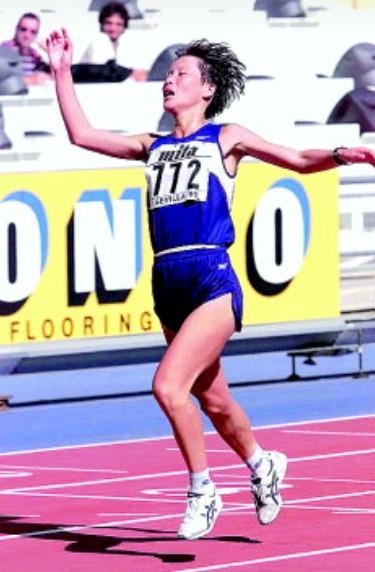
August 24, 1999. North Korea's unheralded athlete Jong Sung Ok won the women's marathon at the World Athletics Championships in Seville, Spain. It was a dramatic victory, as she edged out Japan's Hari Ichihashi by three seconds in a race that went down to the wire. "At the finish line, I remembered Supreme Leader Kim Jong-il calling out to me, 'Welcome home,' and I pushed myself to the end," said Jong Sung-ok. Jong's shoes and sportswear were made by Japanese sports brand ASICS.
North Korea was thrilled with Jong's victory. A documentary was made of Jong's marathon finish and a postage stamp was issued. However, the Japanese trademark ASICS was obscured or erased in archival videos, photographs, posters, and stamps.
There's even a scene like this in the novel that tells the story of Jong Sung-ok. After winning the marathon, a reporter asked Jong which country and which company's sneakers she was wearing. In response to this question, Jong looks at the shoes made in North Korea and smiles. Japanese ASICS shoes were a necessity for North Korean athletes, but something that they were not comfortable talking about in public. So, were there no sneakers being produced in North Korea at the time?
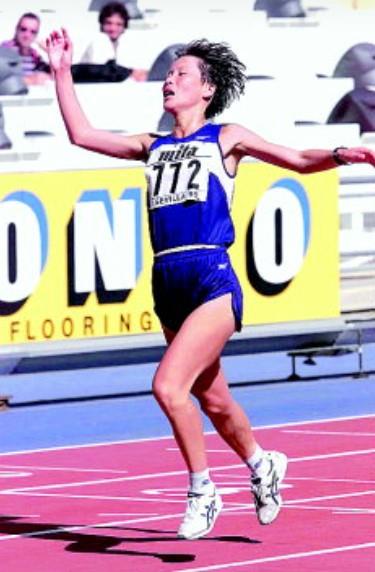
North Korea's Jung Sung-ok wins the women's marathon at the 1999
Seville World Athletics Championships/IMDB
Ryuwon founded in 1988
In 1988, South Korea hosted the Seoul Olympics and the country was abuzz with sports fever. In the run-up to the Olympics, a fierce marketing battle raged between global sporting goods brands like Nike and Adidas and indigenous brands like Pro-Specs and Le Caf. Around the same time, in November 1988, North Korea's Ryuwon Shoe Factory was established in Pyongyang under the direction of Supreme Leader Kim Jong Il. This was a month after the Olympics were held in South Korea.

Ryuwon Shoe Factory/YonhapNews
Ryuwon Shoe Factory was founded by overseas Koreans. In the mid-1980s, North Korea enacted a law allowing foreign technology to be transferred and foreign investment to revitalize the economy. Capital from pro-North Korean diaspora living in Japan entered North Korea at this point. However, the program was notoriously unsuccessful due to North Korea's closed nature, excessive interference, and an investment environment that did not guarantee profits. Ryuwon Shoe Factory, which initially relied on overseas Korean capital, changed hands several times due to poor management. After 2012, with the advent of the Kim Jong-un era, Rywon begins to show signs of change.
The Ryuwon Shoe Factory initially used old production lines imported from overseas and produced mainly cloth shoes and sneakers. The product's design was also bland. Since 2014-15, Ryuwon has been trying to change from the traditional format by diversifying the types of products and designs. In terms of production facilities, a line capable of manufacturing more than 1 million pairs of shoes per year was built in cooperation with the Pyongyang Shoe Factory. In 2017, the company installed 1,200 solar panels on the roof of the factory to power the plant with solar energy. The factory gets more than 80% of its power from solar energy.
Copycat foreign products to its own design
Prior to the mid-2010s, North Korea copied foreign shoe brands. On November 15, 2012, KCNA reported that the Ryuwon Shoe Factory had produced a new type of shoe, which was similar in design to the Japanese sports brand ASICS. Ryuwon's new sneakers looked almost identical to ASICS sneakers, but the shoe factory's name, "Ryuwon," was emblazoned on the back of the sneakers. At the time, North Korea had very little concept of design creation or intellectual property rights. They didn't have much of a problem with the press reporting on products that were copycats of foreign products.
Since the mid-2010s, North Korea has begun to pay attention to industrial design in general. Design has also become a core part of shoe production. Instead of producing the same type of small items, they changed the product mix by age, season, and sport, and introduced different colors for shoes. On May 14, 2018, China's People's Net introduced the Ryuwon shoe factory and the designer who works there, Shim Eunshim. Shim has been working at the Ryuwon shoe factory since graduating from college, and says her design team creates more than 10 new designs every week.
"When designing for product planning, we first understand global trends and then try to create designs that are unique to North Korea by incorporating the styles that consumers like," said Shim.
Footwear-conscious North Korean athletes have also begun to favor the Ryuwon shoe brand. Some of the North Korean athletes who competed in the 2018 Pyeongchang Winter Olympics wore "Ryuwon" shoes. The media focused on the similarity of the shoe design to Adidas, but the shoes clearly bore the markings of a 'Ryuwon' shoe. The shoes are designed similarly to ASICS, Adidas, and Nike sneakers and have the 'Ryuwon' logo on them, but it is true that the 'Ryuwon' logo is larger than in the past.
Toward a global marketplace
The products made in the Ryuwon shoe factory are focused on domestic demand in North Korea. The lower-priced products are supplied to elementary and kindergarten students nationwide, while the higher-priced products are sold mainly in department stores and markets. The final destination for the 'Ryuwon' shoe is the global market. On the outside wall of the Ryuwon shoe factory is a slogan that reads. "Compete with the world. Challenge the world. Stay ahead of the world!". It's a phrase with globalization in mind. Ryuwon also registered its trademark with the World Intellectual Property Organization (WIPO) in 2017.
As a light industry, the footwear manufacturing is a labor-intensive industry that requires only basic facilities and skilled labor to create quality products. As a result, global footwear brands design and plan their products in the country where they are headquartered (usually a developed country) and use labor from developing countries for production. In South Korea, it served as a subcontract manufacturing plant for global sports brands during the high-growth period of the 1960s and 1980s. At the time, South Korea not only had lower wages than the developed world, but also better manufacturing technology. In 1981, South Korea's Kookje launched its own brand, PRO-SPECS, based on its long experience in subcontract shoe production. PRO-SPECS has been successful in the domestic market, competing with the likes of Nike and ASICS through a high-end strategy.
NIKE and PRO-SPECS faced fierce competition in the marketplace. On January 29, 1983, South Korea's Dong-A Ilbo published an interview with business strategists from both NIKE and PRO-SPECS. At the time, NIKE's partnership in Korea was held by Hwaseung. Kookje, the maker of PRO-SPECS, and Hwaseung, NIKE's Korean partner, had the best shoe manufacturing technology, but they had different ideas about what an independent brand should be.
PRO-SPECS (Kookje) : Why should we be satisfied with subcontracting to foreign companies when we can bring the added value to South Korea? We don't need to buy foreign trademarks with expensive royalties. We need to develop products and produce specialized sports shoes. We will compete in the global market with our own brand.
NIKE (Hwaseung) : Although the trademark is American, the actual product is made in Korea. It is to sell goods made in Korea to the world market by American marketing, so it naturally increases exports greatly. It is much more advantageous to sell under a famous brand than to sell under our own trademark in the global market.
PRO-SPECS's promotional slogan was "PRO-SPECS, a trademark of Korea," and the brand entered the global market. It was five years after the launch of PRO-SPECS' own brand, and Hwaseung, NIKE's partner in South Korea, who said that being a subcontractor of a global brand was a more favorable option for South Korean companies, parted ways with NIKE in 1986 to produce its own brand, ‘Le Caf’.
The choice of South Korea's PRO-SPECS 40 years ago has implications for North Korea's Ryuwon. In order to increase the competitiveness of the footwear industry, the first step is to expand production facilities to serve as a production plant for foreign brands by utilizing cheap and high-quality labor. In addition, it should develop technology development and design capabilities and foster them as its own brand. Forty years ago, South Korea's footwear industry broke away from being a subcontracted factory for foreign companies and went global with its own brand. North Korea needs a sober assessment to understand where they stand now.
-
PREV [Defectors' Podium]
-
NEXT [Featured Articles]