

South Korean Soldiers Earn 1.5 Million KRW ($1,100) Monthly,
While North Koreans Work 10 Years Unpaid
Lee Eun-pyeong
former North Korean soldier dispatched to Russia
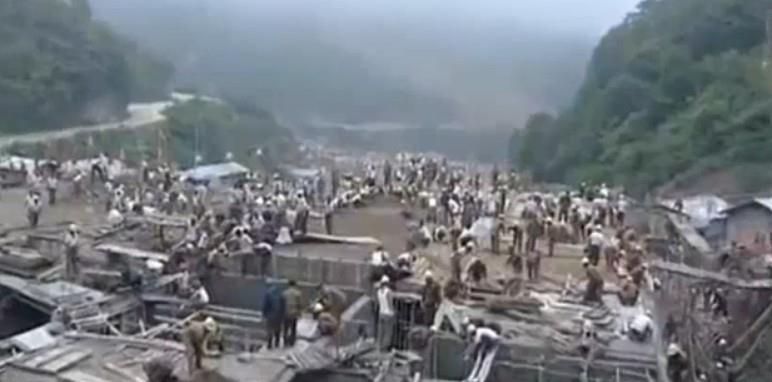
North Korea established the '124th Regiment' on January 24th last year, following a decision at the 19th plenary meeting of the 8th WPK Central Committee, as part of the 'Local Development 20×10 Policy.'
According to North Korean media, the 124th Regiment, organized across various military units, consists of a total of 20 groups: 16 construction regiments and 4 equipment regiments.
North Korea, which has previously used specialized construction units for economic projects, seems to have greatly expanded troop mobilization for local factory construction.
Since Kim Jong-un came to power, the military has been mobilized for large-scale construction projects, including 50,000 homes in Pyongyang and 25,000 in Komdok, along with major infrastructure such as greenhouse farms, local factories, reclaimed land, and hydroelectric power plants.
In North Korea's military, the slogan "Let us take charge of both defense and socialist construction" reflects the expectation that the army handle both national defense and economic development.
The reason North Korea is deploying more troops for economic construction is simple: it can exploit unlimited unpaid labor.
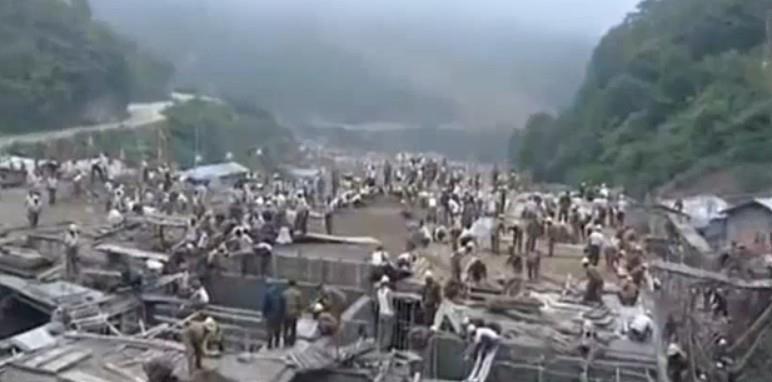
For seven years as a North Korean soldier, I was forced into unpaid construction labor in Pyongyang. While building Ryomyong Street, one of Kim Jong-un's prestige projects, I woke up at 4 a.m. and worked nearly 18-hour days to finish a floor each day.
At dawn, I carried sandbags up to the 40th floor, and while transporting cement, my entire body was coated in sweat and dust.
In the evening, trying to scrape off the hardened cement from my back would often tear my skin, causing it to bleed.
I could barely sleep lying down. Exhausted and working without safety gear, many soldiers dozed off and fell from buildings over 30 stories high.
In North Korea, soldiers are continuously mobilized for large-scale, long-hour labor in state construction projects, resulting in severe exploitation and threats to their safety.
For 10 years, North Korean soldiers endure unpaid labor, receiving no fair compensation. Both commanders and enlisted soldiers face the same exploitation without pay.
The North Korean military operates as a modern-day slave force, used as unpaid construction workers to prop up the economy.
Especially since Kim Jong-un came to power, the military has taken on major economic development projects, intensifying the exploitation of labor.
Soldiers receive no compensation or welfare and continue to endure food shortages and grueling training.
While North Korean soldiers endure unpaid labor, corruption, and shortages, their South Korean counterparts benefit from improved conditions and regular pay raises.
According to the Ministry of National Defense, South Korean soldiers' monthly salaries were 720,000 KRW (~$550) for privates, 800,000 KRW (~$610) for Private First Class, 1,000,000 KRW (~$760) for corporals, and 1,250,000 KRW (~$950) for sergeants. In 2025, these will increase to 860,000 KRW ($650), 960,000 KRW ($730), 1,200,000 KRW ($910), and 1,500,000 KRW ($1,140), respectively.
Such conditions are unimaginable in North Korea. Its soldiers would be stunned by the stark contrast in South Korea.
If North Korea’s military had the same conditions as South Korea’s, I would have gladly served for a lifetime. I hope North Korean soldiers will one day experience that same freedom and dignity.