

Russian Invasion of Ukraine:
North Korean War Crimes and the POW Soldier Repatriation Issue

WADE ROBERT PETER
SEJONG Institute Research Fellow
Introduction
In November last year, reports began to emerge that North Korea was dispatching soldiers to fight in the war in Ukraine. Initially, these reports were met with skepticism, as the U.S. government did not confirm them, and the evidence provided by the Ukrainian and South Korean governments appeared inconclusive—including satellite imagery of alleged troop ships and videos of East Asian-looking soldiers receiving training.
However, subsequent evidence—including North Korean soldiers on the frontline, captured documents, and even captured soldiers—demonstrated relatively conclusively that North Korean troops were actively involved in the fighting, particularly in the Kursk region of Russia.
In August 2024, Ukrainian forces launched an incursion into Kursk, and expelling them from Russian territory has been a priority for the Russian military ever since.
According to Ukrainian authorities, North Korea has dispatched approximately 12,000 soldiers, 50% of whom have either been injured or killed in combat.
One apparent reason for these heavy losses is the tactics employed by the Russian military, which relies heavily on human wave assaults. Another factor is the widespread use of drones by the Ukrainian military—a technology with which North Korean soldiers, including allegedly deployed Special Forces, have limited familiarity.
War Crimes and POWs
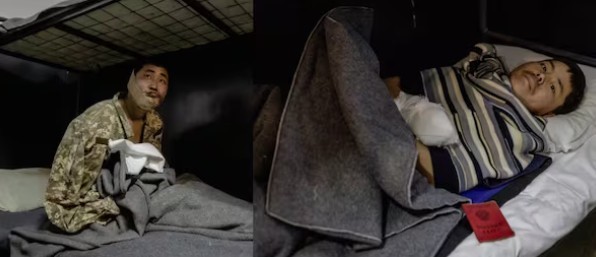
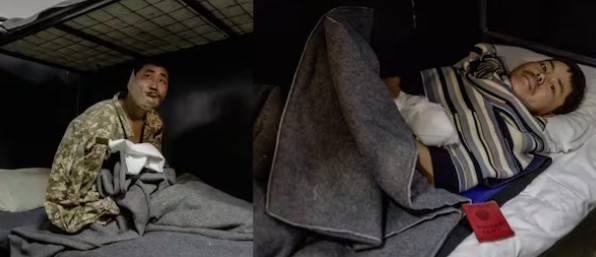
Nonetheless, as of January 2025, at least two North Korean soldiers have been captured by Ukrainian forces. The small number suggests that Ukrainian estimates of North Korean casualties are likely accurate or that relatively few North Korean troops have actually engaged in combat.
Recently, perhaps due to the temporary freeze on U.S. military aid and intelligence sharing, Ukraine has suffered significant territorial losses in the Kursk region. This could lead to North Korean forces being deployed to other fronts, increasing the likelihood of their direct involvement in combat within Ukrainian territory.
If North Korean troops were deployed into Ukraine itself, Kim Jong Un and North Korea’s military leadership could face charges of war crimes under the International Criminal Court (ICC)’s Rome Statute—of which Ukraine is a signatory.
Russian President Vladimir Putin has already been charged under the same statute. In fact, given North Korea’s large-scale shipments of shells and missiles to Russia since at least 2023—materially aiding Russia’s commission of war crimes—it is arguable that such charges could already be applicable.
ICC arrest warrants would severely restrict the freedom of movement of North Korea’s ruling elite. While both Putin and Israeli Prime Minister Benjamin Netanyahu currently face ICC warrants, neither is expected to be arrested anytime soon. However, as demonstrated by the recent arrest of former Philippine President Rodrigo Duterte, such warrants can be enforced under the right circumstances.
Beyond the legal risks facing North Korean leadership, the status and fate of captured North Korean soldiers raise additional complex legal questions.
The Geneva Convention III relative to the Treatment of Prisoners of War provides the legal framework governing Ukraine’s treatment of POWs. Although the treaty does not explicitly ban the forced repatriation of POWs to their country of origin, it does establish that repatriation should occur without delay after the cessation of hostilities, ensuring the protection of detainees’ human rights.
However, the Refugee Convention and the Convention Against Torture enshrine the principle of non-refoulement (prohibition of forced repatriation). As Ukraine has ratified both treaties, it is legally bound to ensure that POWs are not forcibly returned to a country where they could face persecution or mistreatment.
There are still uncertainties regarding the exact legal status of these North Korean soldiers. Since Pyongyang has not officially acknowledged its military involvement in the war, Ukraine may not classify captured North Koreans as regular POWs under international law. Instead, they could be treated as mercenaries, in which case direct repatriation to North Korea would be less likely.
Furthermore, many North Korean soldiers are reportedly disguised as Russian troops. They wear Russian military uniforms, carry Russian identification papers, and are apparently instructed to pose as Russian soldiers even if captured—although it is unlikely that most of them speak Russian well enough to maintain the deception.
Outlook
The war in Ukraine continues, with peace negotiations so far failing to produce substantial results. U.S. President Trump had hoped that Russia would agree to a 30-day ceasefire, but as of March 19, Moscow has only committed to refraining from attacks on Ukrainian energy infrastructure.
There is a real possibility that North Korean forces could be deployed directly into Ukraine, having previously fought only in Russia’s Kursk region. Such a development could intensify calls for North Korea’s leadership to be indicted under the Rome Statute for war crimes.
Currently, the number of North Korean POWs in Ukrainian custody remains low. However, if the war persists, their numbers could rise significantly. Their status remains somewhat ambiguous, as North Korea has not officially acknowledged its involvement in the conflict.
Nevertheless, under the principle of non-refoulement, captured North Korean soldiers should be given the choice at the war’s end—whether to return to North Korea, remain in Ukraine, or seek asylum in South Korea.
-
PREV [Analysis and Suggestion]
-
NEXT [Defectors' Podium]