

North Korea’s Reality, Seen Through the April Spring Festival
Kang Dong-wan,
Professor at Dong-A University
/ YouTube Channel: kangdongwantv
The Korean Peninsula experiences four distinct seasons, with spring symbolizing renewal as new life emerges after winter's chill. People eagerly await its warmth—but in North Korea, April feels more like the harshest winter. Citizens are forced to participate in state-orchestrated events honoring Kim Il-sung’s birthday, celebrated on April 15 as the “Day of the Sun.” In a regime rooted in the hereditary rule of Kim Il-sung, Kim Jong-il, and Kim Jong-un, idolizing its leaders is unavoidable. This serves to legitimize Kim Jong-un’s rule and demand loyalty. The Immortality Tower, inscribed with “Great Comrades Kim Il-sung and Kim Jong-il Will Always Be With Us,” embodies the regime’s ideology.
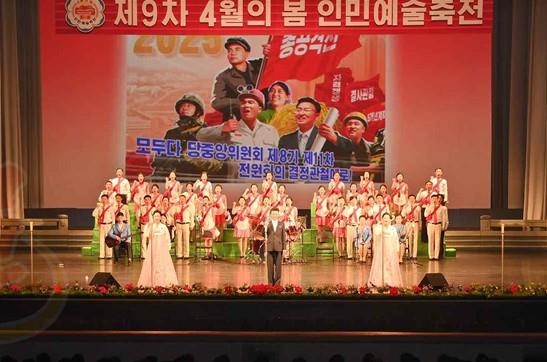
North Korea’s regime knows no bounds—declaring a deceased leader’s birthday a national holiday is only the beginning. Each April, citizens are mobilized for state-run celebrations with no reprieve. Imagine the toll that takes. Events like the People’s Art Festival and Friendship Art Festival may sound cultural and friendly, but their reality is far from it. The <Friendship Art Festival> features foreign performers invited by the regime, alternating yearly with the <People’s Art Festival>, which showcases domestic groups.
The <People’s Art Festival>, launched in 2008 on Kim Jong-il’s orders, is held annually to honor Kim Il-sung’s birthday. Participants come from institutions, factories, farms, and local offices, competing in various group categories: city/county ensembles, institutional troupes, factory teams, and agricultural performers. North Korea promotes the event as a “grand political arts celebration by the people for the great leaders.”
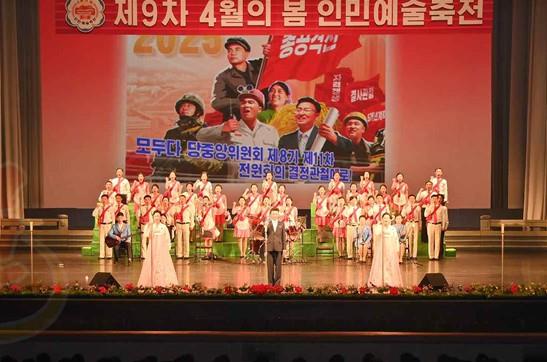
This year, it’s taking place from April 10 to 17 in multiple venues around Pyongyang, including the People’s Culture Palace and the Pyongyang Grand Theatre. A speech rally by workers and union members kicked off the festivities at the Central Workers’ Hall on April 10. Rodong Sinmun reported that the event would “inspire boundless revolutionary passion and optimism among those advancing the comprehensive development of our great state, united around the Party Central.” It’s clear from such propaganda that the event is less about art and more about reinforcing loyalty to the ruling Kim family.
In contrast, the <Friendship Art Festival> takes place biennially, inviting international artists. It began in April 1982 to commemorate Kim Il-sung’s 70th birthday. From 1984 to 2007, it was held annually, and since then, every two years. A dedicated fund was established in 2011 to support its operations. The most recent event, the 33rd edition in 2024, was held online due to continued border restrictions following COVID-19. Despite claiming the pandemic had ended, North Korea kept its borders closed. Instead, foreign performers submitted videos, which were reviewed and edited for broadcast on Korean Central TV. Festival updates and judging outcomes were posted on sites like <Joseon Art>.
North Korean media boasts that “renowned troupes, dance companies, circus groups, and overseas Korean performers from dozens of countries” participate in the festival. The message is clear: the world respects and celebrates Kim Il-sung, and by extension, Kim Jong-un. By showcasing global praise, the regime seeks to boost its internal legitimacy. They emphasize international friendship and cultural exchange, but the reality in North Korea paints a very different picture. Instead of genuine openness, the regime selectively invites participants for political theater—hardly the spirit of true international friendship.
What’s more troubling is that North Korea covers all costs—airfare, lodging, gifts, and lavish banquets—for its foreign guests, while its own people face hunger and uncertainty over their next meal. Enormous sums are poured into celebrating Kim Il-sung, exposing the regime’s distorted priorities.
And the regime’s efforts don’t stop there. In April, it crafts a facade of celebration, as if the whole world is honoring Kim Il-sung’s birthday. A prime example is the <Pyongyang International Marathon>, launched in 1981 for this very purpose.
After a five-year pause due to the pandemic, the event returned this year. State media reported participation from athletes in North Korea, China, Romania, Morocco, Ethiopia, and “running enthusiasts from around the world.” Chinese agency Koryo Tours offered a six-day “Marathon Tour,” combining race entry with sightseeing in Pyongyang, including stops at Okryu Restaurant, Kim Il Sung Square, the Juche Tower, Hwasong Street, and Kangdong Greenhouse Farm.
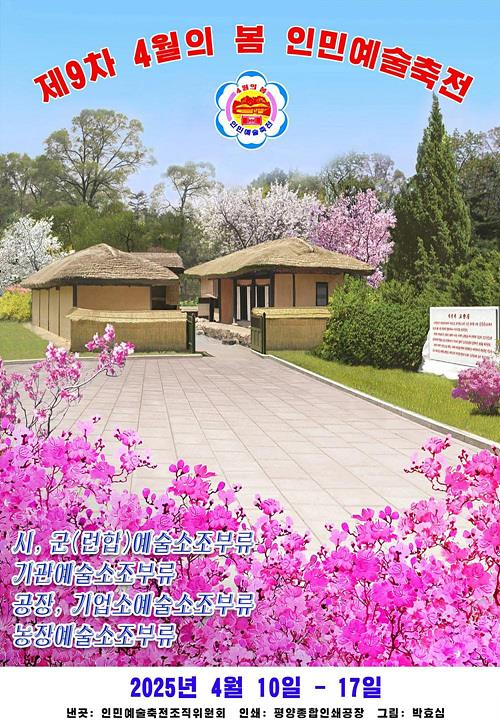
Poster for the 9th April Spring People’s Art Festival in 2025 / Photo by Rodong Sinmun
Hwasong Street and Kangdong Greenhouse Farm are both heavily promoted by Kim Jong-un as models of improved living standards. Including them in tour itineraries reveals the event’s true purpose: regime propaganda. What should be a celebration of fair athletic competition is reduced to a stage-managed political showcase, aimed at portraying North Korea as a global sporting power—a directive from Kim himself. The participation of an Ethiopian athlete, who finished second in the full marathon behind a North Korean runner, seems more symbolic than competitive.
In the half-marathon, North Korean runners swept all three top spots. Rather than a fair contest, it was a spectacle for domestic audiences to reinforce national pride. It’s hard to ignore the tourism aspect either—this event doubles as a way to generate foreign currency for Kim Jong-un’s coffers.
For North Koreans, April may well be the harshest month of the year. They’re forcibly recruited to stage political spectacles like the People’s Art Festival, while also bearing the cost of hosting foreign guests for the so-called Friendship Art Festival.
Meanwhile, April in South Korea is vibrant and full of life, with cherry blossom festivals and seasonal food celebrations bringing communities together. In stark contrast, the North spends the entire month in service of glorifying a single figure. No time of year is crueler than this.