

Conditions for a U.S.–North Korea Summit and South Korea’s Role
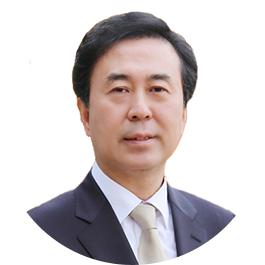
Park Jong-cheol
Visiting Professor, Daejeon University
1. North Korea and the United States: Calculations and the Tug-of-War
For more than three decades, the North Korean nuclear issue has been at the nexus of U.S.–North Korea relations, peace and stability on the Korean Peninsula and inter-Korean dynamics. The issue has evolved through multiple turning points, most notably during the Trump administration, when three U.S.–North Korea summits dramatically altered the diplomatic landscape.
The 2018 Singapore Summit and the 2019 Hanoi Summit drew global attention. The Singapore meeting initiated a personal rapport between President Trump and Chairman Kim Jong-un, outlining broad principles for improving bilateral relations, advancing denuclearization, and building a peace regime. Yet the collapse of the Hanoi Summit laid bare the limitations of a top-down approach to diplomacy.
Under President Biden, Washington effectively deprioritized North Korea, while Kim Jong-un focused on expanding his nuclear arsenal and military capabilities. Upon returning to the White House in 2025, President Trump sought to rekindle his earlier personal diplomacy, publicly emphasizing his friendship with Kim and sending overtures of goodwill. Kim, however, offered no acknowledgment.

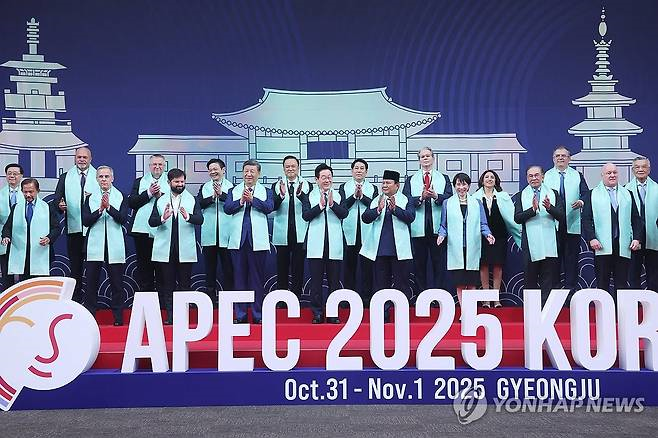
Reports suggest Trump viewed a renewed summit as both a geopolitical opportunity and a personal legacy project—potentially even a pathway toward a Nobel Peace Prize—after promoting himself as a broker of peace in the Middle East, Ukraine, and South Asia. The possibility of a Trump–Kim reunion resurfaced during the APEC Summit in Gyeongju, where Trump’s attendance revived speculation about behind-the-scenes maneuvering.
In the lead-up to APEC, Trump repeatedly expressed his willingness to meet Kim Jong-un, reminding the public of their past rapport. His description of North Korea as “a sort of nuclear power” and his acknowledgment of its substantial nuclear arsenal marked a subtle shift in tone.
Although the term “nuclear power” stops short of formal recognition under the NPT, it hinted at pragmatic acceptance of North Korea’s de facto status. Trump also floated sanctions relief as a bargaining chip—an offer sure to resonate in Pyongyang, given Kim’s fixation on economic reprieve during the Hanoi negotiations.
When North Korea remained unresponsive, Trump doubled down, signaling that he was even prepared to extend his stay in South Korea. Yet Pyongyang’s response was icy. Kim Yo-jong dismissed the prospect of dialogue, declaring that talks were impossible so long as denuclearization remained a U.S. demand. She stipulated that recognition of North Korea as a nuclear state was a prerequisite for any renewed engagement.
North Korea then flexed its military muscle—test-firing a hypersonic missile on October 22 and a strategic cruise missile on October 28, on the eve of APEC—underscoring its deterrent posture. Concurrently, Foreign Minister Choe Son-hui’s meeting with Russian President Vladimir Putin in Moscow signaled closer strategic alignment with Russia and disinterest in Washington’s overtures.
Kim’s silence appears deliberate—a calculated effort to increase his leverage. He is likely preparing to declare at next year’s 9th Workers’ Party of Korea Congress that North Korea has achieved its long-sought military and nuclear objectives. Stronger ties with Russia and China have reinforced his confidence that North Korea can survive—and even benefit—without sanctions relief. For now, Kim seems content to defer engagement with Trump until conditions allow him to dictate the terms of the encounter, rather than appear as a mere prop at APEC.
2. Preconditions and Environment for Renewed U.S.–North Korea Talks
As President Trump departed Seoul, he expressed regret over not meeting Kim but vowed to return. Although a summit did not occur, both sides succeeded in signaling their intentions. From Kim’s perspective, he reaped diplomatic attention equivalent to an actual meeting—without the political risks.
At the August U.S.–ROK summit, President Lee Jae-myung asked Trump to act as a “peacemaker” on the Korean Peninsula while pledging to serve as a “pacesetter.” The idea was to create a mutually reinforcing process: U.S.–North Korea talks to break the ice, and inter-Korean dialogue to sustain momentum. Lee assessed that Trump’s outreach, even absent a meeting, injected new energy into the peace process and reaffirmed Seoul’s readiness to build trust with Pyongyang through concrete measures.
Looking ahead, the question is when, and under what circumstances, a summit might resume. Trump’s planned visit to China in April 2026 could offer a new window—potentially enabling a meeting in Beijing, Shenyang, or Panmunjom.
For such a meeting to yield results, quiet, preparatory diplomacy is essential. Reestablishing the New York channel—or creating new backchannels—would prevent another “photo-op summit” devoid of substance. Progress would hinge on pre-summit negotiations detailing reciprocal steps: phased denuclearization measures, calibrated sanctions relief, improvements in bilateral relations, and humanitarian initiatives such as the repatriation of U.S. service members’ remains.
When talks resume, the Singapore commitments should serve as the foundation for rebuilding trust. Drawing from past experience, uncertainty could be minimized by aligning expectations and sequencing deliverables before the leaders meet.
As a precedent, the postponement of the 2017 ROK-U.S. joint military drills paved the way for the Singapore Summit. Similarly, recalibrating early 2026 exercises could serve as a goodwill gesture, potentially prompting a positive response from Pyongyang. In return, North Korea would need to refrain from provocative missile or nuclear tests to foster a conducive environment for talks.
3. South Korea’s Role
As host of the Gyeongju APEC Summit, South Korea positioned itself as both a regional convener and a global problem-solver. Seoul led discussions on supply chain resilience, AI and semiconductor cooperation, and inclusive economic frameworks, while reinforcing shared U.S.–ROK commitments to peace and prosperity on the Korean Peninsula. Concurrently, through summits with China and Japan, South Korea strengthened trilateral and regional dialogue frameworks.
Building on this momentum, Seoul must continue leveraging multilateral platforms to advance both regional stability and inter-Korean peace. The U.S. and South Korea should closely coordinate to create a roadmap linking renewed U.S.–North Korea engagement with inter-Korean cooperation. A clear division of roles would be prudent: President Trump maintaining high-level diplomatic outreach and President Lee creating conditions that make dialogue politically viable.
President Lee’s E.N.D. Initiative, unveiled at the UN General Assembly in September, outlines a path toward peace and coexistence based on Exchange, Normalization, and Denuclearization. It envisions transforming hostility into trust and pursuing practical, phased solutions—halting, reducing, and ultimately abandoning nuclear and missile programs—through mutual, step-by-step actions by all stakeholders.
Integrating the E.N.D. framework with summit diplomacy will require tangible trust-building. Inter-Korean exchanges should resume in health, disaster management, and environmental cooperation. Restoring the September 19 Military Agreement should begin with mutual suspension of reconnaissance activities, followed by inter-Korean military talks to prevent incidents and rebuild confidence.
Finally, both Koreas should expand humanitarian collaboration—such as health care and disaster relief—within sanctions-exempt frameworks. These civilian-level efforts would not only reduce tensions but also provide the social and moral foundations for sustainable peace on the Korean Peninsula.
-
PREV [Thematic Analysis]
-
NEXT [News&Issue]