

Why Kim Jong-un Didn't Shake Trump's Hand
Kim Dong-soo
Former North Korean Diplomat
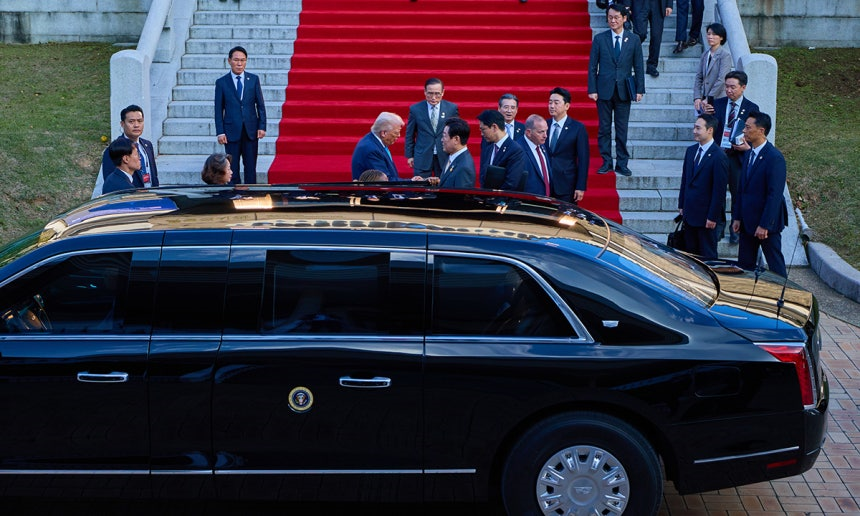
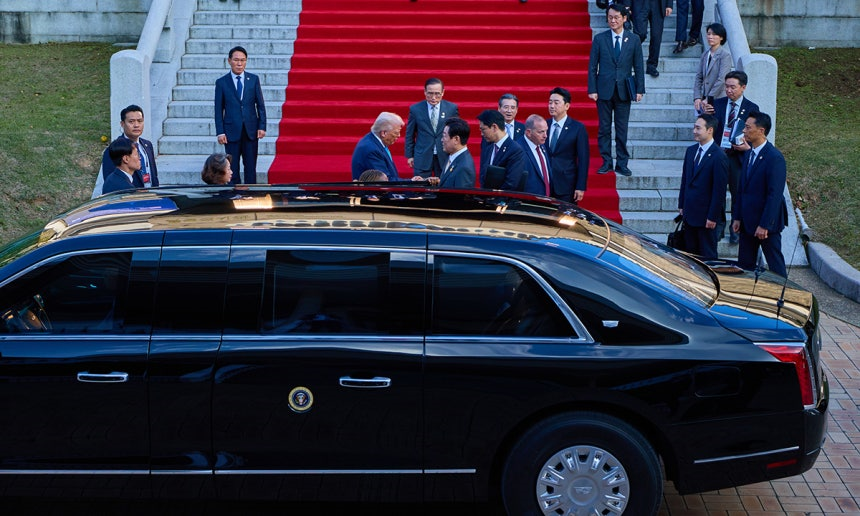
Despite repeated invitations from U.S. President Donald Trump to meet North Korean leader Kim Jong-un during his visit to South Korea, Pyongyang’s response remained conspicuously indifferent.
According to Justin Martel, an American filmmaker and manager at Young Pioneer Tours who recently returned from Pyongyang, most North Koreans were unaware of Trump’s visit to Asia and showed virtually no interest in the potential summit with Kim.
This detachment cannot be explained solely by information control. Rather, it underscores how the Kim regime strategically calculates its external environment. Kim Jong-un’s decision to ignore Trump’s outreach during the APEC summit in Gyeongju reflects a deliberate and rational foreign policy stance rooted in current geopolitical realities.
At present, North Korea sees little incentive—political, economic, or strategic—to engage Washington. The regime is deriving far greater tangible benefits from its deepening alignment with Moscow, which provides critical energy, food, and military technology support. With Russia and China offering Kim both economic relief and diplomatic cover, dialogue with the United States is seen as a liability rather than an opportunity. In Pyongyang’s calculus, premature talks could upset the “favorable balance” it currently enjoys within the emerging anti-U.S. bloc.
The fundamental obstacle remains the negotiation agenda itself. As long as Washington insists on denuclearization as the starting point for dialogue, Kim has no interest in participating. North Korea now regards itself as a de facto nuclear state and it will only engage the United States from that position of acknowledged strength.
While Pyongyang has occasionally referenced its “friendly relationship with President Trump,” such statements are better understood as instruments of psychological leverage rather than genuine diplomatic overtures. The regime’s intent is to encourage Washington to bypass Seoul and pursue direct, bilateral engagement with Pyongyang.
Kim made this orientation clear earlier this year when, during the commissioning ceremony of a new destroyer, he publicly denounced South Korea and redefined inter-Korean relations as “those of hostile states.” This signals a strategic effort to marginalize Seoul in favor of a U.S.–North Korea framework centered on recognition and sanctions relief.
Nonetheless, Washington is unlikely to accept such terms. North Korea’s diplomatic apparatus remains cautious following the fallout from the failed 2019 Hanoi summit, which led to the demotion of key North Korean negotiators, including current Foreign Minister Choe Son-hui. Compounding this caution, the recent U.S. airstrike on Iranian nuclear facilities appears to have reinforced Kim’s conviction that nuclear weapons are the only reliable security guarantee for his regime.
Kim’s refusal to shake Trump’s hand, therefore, is neither personal nor emotional: it is strategic. It reflects Pyongyang’s doctrine of “strategic disregard,” a posture intended to compel the United States to make the first move, while North Korea positions itself as an equal nuclear power awaiting recognition.
In recent weeks, Pyongyang has coupled this stance with escalatory rhetoric. Following the deployment of the U.S. aircraft carrier USS George Washington to South Korea, North Korea’s Foreign Ministry condemned new U.S. sanctions and vowed to “respond accordingly.” Days later, the Ministry of National Defense threatened “more offensive actions” in protest of the carrier’s port call and the annual ROK–U.S. Security Consultative Meeting.
This hardline trajectory is expected to persist through the upcoming Worker Party of Korea party congress early next year. Observers anticipate that the regime will focus on consolidating internal unity by sustaining confrontation with both Seoul and Washington, while showcasing military advancements, potentially including the Hwasong-20 ICBM, first unveiled at last month’s parade, or the successful launch of a reconnaissance satellite.
Still, if Pyongyang intends to reopen dialogue with Washington after March next year, it may exercise restraint on major provocations such as ICBM tests, signaling that even amid its defiance, North Korea continues to manage escalation on its own terms.
-
PREV [Feature Article]
-
NEXT [Thematic Analysis]