

South Korean Defense Ministry's Proposal for Inter-Korean Military Talks and Peace and Stability on the Korean Peninsula

Moon Sung-mook
Director
Unification Strategy Center
Korea National Strategy Institute
The Republic of Korea’s Ministry of National Defense formally proposed inter-Korean military talks to North Korean authorities on November 17. The Ministry issued a statement entitled “Proposal for Talks Concerning the Military Demarcation Line in the Demilitarized Zone,” under the authority of Policy Director Kim Hong-chul, officially putting forward the proposal for inter-Korean military dialogue.
Given the current severance of all communication channels between the two Koreas, the proposal was necessarily delivered in the form of a public statement. This marks the first official initiative for inter-Korean talks under the Lee Jae-myung administration.
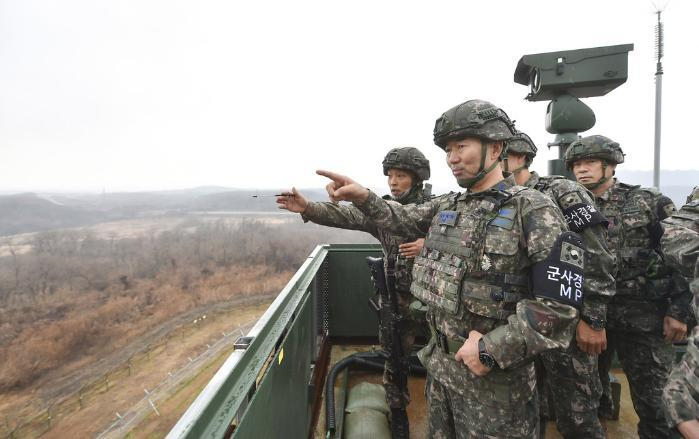
In the statement, the Ministry noted, “Recently, while the North Korean military has been installing tactical roads and barbed-wire fences along the Military Demarcation Line (MDL) within the Demilitarized Zone (DMZ) and laying mines, some personnel have repeatedly crossed the MDL and violated our territory.”
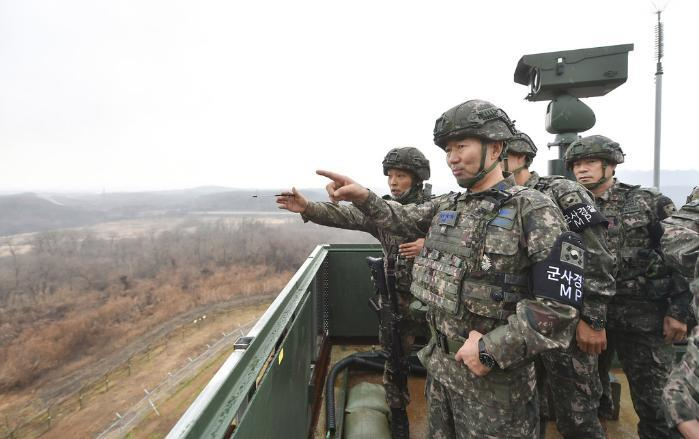
It further added, “As such incursions by North Korean forces and our military’s procedural responses continue, tensions within the DMZ are rising, raising concerns that this could lead to military clashes between the North and the South.” The North Korean military has continuously carried out activities such as constructing tactical roads near the MDL since April of last year.
During this period, incidents in which North Korean troops crossed south of the MDL and then retreated after receiving warnings and warning shots from South Korean forces occurred fewer than ten times last year but have increased to more than ten cases this year.
The Ministry of National Defense assessed that the underlying cause of this situation is that “a significant number of MDL markers installed at the time of the 1953 Armistice Agreement have been lost, leading to differences in perception between the South and the North regarding the boundary line in some areas.”
The MDL markers were installed in August 1953 under the supervision of the Military Armistice Commission, following the signing of the Armistice Agreement on July 27, 1953. In 1973, during a United Nations Command–led marker repair operation, North Korean forces opened fire, causing the suspension of repair work, a halt that continues to this day.
A significant number of markers have since been lost, and many are no longer identifiable due to changes in terrain. Military authorities can currently confirm only approximately 200 markers out of the 1,292 markers along the 248-kilometer MDL. The proposal for talks appears to be a response to the situation in which North Korean troops frequently cross the MDL during operational work, increasing the risk of accidental clashes as they retreat north following warnings and warning shots.
To date, North Korean authorities have shown no response to the Ministry of National Defense’s proposal for military talks. It is therefore difficult to anticipate a positive reaction from North Korea in the near term. This article analyzes the significance of the military talks proposal in the context of President Lee Jae-myung’s END peace initiative.
In doing so, it examines the motivations behind North Korean military actions along the MDL. Furthermore, it outlines why dialogue and cooperative exchanges remain essential for sustainable peace on the Korean Peninsula, regardless of whether North Korea responds to the proposal, and urges North Korean authorities to engage constructively.
The proposal for inter-Korean military talks by the South Korean Ministry of National Defense is timely.
< Concerns Over North Korean Forces’ Intent to Violate the MDL and the Risk of Accidental Armed Conflict >
The North Korean military’s activities along the Military Demarcation Line (MDL), including reinforcing fences and laying mines, reflect an intent to strengthen barriers between the two Koreas. These actions are closely linked to the so-called “two-state policy” articulated by Kim Jong-un at the Workers’ Party Plenary Meeting in late 2023.
At that time, Kim Jong-un escalated threats by declaring that inter-Korean relations were no longer those of fellow countrymen but of warring states, labeling the South the “main enemy” and “number one enemy,” and pledging to mobilize all means to achieve “scorched earth” and “territorial subjugation.”
In October 2024, North Korea demolished the inter-Korean connection sections of the Gyeongui Line railway and National Highway No. 1, as well as the Donghae Line railway and National Highway No. 7, which had been established under inter-Korean agreements, and constructed higher barriers. North Korea communicated this action through a report titled “Complete Closure of Roads and Railways Connecting to the Republic of Korea in the Eastern and Western Regions of the Southern Border of the Democratic People’s Republic of Korea.”
The report asserted that these measures were grounded in North Korea’s Constitution, which designates the Republic of Korea as a hostile enemy state, and emphasized that the policy of two hostile states is explicitly enshrined in the Constitution. The barriers along the MDL are clearly intended for internal control purposes rather than conventional defense.
North Korea is fully aware that the Republic of Korea has not once invaded the North since the Armistice Agreement was signed. Incidents in which North Korean soldiers cross the MDL during construction work are more likely the result of limited visibility in the MDL area rather than deliberate military provocations. Nevertheless, there may be an intent to test South Korea’s responses.
The fact that North Korean troops retreat without significant engagement after warnings and warning shots reinforces the view that these are largely accidental incursions. Yet, given that there have already been more than ten incursions this year, following a similar number last year, the potential for accidental clashes is increasing.
President Lee Jae-myung’s expression of concern regarding possible clashes near the MDL, delivered during an in-flight briefing before his state visit to Turkey in November, underscores the necessity of addressing these issues through direct communication between the military authorities of the two Koreas.
< President Lee Jae-myung’s E.N.D Peace Initiative and the Significance of Military Talks >
President Lee Jae-myung announced the E.N.D. Initiative during his keynote address at the 80th United Nations General Assembly, held at the UN Headquarters in New York, USA, on September 23 (local time). E.N.D. stands for “Ending,” representing a vision to conclude the Cold War on the Korean Peninsula and pursue a path of peace and coexistence. President Lee proposed comprehensive dialogue aimed at establishing a peace regime on the Korean Peninsula, centered on three pillars: Exchange, Normalization, and Denuclearization.
‘Exchange’ refers to resuming cultural, economic, and humanitarian interactions between the North and South to lay the foundation for trust. ‘Normalization of Relations’ encompasses restoring North Korea’s relations not only with the South but also with the broader international community, including the United States.
‘Denuclearization’ proposes a phased approach involving a nuclear freeze, reduction, and eventual abandonment. The practical principles outlined include restoring trust, easing military tensions, respecting political systems, and pursuing international cooperation. This vision embodies the effort to conclude the Cold War and define the final chapter on the international stage. The recent proposal for inter-Korean military talks represents the first step in the Exchange pillar outlined in the E.N.D. vision.
Dialogue is essential to initiating this exchange. The proposal for talks appears to be an effort to mitigate North Korea’s hostile posture and establish a foundation for dialogue. Last June, the government implemented preemptive measures, suspending loudspeaker broadcasts toward the North in frontline areas and requesting that civilian groups cease leaflet distribution.
However, North Korea’s stance remained unchanged. President Lee has repeatedly emphasized such preemptive measures to promote peace, notably in his Liberation Day address and at the APEC Summit. Reducing military tensions and building confidence constitute the foundation for denuclearization.
< Long-Term Perspective Needed to Pursue Peace Efforts for Sustainable Peace >
North Korean authorities, which have exhibited little reaction to proposals thus far, appear unlikely to engage in military talks in the near term. This assessment is reinforced by Kim Jong-un’s September policy speech to the Supreme People’s Assembly, in which he stated unequivocally that “there will be no sitting down with South Korea, and we will not engage in anything together.”
Having defined inter-Korean relations as strictly hostile, dismantled organizations related to dialogue and exchange, and severed ties completely, North Korea is unlikely to make a positive response. From North Korea’s perspective, inter-Korean dialogue offers no immediate tangible benefits and is perceived as a potential threat to regime stability. Even in prior military talks, North Korea has maintained a consistently passive approach.
While the two Koreas reached agreements on confidence-building measures, such as regularized dialogue through a joint military committee or the installation of a direct hotline, follow-through has been limited. Therefore, the recent proposal for talks is also likely to be declined.
Nonetheless, for South Korea, peace efforts cannot be abandoned. Peaceful and free unification is its constitutional mandate. Achieving unification requires reducing military tensions, building confidence, and pursuing denuclearization. Given 80 years of division, a subsequent war, and numerous military clashes, restoring inter-Korean relations is a complex endeavor.
A long-term perspective is therefore necessary, as impatience risks undermining progress. A calm, measured approach is more likely to elicit a positive response from North Korea. Historically, North Korea has engaged in dialogue when strategic interests demand it, and future shifts in the international security environment may alter its current posture.
While North Korea has closed the door on inter-Korean dialogue, it has maintained channels for engagement with the United States. This dynamic could present an opportunity. Through close ROK–US coordination, North Korea must perceive the strategic value of dialogue.
North Korean authorities should move beyond rhetorical commitments to peace and actively respond to offers for dialogue. In his October 10th speech commemorating the founding of the Workers’ Party of Korea, Kim Jong-un stated that he would “fulfill his responsibility and role in defending justice and peace.”
If there is genuine intent to uphold these responsibilities, it must be demonstrated through actionable steps. In particular, North Korea should respond to the Ministry of National Defense’s proposal for military talks aimed at sustainable peace. Today’s international environment operates with full transparency, with information shared instantly and widely.
Attempting to maintain control through isolation is untenable. North Korea is urged to abandon the unsubstantiated claim denying a shared historical heritage spanning half a millennium and to engage in a path toward peaceful reunification, building on the foundation laid by predecessors. This is the only path for North Korea to address its challenges and accelerate the creation of a prosperous society, as emphasized by its own leadership.
Prompt engagement in the proposed military talks is essential to fulfill denuclearization obligations, prevent military clashes, ease tensions, and build trust. The international community should actively support the Republic of Korea’s peace initiatives and encourage North Korea to respond wherever possible. This approach represents the path to peace on the Korean Peninsula and globally, while ensuring that North Korean citizens can enjoy lives worthy of human dignity.
-
PREV [Column]
-
NEXT [Thematic Analysis]