

Restoring South Korea–China Relations: A Structural Precondition for Advancing Inter-Korean Relations
— Reframing the ROK–U.S. Alliance as a Strategic Asset, Not Subordination

Professor. Choi Jae duk
Seoul School of Integrated Science and Technology
President Lee Jae-myung’s state visit to China in January 2026—the first by a South Korean president in nearly eight years—marks a critical inflection point in the normalization of Korea–China relations. Coming on the heels of President Xi Jinping’s visit to Seoul in 2025, the summit signals a shared recognition that bilateral ties require strategic recalibration after a prolonged period of tension.
Ahead of the visit, President Lee publicly reaffirmed South Korea’s adherence to the “One China” principle, as originally agreed upon at the establishment of diplomatic relations, in an interview with China Central Television (CCTV). By clearly restating Seoul’s long-standing position on the Taiwan issue, the administration took deliberate steps to prevent unnecessary strategic misperceptions and to restore an institutional baseline for diplomatic recovery.
At the same time, President Lee emphasized that confrontation with China does not serve South Korea’s national interests. While underscoring the enduring importance of the ROK–U.S. alliance, he articulated Korea’s intent to pursue greater strategic autonomy amid intensifying U.S.–China competition.
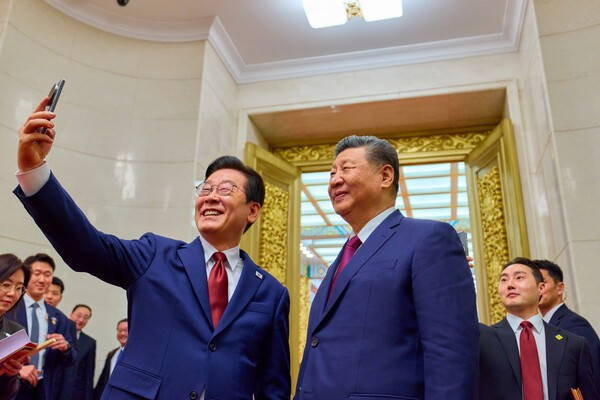
In this sense, the state visit represents more than bilateral rapprochement. It constitutes an effort by South Korea to reposition itself amid shifting great-power dynamics in Northeast Asia. The restoration of Korea–China relations functions simultaneously as a catalyst for economic stabilization, a diplomatic foundation for managing peace on the Korean Peninsula, and a strategic choice to recalibrate South Korea’s external posture during a period of structural transformation in the international order. Expanding diplomatic autonomy will be essential to reestablishing a strategic compass for South Korean foreign policy over the next decade.
This recalibration must be understood against the backdrop of evolving U.S. strategy. In December 2025, the Trump administration released its second National Security Strategy (NSS), which revealed a notable shift in Washington’s global outlook. The document does not frame China as an ideological adversary or a target of regime-change, nor does it emphasize an overarching ideological confrontation.
While it identifies the Taiwan Strait as a “critical strategic issue,” it places greater emphasis on allied cooperation and role-sharing rather than on direct U.S. military intervention. More significantly, the NSS identifies technology, industrial capacity, and supply chains as core domains of national security, signaling that the center of gravity in U.S.–China competition is shifting decisively from the military sphere to the technological and economic arenas.
Of particular relevance to Seoul is what the NSS omits: there is no explicit reference to the North Korean nuclear issue. This absence suggests a relative downgrading of the Korean Peninsula within U.S. strategic priorities. Such a shift implies not only changes in Washington’s global posture but also the need for South Korea to reassess its own diplomatic and security strategies accordingly.
These developments reflect broader structural constraints on American power. In the immediate post–World War II era, the United States accounted for roughly half of global GDP, enabling it to design and sustain the international order largely on its own terms.
Today, the U.S. share has declined to approximately 25 percent, while China—whose global economic footprint was negligible four decades ago—now accounts for nearly 18 percent. Although China’s growth has slowed from its earlier breakneck pace, it has entered a phase of sustained medium-speed expansion while concentrating national resources on narrowing the technological gap with the United States.
China has already made rapid advances in areas such as robotics, unmanned systems, defense technologies, and space capabilities. Its push for semiconductor self-sufficiency has become a core national strategy, and the expansion of AI ecosystems such as DeepSeek illustrates China’s ambition to shape next-generation digital standards. Through long-term initiatives such as China Standards 2035, Beijing is positioning itself not as a passive rule-taker but as an active architect of global technological governance.
At the same time, China is moving to fill strategic space created by U.S. adjustments in Northeast Asia. Beyond cautious neighborhood diplomacy, Beijing has begun to signal a more proactive role in regional realignment. The visual symbolism of Chairman Kim Jong-un and President Vladimir Putin flanking President Xi Jinping at China’s Victory Day ceremony conveyed a message of emerging strategic coordination among China, North Korea, and Russia.
Concurrently, China’s renewed emphasis on revitalizing its northeastern provinces and integrating eastern coastal development into the Belt and Road Initiative suggests a reorientation of strategic focus toward Northeast Asia.
This trajectory was further underscored at the Shanghai Cooperation Organization (SCO) summit held in Tianjin in August 2025. The largest gathering in the organization’s history, the summit adopted both the Tianjin Declaration and a development strategy extending to 2035.
These documents significantly broadened the SCO’s scope beyond security to include economic cooperation, science and technology, digital governance, and infrastructure development—highlighting China’s intent to expand its institutional and economic influence across Northeast Asia and Eurasia.
Against this backdrop, the U.S. decision not to frame China as a systemic or ideological adversary in the 2025 NSS reflects strategic realism. Washington increasingly lacks the political, fiscal, and institutional capacity to unilaterally manage global order. Consequently, U.S.–China competition is evolving into a long-term structural contest centered on technology and economic resilience rather than direct military confrontation. The emphasis on allied burden-sharing, particularly regarding Taiwan, follows the same logic.
In the near term, this strategic shift may actually reduce the likelihood of acute military crises in the Taiwan Strait. Although China’s military capabilities have expanded significantly, they do not yet match those of the United States in terms of full-scale warfighting capacity.
At the same time, domestic constraints in the United States limit its ability to sustain prolonged large-scale conflicts. Under these conditions, strategic competition is increasingly taking the form of a protracted contest over technological ecosystems and economic rules rather than open conflict.
For South Korea, these changes carry profound implications. The ROK–U.S. alliance remains the cornerstone of South Korea’s national security and must continue to be preserved. This is a non-negotiable premise. However, alliance centrality does not require the erosion of Seoul’s diplomatic autonomy. On the contrary, in a period of structural transition, the alliance should be leveraged not as a framework of subordination but as a strategic asset that expands South Korea’s policy options.
During earlier phases of intensified U.S.–China rivalry, South Korea’s strategic space narrowed as alliance pressures mounted. Today, the landscape is more fluid. The United States is exhibiting stronger isolationist tendencies while demanding greater burden-sharing, and China is consolidating its regional focus while promoting new frameworks for diplomatic engagement. Between these forces, South Korea must secure sufficient structural space to actively shape its strategic choices.
The omission of the North Korean nuclear issue from the NSS underscores a reordering of U.S. priorities on the Korean Peninsula. This development presents both risk and opportunity. While it may signal reduced U.S. attention, it simultaneously grants South Korea greater latitude to take initiative in managing peninsula affairs. Seoul must therefore evolve from a reactive ally into an active strategic actor within the alliance framework.
The task ahead is to comprehensively leverage Korea’s geopolitical position and its economic and technological capabilities to expand strategic autonomy. While maintaining the alliance with Washington, Seoul must institutionalize its independent interests within that alliance. At the same time, Korea must manage frictions with China while enhancing its diplomatic standing amid Northeast Asia’s evolving order.
The convergence of U.S. strategic retrenchment and China’s regional reorientation is opening a structural window for South Korea to move beyond passive adaptation toward proactive strategy. Seizing this opportunity—and translating it into sustained diplomatic autonomy—constitutes the central challenge for Korean foreign policy today.
-
PREV [Current Affairs Analysis]
-
NEXT [Feature Article]