

Proposals for Improving Korea–Russia Relations and Advancing the Korean Peninsula Peace Initiative

Cho Eun-il
Korea Institute for Defense Analyses
The Protracted Russia–Ukraine War: Trajectory and Current Dynamics
The war initiated by Russia’s invasion of Ukraine in February 2022 has evolved into a protracted war of attrition, now extending beyond four years. The conflict has generated a humanitarian catastrophe of historic magnitude, with civilian and military casualties reportedly exceeding two million. The United Nations has warned that there are effectively no safe zones remaining in Ukraine, underscoring the scale of systemic disruption and socioeconomic collapse.
Competing interpretations persist regarding the origins of the war. Some analysts characterize Russia’s actions as a response to perceived NATO expansion, while others attribute the invasion to President Vladimir Putin’s broader strategic objective of restoring Russia’s sphere of influence in the post-Soviet space. Regardless of causation, the consequences have been destabilizing not only for Europe but for the broader international order.
The conflict can be analytically divided into three phases.
Phase I (2022): Initial Offensive and Strategic Recalibration.
On February 24, 2022, Russia launched what it termed a “Special Military Operation,” framing the invasion as a limited action aimed at protecting residents of the Donbas region and pursuing “de-Nazification.” The initial thrust toward Kyiv failed to achieve regime change, prompting Moscow to redirect its operational focus to eastern and southern Ukraine. Ukraine’s successful counteroffensives in Kharkiv and Kherson blunted Russia’s advances, resulting in an early strategic stalemate.
Phase II (2023–2024): Entrenchment and Technological Adaptation.
As the war settled into a prolonged confrontation, both sides adopted entrenched defensive postures reminiscent of industrial-era trench warfare. Russia constructed extensive defensive lines reinforced by minefields and anti-armor obstacles to counter Western-supplied equipment. Ukraine responded by leveraging mass-produced, low-cost unmanned aerial systems, including first-person view (FPV) drones.
These systems—used for reconnaissance and precision strikes—transformed tactical engagement patterns. Nevertheless, technological innovation did not produce decisive breakthroughs. Russia pursued a manpower-intensive strategy of attrition, including the deployment of mercenary forces, reinforcing a static battlefield defined by the intersection of trench warfare and aerial drone operations.
Phase III (2025–Present): Negotiation Under Strategic Pressure.
As the conflict entered its later stage, diplomatic momentum increased, with the United States playing a central mediating role. Under the administration of President Donald Trump, Washington shifted from open-ended support for Kyiv toward a ceasefire-oriented negotiating posture. Meetings between President Trump and President Volodymyr Zelenskyy signaled a recalibration in U.S. policy, emphasizing leverage and burden-sharing.
A mineral and reconstruction investment framework concluded in April 2025 institutionalized U.S. economic involvement in Ukraine’s postwar recovery while reinforcing Kyiv’s dependence on American backing. Although negotiations have intensified, active hostilities continue, with Russia seeking to consolidate territorial gains and Ukraine adopting a more conditional stance regarding NATO membership. Ultimately, the trajectory of peace negotiations hinges on U.S.–Russia diplomatic engagement.
Implications for Peace and Security on the Korean Peninsula
Although geographically distant, the war has had direct strategic repercussions for the Korean Peninsula. A pivotal development was the revitalization of North Korea–Russia relations. In June 2024, President Vladimir Putin visited Pyongyang for the first time in 24 years. During the summit with Chairman Kim Jong-un, the two leaders signed a Treaty on Comprehensive Strategic Partnership, effectively restoring elements of a military alliance framework.
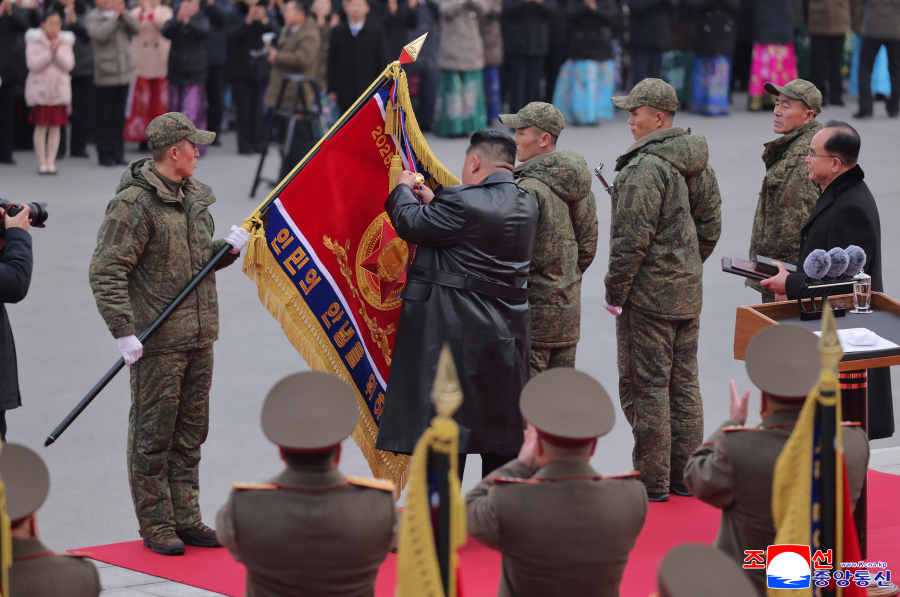
Subsequently, North Korea formalized military assistance to Russia, including artillery munitions and missile systems, and reportedly deployed over 12,000 personnel. Rotational deployments have allowed North Korean forces to gain combat experience.
In exchange, Pyongyang is believed to be receiving advanced military technologies, including those related to nuclear-powered submarines and satellite systems. These developments underscore that the Russia–Ukraine war has implications extending beyond European security, directly affecting the strategic balance on the Korean Peninsula.
Importantly, the conclusion of hostilities in Ukraine would not automatically normalize relations between Seoul and Moscow. South Korea must calibrate its Russia policy in light of deepening North Korea–Russia strategic alignment.
Two principal considerations emerge:
Sanctions and Economic Engagement.
Should the war conclude and international sanctions on Russia be eased, opportunities may arise for resuming energy and economic cooperation. Any such engagement must proceed in parallel with the broader sanctions framework and align with South Korea’s alliance commitments.
Military Technology Transfers.
The potential transfer of advanced military technologies from Russia to North Korea poses a significant security risk. Seoul should leverage prospective economic cooperation to dissuade Moscow from such transfers. Preventing qualitative enhancements to North Korea’s strategic capabilities must remain a central priority.
Finally, pragmatic diplomacy with Russia will require improvement in U.S.–Russia relations. The diplomatic space that may open following the war’s conclusion could generate both opportunities and new security burdens, depending on the evolution of Moscow–Pyongyang ties.
In this context, advancing the Korean Peninsula Peace Initiative necessitates a balanced approach: sustaining the U.S.–ROK alliance, cautiously reengaging Russia, and ensuring that evolving geopolitical realignments do not erode deterrence or regional stability.
-
PREV [Feature Article]
-
NEXT [Current Affairs Analysis]