

Resumption of North Korea–China Economic Cooperation and New Opportunities for Inter-Korean Relations

So-yeon Kim
Director and Principal Research Fellow
China and Korean Peninsula Center
Sungkyun Institute of China Studies
North Korea’s Strategic Watch and the Resumption of China–North Korea Cooperation
Amid an evolving multipolar international order marked by intensifying great-power competition, North Korea appears to be positioning itself as a strategic asset within this competitive landscape in order to enhance its bargaining leverage. Pyongyang perceives that the effectiveness of sanctions imposed on the country has weakened considerably compared with earlier periods, and that it has partially mitigated its diplomatic and economic constraints through expanded cooperation with Russia and China.
As a result, the regime sees little immediate incentive to rush into negotiations. North Korea’s so-called “strategic wait-and-see” approach should therefore not be interpreted as a complete rejection of dialogue, but rather as a transitional posture aimed at waiting for a more favorable moment to pursue new negotiation opportunities.
Even within the context of this strategic posture, North Korea–China trade—sharply curtailed during the COVID-19 pandemic— has been steadily recovering. The volume of bilateral trade in 2024 is estimated to have reached approximately $2.2 billion, approaching pre-pandemic levels.
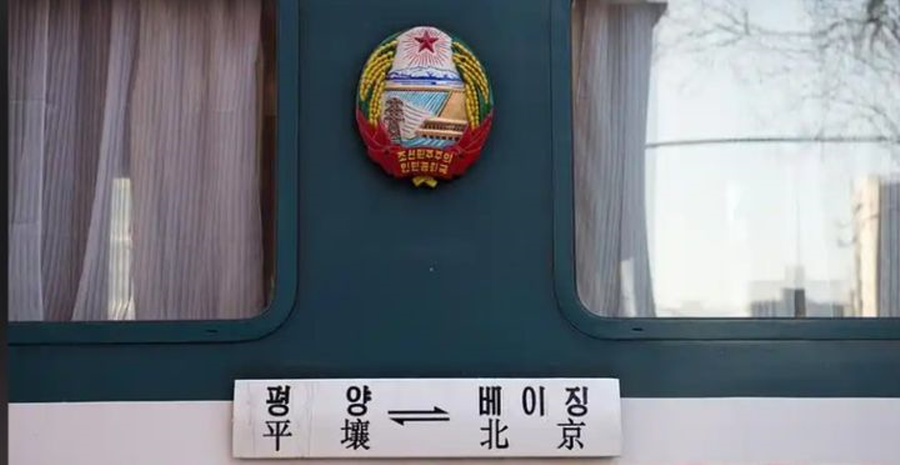
Notably, the scope of cooperation appears to be expanding beyond conventional trade to encompass areas such as technology transfer, industrial upgrading, and personnel exchanges. For instance, recent visits by North Korean delegations from the livestock sector and the Ministry of Education to China suggest Pyongyang’s interest in pursuing industrial technological innovation, the digitalization of educational content, and the localization of artificial intelligence technologies through cooperation with Beijing.
These developments suggest that North Korea is seeking pathways for industrial upgrading and long-term competitiveness even under the constraints of international sanctions.
Although the expansion of North Korea–Russia cooperation following the war in Ukraine has helped sustain the North Korean economy, it remains limited in its ability to restore pre-sanctions economic levels or generating sustained growth. Moreover, the long-term sustainability of North Korea–Russia cooperation after the eventual conclusion of the Russia–Ukraine war remains uncertain.
Even as Pyongyang seeks to expand its strategic maneuvering space by leveraging its relationship with Russia, its relationship with China remains indispensable to regime stability. North Korea’s efforts to pursue technological cooperation and modernization in sectors such as livestock production, education, and artificial intelligence through engagement with China highlights both the limitations of relying solely on the doctrine of self-reliance and the persistence of latent demand for external technology and capital.
The Need to Bring North Korea to the Negotiating Table and to Build a Foundation for Cooperation with China
China represents a cooperation partner that is structurally difficult to replace in supporting a reward structure that North Korea might view as genuinely beneficial in reentering dialogue, as well as in ensuring the credible and sustained implementation of such arrangements. As a permanent member of the United Nations Security Council, China also has the capacity to influence both the enforcement and the potential easing of sanctions.
At the same time, as a major economic actor capable of providing tangible benefits—such as trade, investment, tourism, and humanitarian assistance—China can generate incentives that lead Pyongyang to anticipate a meaningful compensation framework worth negotiating for. Consequently, North Korea may come to view negotiations as a pathway to tangible sanctions relief and economic rewards if China’s participation becomes visible alongside a potential agreement with the United States.
Incorporating China into the initial design and implementation of negotiations in a way that reflects its interests and role could create conditions in which North Korea simultaneously strengthens both its security and economic environment by leveraging relationships with South Korea, the United States, and China through renewed dialogue.
To move North Korea’s current wait-and-see posture toward engagement, the necessary incentives and strategic framework should be embedded within a multilateral structure that includes China. South Korea’s strategy for advancing inter-Korean relations should similarly focus on building a cooperative foundation with China, alongside the continued reinforcement of the ROK–U.S. alliance.
Reconfiguring China’s Role as Co-Manager and Stakeholder
Transforming the resumption of North Korea–China economic cooperation into a catalyst for inter-Korean cooperation represents a key task for South Korean diplomacy. Achieving this objective requires a realistic reconfiguration of China’s role.
Historically, much of the international community’s effort has focused on urging China to rigorously enforce sanctions against North Korea. However, Beijing has increasingly expressed skepticism regarding both the effectiveness and the costs of sanctions, gradually viewing the North Korean nuclear issue not as a problem that can be readily resolved, but as a reality that must be managed.
Under these circumstances, it is important to redefine China’s role—not primarily as an instrument for applying pressure on North Korea, but as a co-manager of regional risks and a stakeholder in stability. China’s primary concern lies less with North Korea’s nuclear capabilities themselves and more with the secondary effects that may arise, including regional security instability, strengthened trilateral security cooperation among South Korea, the United States, and Japan, and the potential rise of public support for nuclear armament in South Korea and Japan.
Accordingly, South Korea and China should seek to develop a shared understanding that the North Korean nuclear issue must at least be managed to prevent further deterioration beyond the current level of threat. Building on this foundation, the two countries could establish a “Korean Peninsula Strategic Dialogue,” a consultative framework dedicated to discussing peninsula issues.
Such a mechanism could facilitate regular discussions on coordinating responses to North Korea’s nuclear program, reviewing crisis management hotlines, expanding cooperation on non-traditional security issues, and establishing joint protocols for potential contingencies.
Practical Approaches to Inter-Korean and North Korea–China Cooperation
Inter-Korean cooperation may become more feasible if framed as complementary to North Korea–China cooperation rather than as a competing initiative. From a practical perspective, several approaches can be considered.
First, a pilot trilateral cooperation model involving South Korea, North Korea, and China could be pursued in humanitarian assistance and livelihood sectors that fall outside the scope of international sanctions.
Issues such as North Korea’s deforestation, limited healthcare infrastructure, and declining agricultural productivity fall within the category of humanitarian assistance exempted from United Nations sanctions. Under a trilateral framework, South Korea could provide financial support, China could supply materials and logistical assistance, and North Korea could identify local needs. Such a model would remain feasible under the current sanctions regime and could serve as an initial step toward rebuilding inter-Korean trust.
The United States also provides sanctions exemptions for humanitarian assistance and projects aimed at improving basic living conditions in North Korea. By incorporating initiatives in areas such as healthcare, food security, and agriculture—alongside non-traditional security cooperation in fields like public health, climate response, and disaster management—into this exemption framework, and by coordinating closely with the United States to avoid the risk of secondary sanctions, it would be possible to establish safe channels for Chinese local governments and businesses to expand cooperative engagement.
Second, tourism cooperation along the North Korea–China border may offer a realistic avenue for expanding trilateral engagement. If the resumption of tourism to Mount Kumgang proves challenging in the near term, the concept of a Northeast Asia tourism belt linking Dandong, Kaesong, Mount Kumgang, and Wonsan could be explored through bilateral consultations between South Korea and China. Under such a model, tourism products in North Korea could be developed primarily for Chinese visitors, while South Korean companies participate in investment and operational management.
North Korea’s gradual opening and increased stability would likely generate positive spillover effects on logistics, energy, and industrial development in China’s northeastern provinces. Moreover, presenting a mid- to long-term vision that integrates railway, port, and energy infrastructure under the broader framework of “North Korean stability – revitalization of Northeast China – peace on the Korean Peninsula” could stimulate interest not only at the central government level but also among local governments and private sector actors.
Constraints and Opportunities for Cooperation
At the same time, it is important to acknowledge the practical constraints surrounding South Korea–China cooperation aimed at bringing North Korea back to the negotiating table and promoting peace and prosperity on the Korean Peninsula.
Although both countries share an interest in maintaining stability on the peninsula, denuclearization itself is not a top strategic priority for China. Consequently, while China’s influence over North Korea may exceed that of most other countries, its willingness to actively exercise that influence for purposes of pressure or persuasion may be more limited than South Korea might hope.
Moreover, North Korea is not entirely subordinate to Chinese influence, and China itself faces what might be described as an “influence dilemma.” For this reason, it is unrealistic to assume that China’s participation alone would directly produce meaningful changes in North Korea’s behavior.
Rather than placing excessive expectations on China, it is more prudent to first establish a strategic consensus and cooperative foundation between South Korea and China. Such a foundation should position China as a key partner both in encouraging North Korea’s return to dialogue and in shaping the broader design of future negotiation frameworks.
-
PREV [Feature Article]
-
NEXT [Feature Article]