

South Korea’s Three-Stage Solution: A Realistic Alternative to the North Korean Nuclear Issue

Dong-soon Park
Professor
Graduate School of Defense Studies
Hansung University
Current Status and Perspectives on the North Korean Nuclear Issue
At the Ninth Congress of the Workers’ Party of Korea, convened in Pyongyang in February 2026, North Korea reaffirmed what it termed its “irreversible status as a nuclear-weapon state” and explicitly articulated a policy of comprehensively expanding and strengthening its nuclear forces. In his Report on the Summary of Work, Chairman Kim Jong-un characterized the national nuclear force as the “backbone” of the state’s war deterrence strategy and outlined plans to further increase the size of the nuclear arsenal while advancing its operational capabilities.
Kim Jong-un further assessed that “drawing an unyielding line so that our nuclear weapons cannot be bargained away under any circumstances constitutes a historic development.” In particular, he highlighted the enactment of the Nuclear Force Policy Law (2022) and its subsequent incorporation into the Constitution following the Eighth Party Congress in 2021 as measures of “the utmost gravity and strategic significance.”
Re-elected as General Secretary, Kim asserted that the country’s defense posture is centered on nuclear capabilities, stating, “Our nuclear forces are now physically capable of robustly deterring any war of aggression, and we have completed all necessary preparations to respond immediately in the event of an attack.”
The principal elements of North Korea’s nuclear posture, as articulated at the Ninth Party Congress—which sets the strategic direction of governance for the next five years—are as follows:
First, North Korea reaffirmed its commitment to strengthening and expanding its nuclear forces. It defined its status as a nuclear-armed state as “irreversible” and expressed confidence in further enhancing its national defense capabilities on that basis.
Pyongyang announced plans to increase the number of nuclear weapons and to continue developing advanced strategic systems, including submarine-launched intercontinental ballistic missiles (ICBMs), in accordance with a forward-looking, phased annual plan for nuclear force development. It also indicated an intention to institutionalize nuclear use beyond sole reliance on the supreme leader’s discretion, suggesting the possible establishment of a “nuclear trigger” mechanism capable of automatic retaliation in response to an external nuclear threat.
Second, North Korea appears to be adopting a differentiated approach toward the United States and South Korea on nuclear-related issues. With respect to the United States, Pyongyang signaled conditional openness to dialogue, suggesting the possibility of more stable relations if Washington acknowledges its status as a nuclear-armed state and abandons what it characterizes as hostile policies.
By contrast, with regard to South Korea, North Korea declared that it would “permanently exclude it from the category of fellow Koreans” and designated it as “the most hostile entity,” thereby effectively foreclosing prospects for improved inter-Korean relations.
In sum, the outcomes of the Ninth Party Congress indicate that North Korea intends to prioritize regime security through its nuclear capabilities while consolidating a dual-track posture of engagement with the United States and confrontation with South Korea. Within this context, the policy orientation of the United States and the range of proposals under consideration in South Korea for addressing the North Korean nuclear issue can be outlined as follows.
U.S. Perception and Approach to the North Korean Nuclear Issue
The Trump administration, which assumed office in 2025, has approached the North Korean nuclear issue under the rubric of “America First,” framing it less as a question of “complete denuclearization” and more as one of “threat management” and “unconditional dialogue.” First, a review of statements and policy positions articulated by President Trump and senior officials in his second administration suggests a consistent underlying recognition that North Korea is a nuclear-armed state.
President Trump has referred to Kim Jong-un as a “nuclear power,” reflecting a pragmatic perspective that seeks to negotiate on the basis of acknowledging North Korea’s nuclear capabilities rather than denying them. Furthermore, in March 2025 at the White House, President Trump remarked, “My relationship with Kim Jong-un was very good, and we’ll see what happens,” signaling the potential resumption of top-down summit diplomacy.
The recently released U.S. National Security Strategy (NSS) and National Defense Strategy (NDS) also exhibit a degree of strategic ambiguity distinct from prior approaches, including the absence of explicit references to North Korea and the omission of any reference to denuclearization. The NSS, issued in December 2025, makes no mention of North Korea and omits the phrase “complete denuclearization of the Korean Peninsula.”
Meanwhile, the NDS, released in January 2026, characterized North Korea’s nuclear and missile capabilities as a “clear and present danger to the U.S. homeland” and identified it as a major threat alongside China, Russia, and Iran.
However, although the NDS explicitly recognized North Korea as a direct military threat to South Korea and Japan, it did not formally codify a U.S. commitment to provide a “nuclear umbrella” (extended deterrence). This may be interpreted as indicating that the United States has either lowered the priority of the North Korean nuclear issue or implicitly acknowledged the limitations of its previous denuclearization policy.
In summary, the White House appears to be maintaining a position of openness to dialogue without preconditions, even as North Korea demands recognition as a nuclear-armed state and the withdrawal of hostile policies. It can be assessed that the Trump administration, in its second term, is treating North Korea’s nuclear status as a de facto reality. On this basis, it is either deprioritizing or effectively setting aside the objective of complete denuclearization, instead pursuing a strategy aimed at managing the nuclear threat through high-level negotiations with Kim Jong-un.
Accordingly, the key issue for South Korea is how to prepare for the possibility that future negotiations—given the difficulty of achieving full denuclearization—may take the form of arms control or “disarmament” arrangements aimed at limiting North Korea’s nuclear capabilities under the assumption that it possesses such weapons.
An Assessment of the Effectiveness of President Lee Jae-myung’s Phased Roadmap
The Lee Jae-myung administration, which took office in June 2026, has advanced its own proposals to address the North Korean nuclear issue and establish a durable peace regime on the Korean Peninsula amid shifting international dynamics and deeply strained inter-Korean relations.
In August 2025, South Korean President Lee Jae-myung formally introduced the “Three-Stage Denuclearization Framework (Freeze–Reduction–Elimination)” in his Liberation Day address, presenting a concrete roadmap for denuclearization on the Korean Peninsula.
This initiative reflects a strategic determination to reopen a pathway to denuclearization through a phased and pragmatic approach, grounded in the assessment that the traditional “comprehensive settlement” model is no longer viable in light of North Korea’s advanced nuclear capabilities. Subsequently, during a summit with President Trump, President Lee articulated a division of roles in which Trump would serve as the “Peacemaker” and Lee as the “Pacemaker,” jointly pursuing denuclearization and the establishment of a peace regime.
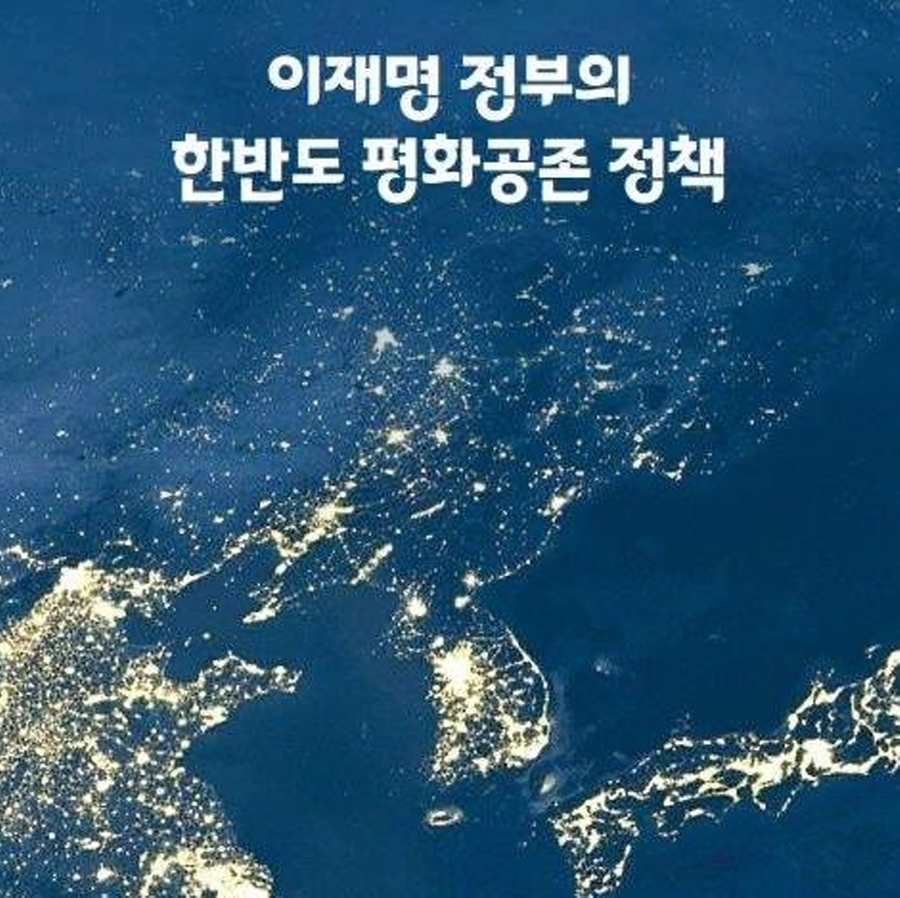
The “Policy for Peaceful Coexistence on the Korean Peninsula,” announced in 2026, further operationalizes this three-stage framework and introduces a new variable into the regional strategic environment. The first stage entails a “freeze” on North Korea’s nuclear and missile development, including a halt to the production of fissile materials and missile testing, as well as acceptance of inspections by the International Atomic Energy Agency (IAEA).
The second stage involves the “reduction” and dismantlement of nuclear capabilities, while the third stage aims at complete denuclearization, defined as the full elimination of nuclear weapons. This phased approach reflects the assessment that, given North Korea’s existing nuclear arsenal, a step-by-step process—first preventing further advancement, then reducing capabilities, and ultimately eliminating them—is more feasible than an all-or-nothing approach.
This framework is rooted in a realist perspective that maintains the ultimate objective of denuclearization while pursuing achievable intermediate goals. Accordingly, the Lee Jae-myung administration’s three-stage approach does not constitute a unilateral concessions to North Korea. Rather, its core lies in a “two-track strategy” that combines robust coordination with the United States with the creation of favorable conditions through inter-Korean dialogue.
A New Approach: The Arduous Journey Toward Peace and Future Prospects
Notwithstanding its strategic rationale, significant obstacles remain to the successful implementation of this plan. The most immediate challenge is North Korea’s dismissive posture. Pyongyang has sharply criticized President Lee Jae-myung’s three-stage denuclearization proposal as a “futile delusion.” Moreover, given its firm position that nuclear weapons constitute the foundation of the state and that its nuclear status is irreversible, North Korea is unlikely to accept even the initial “freeze” stage.
At the same time, the administration must address concerns among domestic conservative constituencies that a first-stage freeze could effectively amount to tacit acceptance of North Korea’s nuclear capabilities. Accordingly, a central policy task for the Lee administration is to clearly establish that the “freeze” phase is an intermediate step toward dismantlement and to demonstrate substantive confidence-building measures that go beyond symbolic reductions in inter-Korean tensions.
The three-stage denuclearization framework advanced by the Lee Jae-myung administration is significant insofar as it represents a pragmatic and credible effort to break the longstanding impasse over North Korea’s nuclear program.
It has the potential to serve as a catalyst for reopening dialogue between the United States and North Korea. The broader vision of “peaceful coexistence,” rooted in the East Asian peace philosophy advocated by Ahn Jung-geun, may provide an initial pathway for prioritizing peace over confrontation and dialogue over mistrust in Northeast Asia, with the Korean Peninsula at its center.
The remaining challenge lies in designing concrete implementation mechanisms for each phase, particularly in developing reciprocal measures capable of eliciting North Korea’s participation in the initial “freeze” stage. The path forward will be complex, as the Lee Jae-myung administration seeks to achieve the objective of a “nuclear-free Korean Peninsula” through a combination of U.S.–ROK alliance coordination and calibrated inter-Korean engagement.
For decades, denuclearization negotiations on the Korean Peninsula have oscillated between a “big deal” approach and a phased framework. North Korea has consistently demanded step-by-step compensation based on its perceived security needs, while the international community has adhered to the principle that no meaningful concessions should be granted in the absence of complete and verifiable dismantlement. This divergence has produced a protracted and deeply entrenched stalemate.
The “Three-Stage Denuclearization Framework” proposed by the Lee Jae-myung administration represents a practical effort to overcome this enduring “dilemma of mistrust.” It neither reflects the idealism of demanding immediate denuclearization nor the defeatism of tacitly accepting North Korea’s nuclear arsenal. Rather, it constitutes a framework of “conditional commitments” that clearly delineates reciprocal obligations and seeks their parallel implementation.
Peace is neither granted unconditionally nor sustained by force alone. The Lee Jae-myung administration’s three-stage denuclearization plan embodies both a principled stance—that South Korea will not act unilaterally in the absence of corresponding measures from North Korea—and a commitment to provide tangible incentives should Pyongyang choose to alter its course.
A durable peace regime on the Korean Peninsula must ultimately serve as a practical foundation for improving the well-being of its people and ensuring long-term stability and opportunity for future generations, rather than resting on purely rhetorical appeals to unification.