

Assessing the South Korea–France Summit
Ph.D. Sang-chun Jung
History of International Relations, University of Paris 1
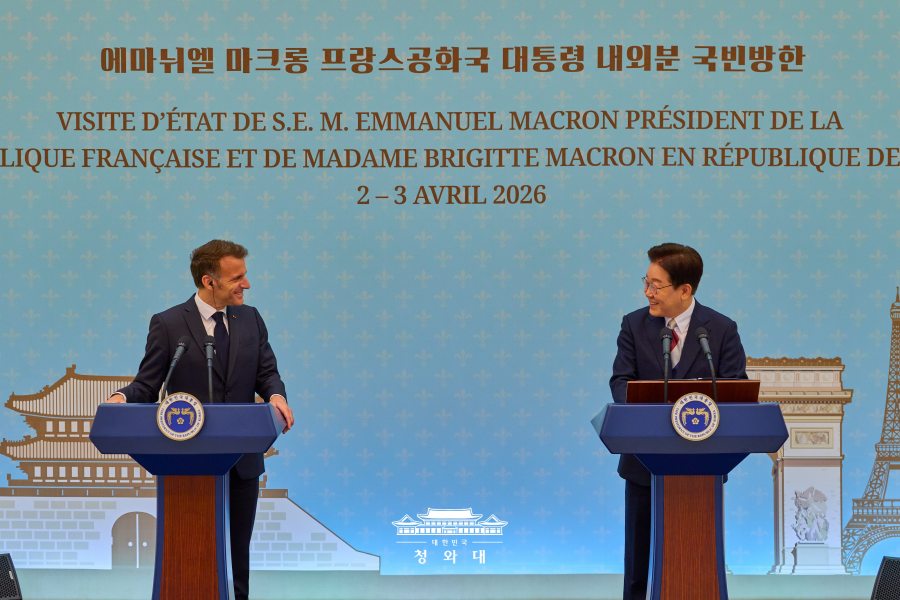
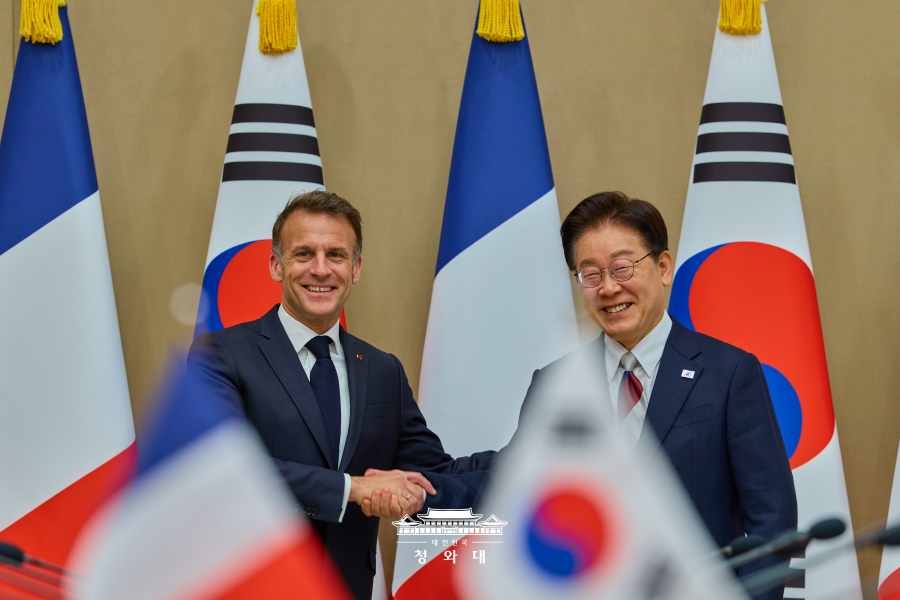
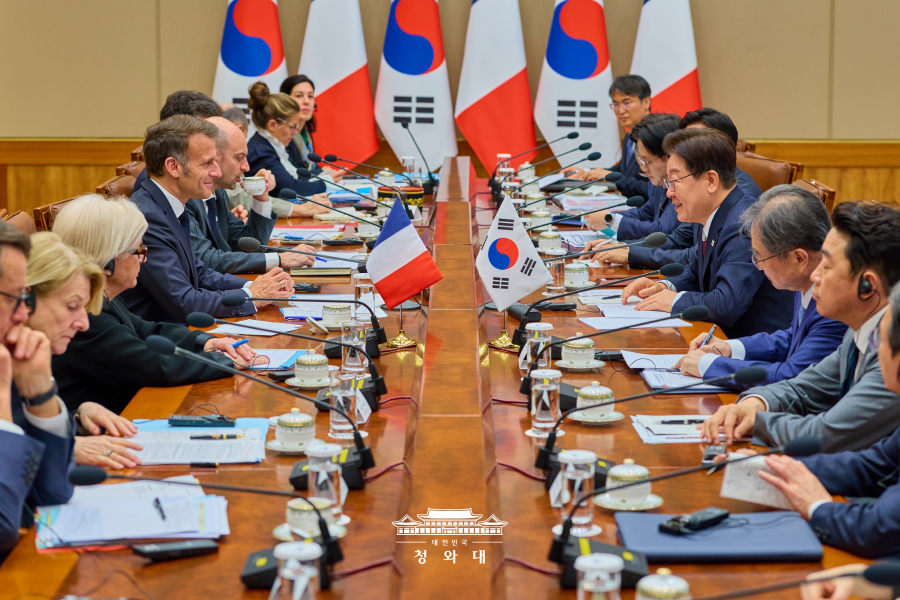
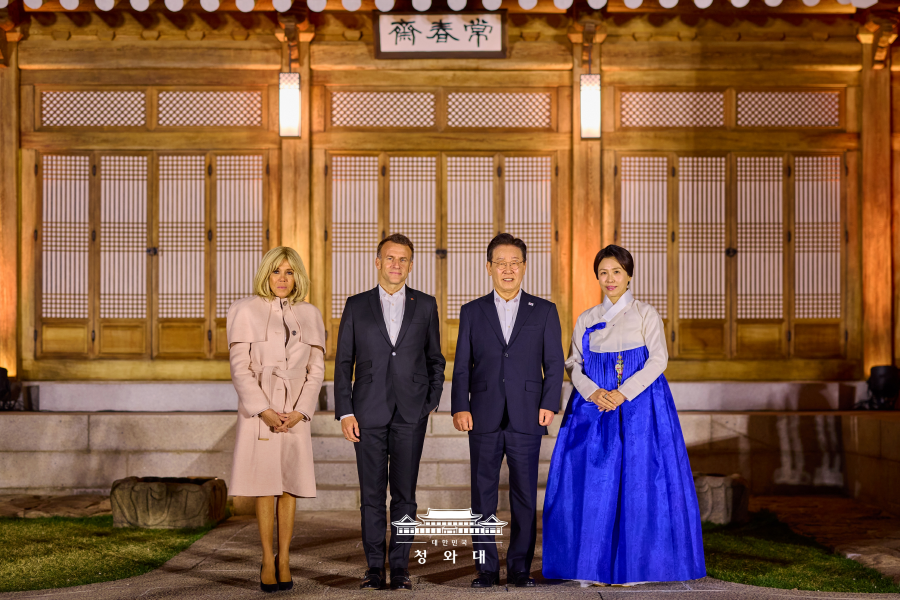
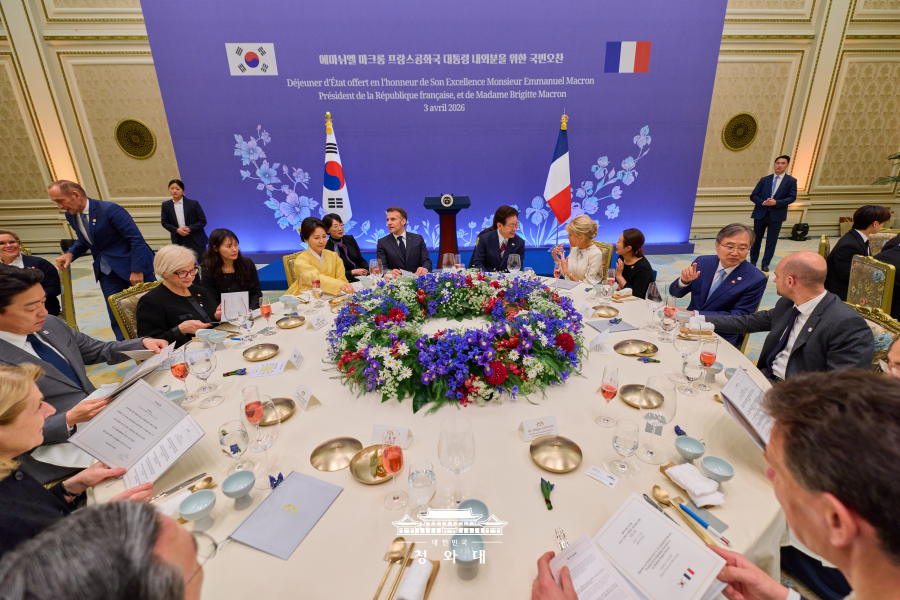
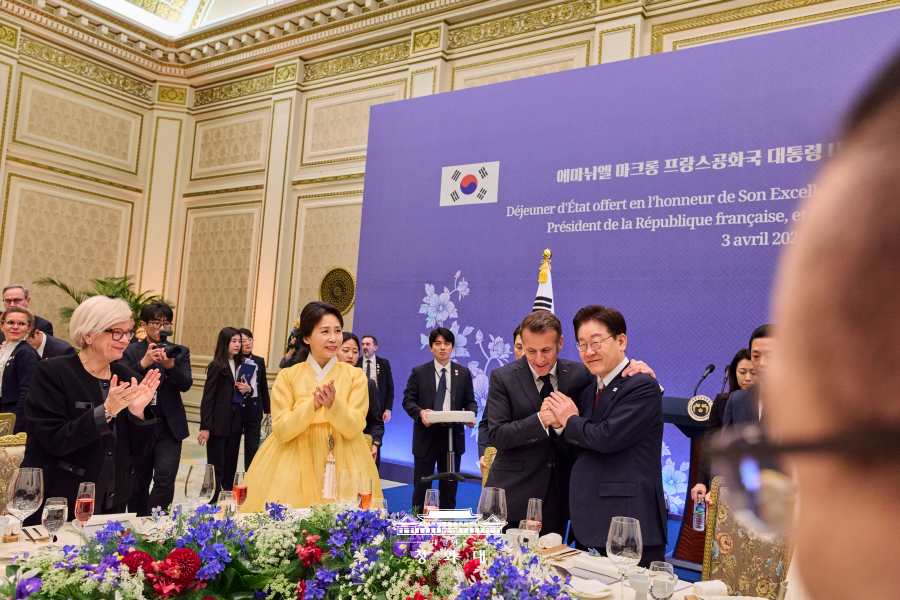
French President Emmanuel Macron visited South Korea at the invitation of President Lee Jae-myung to commemorate the 140th anniversary of bilateral relations between the two countries. The visit carries considerable significance, marking both the first state visit by a European head of state since the inauguration of the Lee Jae-myung administration and the first visit by a French president in 11 years.
The relationship between South Korea and France predates the signing of the Korea–France Treaty in 1886. France had begun dispatching missionaries to Asia as early as the mid-13th century in the broader context of the Crusades.
French Jesuit missionaries arrived in China in the late 17th century, and the earliest point of contact between France and the “Land of the Morning Calm” may be traced to the baptism of Lee Seung-hun (1756–1836) in Beijing in 1784, during a diplomatic mission. Around 1790, the emerging Korean Catholic community sought ecclesiastical support through Bishop Alexandre de Gouvea in Beijing, laying an early foundation for later religious and diplomatic ties between Korea and France.
Subsequently, in 1831, Pope Gregory XVI established the Apostolic Vicariate of Korea, formally entrusting the Paris Foreign Missions Society (la Société des Missions Étrangères de Paris) with missionary responsibility through the appointment of Bishop Barthélemy Bruguière as its first apostolic vicar.
This development marked an early phase of informal Korea–France contact. Another significant informal encounter took place in 1851, when Charles de Montigny, the French consul in Shanghai, met Lee Jeong-hyeon, the magistrate of Naju, in connection with the rescue of the crew of the French whaling ship Narval, which had been wrecked near Bigeumdo Island. Despite the absence of formal diplomatic ties, the two sides cooperated peacefully to secure the safe return of the stranded sailors.
Later, in 1866, the French Far East Fleet launched an expedition against Ganghwa Island under the pretext of responding to the persecution of Catholics, resulting in an armed confrontation between the two sides—an event known as the French expedition to Korea, or Byeongin Yangyo. This incident also marked the first major military clash between the Joseon government and a Western power.
The Joseon government, which had long adhered to a policy of isolation, subsequently concluded treaties of friendship and commerce with Western powers, beginning with the United States in 1882, but established diplomatic relations with France relatively late, in 1886. Owing in part to the legacy of the 1866 expedition, both Korea and France harbored residual mistrust toward one another until the establishment of formal ties.
The issue of permitting the free propagation of Catholicism on the Korean Peninsula constituted one of the principal obstacles during the negotiation of the 1886 treaty. In 1905, Korea’s diplomatic sovereignty was effectively curtailed by Japan through the Eulsa Protection Treaty, and in 1910, bilateral relations between Korea and France were severed following Japan’s annexation of Korea.
Diplomatic relations were subsequently reestablished with the founding of the Republic of Korea in 1948, and the French Fourth Republic formally recognized the new government in February 1949. Although relations were temporarily disrupted by the outbreak of the Korean War in 1950, the two countries developed into close partners following France’s decision to participate in the war as one of the 16 UN member states.
Over the past 140 years, a defining feature of Korea–France relations has been the relatively greater development of economic ties compared to political relations, with a particular emphasis on capital goods exchange and technology transfer rather than conventional trade. Despite steady growth in trade volume, France’s share of South Korea’s total trade has generally remained below 2% in both exports and imports, a pattern that has persisted for much of the postwar period.
For example, according to 2025 trade statistics, France ranks as South Korea’s 25th largest trading partner, and bilateral trade, valued at approximately $15 billion, accounts for only 1.12% of its total trade volume of $1.3412 trillion, indicating a relatively modest scale. Three principal factors help explain the limited scope of bilateral trade relations.
First, as South Korea’s economy and trade volume have expanded, its network of economic partners has diversified significantly. Second, South Korea–France economic relations have been characterized more by large-scale contracts—such as nuclear power plant construction and high-speed rail projects—than by the exchange of general merchandise, resulting in a concentration on capital goods and technology-intensive sectors. Third, France’s commercial presence in Asia has historically been less pronounced than that of other major European economies, while South Korea has likewise faced constraints in expanding its footprint in European markets.
In 1993, the French government launched the Initiative française vers l’Asie, a strategy aimed at strengthening France’s industrial and commercial presence in Asia, particularly in Northeast and Southeast Asia. In February 1997, then-Minister of Finance and Foreign Trade Yves Galland designated eight priority partner countries—South Korea, South Africa, Brazil, China, India, Indonesia, Mexico, and Russia—within this framework.
The Economic and Commercial Section of the French Embassy in South Korea further identified three structural factors underlying the relatively limited scale of bilateral trade: first, the substantial share of energy imports in South Korea’s total imports; second, the exclusion of defense-related transactions from official trade statistics; and third, the omission of financial sector activities—where France maintains a significant presence—from such statistics.
Against this backdrop, it is appropriate to assess the key agenda items of the current Korea–France summit within the broader historical and structural context of bilateral relations. It is also important to recall that, during President Roh Moo-hyun’s state visit to France in December 2004, the two countries defined their relationship as a “comprehensive partnership for the 21st century” (partenariat global pour le XXIe siècle). This concept entails expanding bilateral relations beyond the economic and cultural domains to include political cooperation, thereby promoting a more integrated and multidimensional partnership.
Four priority areas were identified: first, deepening political dialogue on major international issues, including those in the Indo-Pacific region; second, strengthening cooperation in security and defense, particularly with regard to the North Korean nuclear issue; third, enhancing economic ties through investment and innovation; and fourth, expanding cooperation in fields such as science, education, culture, and sports.
To date, most South Korea–France cooperation has been carried out within this overarching framework. The elevation of bilateral relations at this summit from a “Comprehensive Partnership for the 21st Century” to a “Global Strategic Partnership”—the first such upgrade in 22 years—signals a substantial expansion in both the breadth and depth of bilateral cooperation.
French President Emmanuel Macron, who is currently visiting South Korea, previously visited the country in November 2014 as Minister of the Economy, Industry and Digital Affairs to attend the South Korea–France ministerial-level economic dialogue. At the time, he was a 37-year-old rising political figure, noted for his fluency in English and his reform-oriented agenda. As a centrist political newcomer appealing to both the left and the right, he was elected as the 25th President of France in May 2017, less than three years after his visit to Seoul.
The principal agenda items discussed during the 2014 ministerial dialogue included: (1) cooperation in the creative economy and emerging industries, (2) the expansion of trade and investment, including through the South Korea–China and South Korea–EU free trade agreements, and (3) issues of concern to French companies operating in South Korea. At the conclusion of the meeting, the two sides signed a Joint Declaration on South Korea–France cooperation in research and development.
The principal agenda items discussed at this summit included: (1) the expansion of trade and the promotion of investment; (2) cooperation in advanced industries and future-oriented technologies; (3) coordination on international issues, including developments on the Korean Peninsula—particularly the North Korean nuclear issue—as well as broader regional dynamics, the U.S.–Iran conflict, and the war in Ukraine, including security and global governance issues, notably the invitation extended to South Korea to attend the G7 Summit and the Foreign Ministers’ Meeting to be held in France in June 2026; and (4) the expansion of exchanges in science and technology, education, culture, and people-to-people engagement.
The leaders of both countries agreed to raise bilateral trade, which stood at $15 billion last year, to $20 billion by 2030. South Korea’s principal exports to France include ships, automobiles, and pharmaceuticals, while imports from France consist of leather goods and apparel, aerospace products, and uranium. From an investment perspective, the France 2030 Investment Plan constitutes a major area of interest for South Korean firms.
Launched in 2021 under President Macron, this large-scale initiative is designed to address structural weaknesses in France’s industrial base, invest in cutting-edge technologies, and facilitate the ecological transformation of industry, with a total investment envelope of €54 billion (approximately KRW 95 trillion).
The plan is closely aligned with the broader France Relance initiative, which aims both to modernize traditional industries and to promote the emergence of new industrial and technological sectors. Accordingly, trade, investment, and technological cooperation between the two countries are expected to expand further through follow-up measures undertaken by the Korean and French business communities.
The second agenda item—cooperation in advanced industries and emerging technologies—has historically been a central pillar of South Korea–France collaboration. Notable examples include the construction of the Paldang Dam in the 1960s using French capital and expertise; the introduction of Airbus aircraft in the 1970s; the construction of Uljin and Kori Nuclear Power Plant Units 9 and 10 by France’s Framatome in the 1980s; the adoption of the French high-speed rail system (TGV) in the 1990s; and the integration of Eurocopter platforms into South Korea’s helicopter development program in the 2000s. Going forward, bilateral cooperation is expected to concentrate on artificial intelligence, semiconductors, and quantum technologies; space and aviation; defense; decarbonization and energy; and biotechnology.
As a core member of the European Space Agency (ESA) with extensive launch vehicle expertise, France is well positioned to expand cooperation in satellite and launch vehicle technologies through structured collaboration between the Korea Aerospace Administration (KASA) and the French National Centre for Space Studies (CNES). In the field of decarbonization and energy, the planned expansion of collaboration in nuclear power and offshore wind is particularly significant.
France derives over 70% of its electricity from nuclear energy, compared with approximately 30% in South Korea. Looking forward, joint research and development in small modular reactors (SMRs) and hydrogen energy could enable coordinated entry into the global nuclear energy market. According to 2024 data, South Korea imported €710 million worth of uranium from France—a figure likely to grow as SMR deployment expands.
With respect to the third agenda item—coordination on international issues encompassing the Korean Peninsula (particularly the North Korean nuclear program), regional security dynamics, the U.S.–Iran conflict, and the war in Ukraine—South Korea and France demonstrate broad alignment. Both parties maintain that North Korea’s nuclear program is unacceptable, and France, in its capacity as a permanent member of the United Nations Security Council, has consistently advocated for the suspension of North Korea’s nuclear activities and for progress on human rights issues.
These considerations have also contributed to the absence of formal diplomatic relations between France and North Korea. France’s core policy on the North Korean nuclear issue consists of: (1) complete, verifiable, and irreversible denuclearization (CVID); (2) the maintenance and reinforcement of sanctions; and (3) the non-recognition of North Korea as a nuclear-armed state under any circumstances. In pursuing a policy of engagement toward North Korea, the Lee Jae-myung administration will need to operate within this framework while seeking France’s support through a calibrated and flexible approach.
The French government has consistently endorsed South Korea’s policy toward the Korean Peninsula. Regarding the U.S.–Iran conflict and the war in Ukraine, the two countries—whose positions are broadly aligned—agreed to maintain close coordination. In particular, substantive discussions focused on cooperation in energy security and supply chain resilience, both affected by instability in the Middle East, as well as on coordinated responses to broader economic challenges.
Both parties also agreed to cooperate in securing maritime routes through the Strait of Hormuz. Importantly, France has invited South Korea to the G7 Summit and Foreign Ministers’ Meeting scheduled for June 2026. South Korea was likewise invited to last year’s G7 Summit in Canada.
France’s invitation should be seen not merely as a diplomatic formality, but as a signal that it regards South Korea as a partner capable of contributing meaningfully to discussions on global governance. This reflects South Korea’s elevated international standing as a “global pivotal state,” underpinned by its critical role in global supply chains, advanced military capabilities, and position among the world’s ten largest economies.
On the final agenda item—expanding cooperation in science and technology, education, culture, and people-to-people exchanges—both countries discussed measures to institutionalize collaboration in research, development, and innovation. They agreed to continue regular exchanges and researcher support programs through frameworks such as the Korea–France Joint Committee on Science and Technology, the Korea–France Joint Coordination Committee on Nuclear Energy, and the Korea–France Science and Technology Cooperation Program (STAR).
By combining France’s strengths in fundamental science with South Korea’s expertise in applied industrial technologies, bilateral cooperation is expected to generate significant synergies and elevate the scientific and technological capacities of both nations. Historically, French cultural influence predominated in the exchange, but contemporary interactions have become increasingly reciprocal, with Korean cultural exports—including K-pop, K-dramas, and K-beauty—achieving notable success in France.
Currently, approximately 7,000 South Korean students study in France, while around 3,000 French students learn Korean across 32 primary and secondary schools in eight major French cities. In November 2016, South Korea became the first country in Northeast Asia to join the International Organization of La Francophonie (OIF) as an observer. The OIF encompasses roughly 80 member states and represents approximately 274 million French speakers worldwide.
In 2017, Korean was introduced as an elective foreign language in the French baccalauréat, and Korean-language instruction was incorporated into primary and secondary school curricula. Looking forward, exchanges among younger generations are expected to expand further, building on the historical foundations of bilateral ties. To this end, both leaders have reaffirmed their commitment to strengthening educational and cultural cooperation, aiming to usher in an “era of one million people-to-people exchanges.”
The 140th anniversary of diplomatic relations between South Korea and France is marked by the slogan “Creativity, Opportunity, Solidarity,” which captures the essence of bilateral engagement. It highlights innovation and imagination across culture, the arts, and science and technology; the potential for shared growth through cooperation in education, academia, and industry; and a joint commitment to universal values such as peace and prosperity.
This may also be interpreted as a modern reflection of the principles of “peace, friendship, and the protection of life and property” enshrined in Article 1 of the 1886 Korea–France Treaty of Amity and Commerce (Le traité d'amitié et de commerce entre la France et la Corée). Against the backdrop of intensifying U.S.–China strategic competition, both countries—as middle powers—must strengthen their partnership and pursue pragmatic diplomacy to navigate a more complex international environment.
The effective implementation of agreements reached at this summit is expected to consolidate the newly elevated “Global Strategic Partnership” and position South Korea and France as partners capable of jointly shaping the next phase of their bilateral relations.