

Toward Peace on the Korean Peninsula: The Prospects for a Mediating Role in Inter-Korean Communication

Keeyoung Yoon
Adjunct Professor
Hankuk University of Foreign Studies
President Lee Jae-myung’s State Visits to India and Vietnam: Advancing Diplomatic Diversification
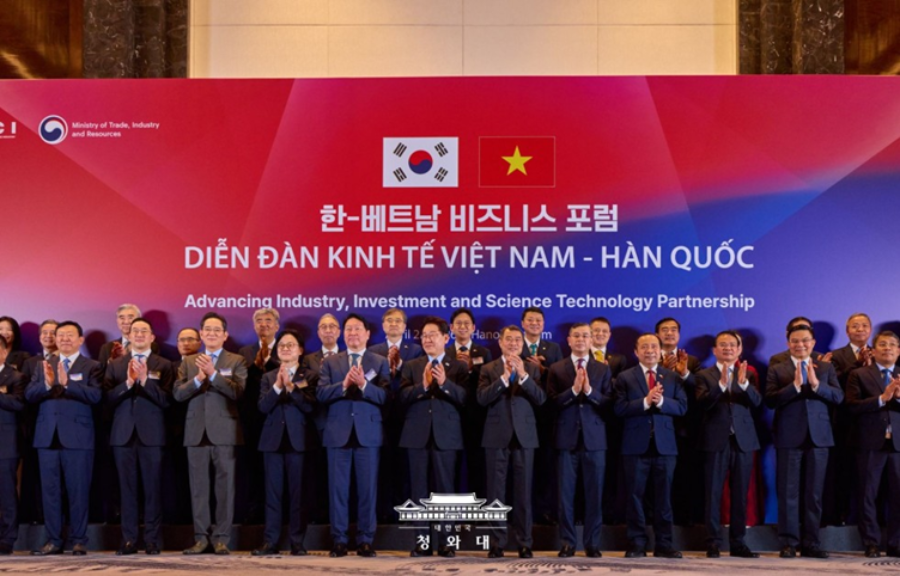
President Lee Jae-myung’s state visits to India and Vietnam from April 19 to 24, 2026, marked a pivotal milestone in South Korea’s foreign policy at a time of sweeping geopoliti-cal transformation.
In India, a summit with Prime Minister Modi produced a joint declaration to resume negoti-ations on upgrading the Korea–India Comprehensive Economic Partnership Agreement (CE-PA), along with more than twenty MOUs and private-sector agreements covering strategic sectors such as artificial intelligence, semiconductors, digital technology, energy, and critical minerals. The two sides also set an ambitious target of $50 billion in annual bilateral trade by 2030—a clear signal that Seoul is seeking to establish India as a third major hub for ex-port and supply chain diversification.
The Vietnam leg of the tour carried its own symbolic weight, as it marked the first state re-ception hosted by Vietnam since Tô Lâm assumed the party leadership. At the summit with General Secretary Tô Lâm, both sides reaffirmed their goal of reaching $150 billion in bilat-eral trade by 2030, while advancing some eighty MOUs, investment agreements, and con-tracts expected to generate approximately $8 billion in export and investment opportuni-ties.
Highlights included a contract involving a consortium led by Hyundai Rotem to supply roll-ing stock for Ho Chi Minh City’s Metro Line 2; collaboration between Korean and Vietnam-ese firms—GS Engineering & Construction, LG CNS, and FPT—in areas such as AI, digital infrastructure, and data centers; and a battery materials plant investment by a POSCO affili-ate. In addition, twelve MOUs in nuclear power, electricity grids, and energy, along with strengthened cooperation on critical mineral supply chains, are expected to broaden the foundation for bilateral energy security.
The significance of these visits extends well beyond economic deliverables. Both leaders discussed regional and international issues, including the Korean Peninsula, and agreed that peace and stability there are essential to the prosperity of the region and the broader inter-national community.
General Secretary Tô Lâm praised Seoul’s willingness to re-engage in dialogue and reaffirmed his commitment to supporting peace and stability on the Peninsu-la. This can be interpreted as reflecting South Korea’s broader strategic calculus: to weave middle powers such as India and Vietnam into its approach to the Peninsula’s security equa-tion.
The Absence of Direct Communication and the Inevitability of Third-Party Mediation
The paralysis of official inter-Korean dialogue channels and the highest level of military hos-tility since the armistice stand in sharp contrast to Seoul’s active diplomatic expansion abroad. The Lee Jae-myung administration’s North Korea policy is structured as a phased approach that prioritizes engagement through exchanges, the normalization of relations, and, ultimately, denuclearization.
Yet Pyongyang continues to define South Korea as “the most hostile state” and has shown little interest in inter-Korean dialogue. Declarations alone cannot alter this reality. South Korea must therefore pursue the reopening of direct dia-logue while simultaneously exploring the use of third countries that maintain credible chan-nels with Pyongyang.
Vietnam as Mediator: Historical Trajectory and Layered Motivations
Vietnam’s support for Korean Peninsula denuclearization and dialogue is not a product of the 2026 summit alone; rather, it has deepened steadily since President Roh Moo-hyun’s visit in 2004. The 2009 summit under President Lee Myung-bak elevated bilateral ties to a strategic cooperative partnership and formally reaffirmed joint support for denuclearization and peace on the Peninsula—an indirect contribution to inter-Korean stability.
During the Park Geun-hye administration, Vietnam continued to express official support for denuclearization and dialogue. The 2019 Hanoi summit between the United States and North Korea further reinforced Hanoi’s image as a country capable of hosting high-stakes diplomatic engagements, building on its accumulated diplomatic capital.
The 2026 Lee–Tô Lâm summit can be seen as an effort to consolidate a forward-looking partnership that integrates Vietnam’s support for denuclearization and peace on the Peninsula with cooperation in energy, supply chains, and advanced technologies.
The Role of Middle-Power Mediators and the Calculus of Self-Interest
Vietnam is not the only middle power seeking to position itself as a facilitator of peace on the Korean Peninsula.
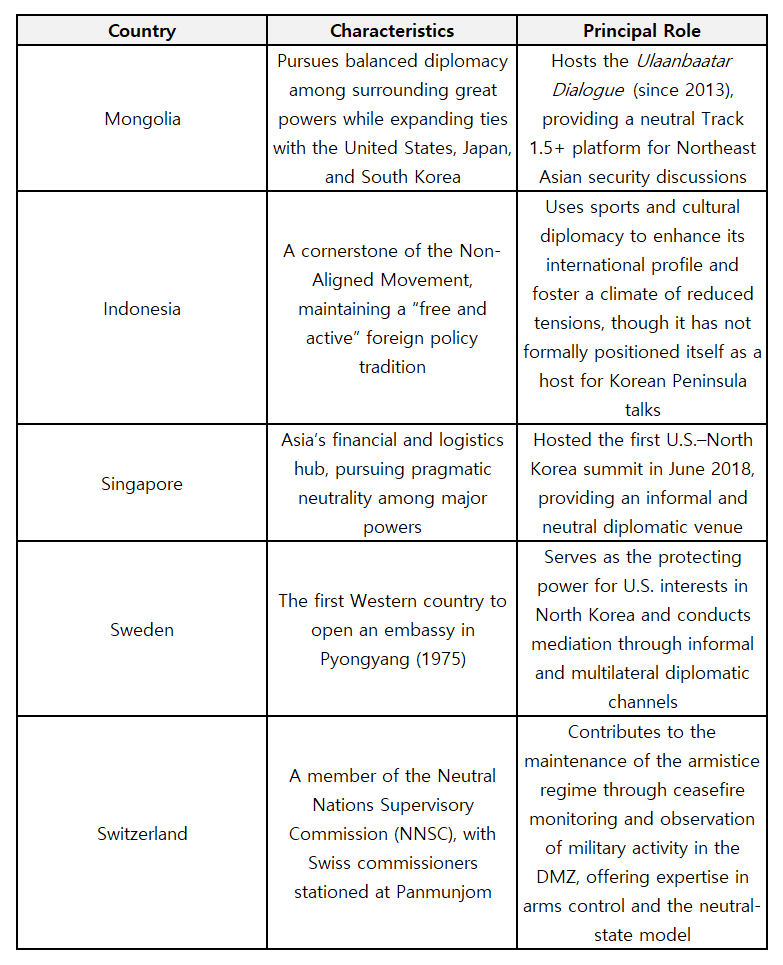
These mediating efforts are driven not by pure altruism but by a sophisticated alignment of national interests. A mediating role allows a country to project its presence on the global stage through diplomatic soft power rather than military might—Singapore’s consolidation of its status as Asia’s neutral hub following the historic 2018 summit offers a clear illustra-tion.
Regional tensions tend to dampen investment sentiment across Southeast Asia, making contributions to peace not only normative but also a form of economic self-preservation. Moreover, should North Korea eventually open, the countries that earned its trust during periods of isolation are likely to secure the earliest economic opportunities—a long-term strategic calculation that continues to shape behavior today.
This logic raises a critical question. If each of these mediators operates its own channels and assets independently, the overall effect is likely to be diffuse and vulnerable to neutrali-zation by great-power intervention.
Vietnam maintains trusted channels with Pyongyang but has limited formal diplomatic lever-age with the West. Sweden possesses an institutional bridge between the West and North Korea but has limited regional influence in Southeast Asia. Mongolia can facilitate multilat-eral dialogue platforms but lacks the capacity to offer meaningful economic incentives. In effect, each country’s strengths correspond closely to the others’ weaknesses.
The logical next step for Seoul, therefore, is to move beyond engaging these mediators individually and instead develop a loose coalition platform—a Korean Peninsula Mediation Network (KPMN)—to bind them together. The KPMN should be understood not as a re-placement for the Six-Party Talks, but as a supplementary mechanism for managing trust channels, hosting functions, technical expertise, and regional legitimacy in a distributed manner when formal negotiations are stalled.
A functional division of labor could be structured as follows: Vietnam and Mongolia facili-tate contact channels with Pyongyang; Sweden and Switzerland provide message transmis-sion and confidence-building expertise; and Singapore and Indonesia furnish the diplomatic infrastructure and legitimacy required to host formal talks.
Anchoring the Coalition: South Korea’s Role and Strategic Design Principles
For this coalition platform to function, South Korea must step forward not merely as its beneficiary, but as its architect and coordinator. Three principles should guide this effort.
First, institutionalize mutual benefit. Mediators will join the coalition not out of solidarity alone, but when their interests are structurally secured. Seoul should design a form of pack-age diplomacy that explicitly links each country’s stake—Vietnam’s energy and infrastructure cooperation, Mongolia’s development assistance, Indonesia’s investment attraction, and Singapore’s financial hub ambitions—to its mediating role. The clearer the returns, the more durable the coalition.
Second, manage great-power inclusion rather than exclusion. The network should not be framed as a structure hostile to the United States or China, but rather as one designed to function alongside their direct involvement while drawing their consent into the final stages of any agreement. The collective credibility of the mediators should increase the political cost for any great power seeking to exercise a veto—“great-power management through minilateral solidarity” captures this core concept.
Third, institutionalize Track 1.5 dialogue. Given the closure of official government-to-government channels, semi-official (Track 1.5) and civil society (Track 2) exchanges among network members should be regularized. Multilateral workshops—rotating among participating countries and bringing together former diplomats, think tanks, and academics—should be established, with their outputs feeding into official diplomatic channels through a structured, deliberate pipeline.
South Korea’s “Conditional Autonomy” and Its Limits
This was exposed during the state visits by the controversy surrounding Defense Minister Jeong Dong-young’s remarks on the Kusong nuclear facility. When he referenced the exist-ence of a weapons-grade highly enriched uranium (HEU) facility in North Pyongan Province before the National Assembly, the United States responded by immediately restricting cer-tain intelligence sharing on North Korea. On the surface, the issue concerned an intelligence disclosure and a failure to consult Washington in advance. However, reducing the episode to a diplomatic gaffe risks obscuring the deeper structural signals it carries.
One interpretation is that it reflects Washington’s latent discomfort with the prospect of South Korea’s wartime operational control (OPCON) transfer. Another is that it marks a turn-ing point in which the alliance is shifting toward a more transactional relationship amid broader changes in the international order. This is not the first instance of U.S. restrictions on intelligence access, but it should be understood in the context of America’s evolving global strategy.
The responses available to South Korea include leveraging its distinctive strengths, concentrating internal capacity to respond consistently to external pressures, and making strategic use of an emerging multipolar international order. Minilateral approaches such as the KPMN represent one avenue within this broader repertoire.
Policy Counsel: Applying Systems Thinking and Strategic Wargaming
For a strategy such as the KPMN to succeed in a complex multipolar order, strategic au-tonomy in North Korea policy must be secured—and that requires a fundamental innova-tion in how policy is formulated.
First, map feedback loops through systems thinking. U.S. sanctions trigger North Korean provocations; provocations intensify pressure within the U.S.–Japan–South Korea trilateral framework; and that pressure, in turn, encourages Chinese workarounds that further freeze inter-Korean relations.
In this web of complex interactions, intuition-driven policymaking risks producing unintended consequences. Applying causal loop diagram (CLD) methodolo-gy to model the interconnections among variables across multiple actors enables policy-makers to identify leverage points and anticipate side effects.
Second, validate scenarios through strategic wargaming. Tabletop exercises and matrix games involving the Ministry of Foreign Affairs, the Ministry of Unification, the Ministry of National Defense, and the intelligence community should be institutionalized as a perma-nent feature of policy planning.
Participants would be assigned roles such as North Korea (adversary), the United States (ally), and mediators including Vietnam and Sweden, and then tasked with simulating specific crisis scenarios—for example: “If South Korea seeks to bring both sides to a negotiating table in Hanoi through the Vietnam channel, what concessions would the United States and China demand?” Such exercises provide one of the most rig-orous means of overcoming groupthink and identifying structural constraints across multi-ple dimensions.
Becoming an Active Rule-Maker in the International Order
President Lee Jae-myung’s visits to India and Vietnam were more than sales diplomacy. They marked a historic step in which South Korea meaningfully expanded its strategic au-tonomy through partnerships with rising powers amid the turbulent currents of a multipolar-izing world. That achievement must now be given purpose—channeled toward dismantling the Cold War structure on the Korean Peninsula.
Even as the foundations of intelligence and security are strengthened, South Korea must boldly extend its diplomatic maneuverability—long constrained by great-power depend-ence—into the domain of Korean Peninsula affairs.
Drawing on Vietnam’s neutral platform and the lived example of Đổi Mới as strategic reference points, Seoul should seek to bring North Korea to the dialogue table, while embedding the analytical tools of systems thinking and strategic wargaming into its national policymaking architecture. This is the only path by which the Republic of Korea, in an age of uncertainty, can lead efforts for peace on the Ko-rean Peninsula as an active rule-maker rather than a passive object of external decisions.
Lasting peace on the Korean Peninsula will not be achieved through short-term crisis man-agement. Translating these ideas into concrete outcomes—reading new possibilities in a multipolar order from a limited opening such as Vietnam, designing a coalition of media-tors, and steadily building internal capacity—requires the strategic patience of a long breath. With long-term vision, significant progress becomes possible. The most urgently needed virtue in South Korean diplomacy today is precisely such an expansive, far-sighted perspective.
-
PREV [Feature Article]
-
NEXT [Feature Article]