

The Historical Significance of the June 15 Joint Declaration
and the Lee Jae-myung Administration’s Efforts
to Promote Peace on the Korean Peninsula

Seunghyun Lee
Visiting Professor
Institute for Unification Studies, Yonsei University
For the South Korean people, June is a month marked by profound historical wounds. The designation of Memorial Day as a national holiday in June—a month most closely associated with the outbreak of the Korean War on June 25—can be understood as a national effort to honor the patriotic martyrs and fallen heroes who sacrificed their lives during times of national crisis, including the Korean War, while also helping to heal the nation’s collective historical trauma.
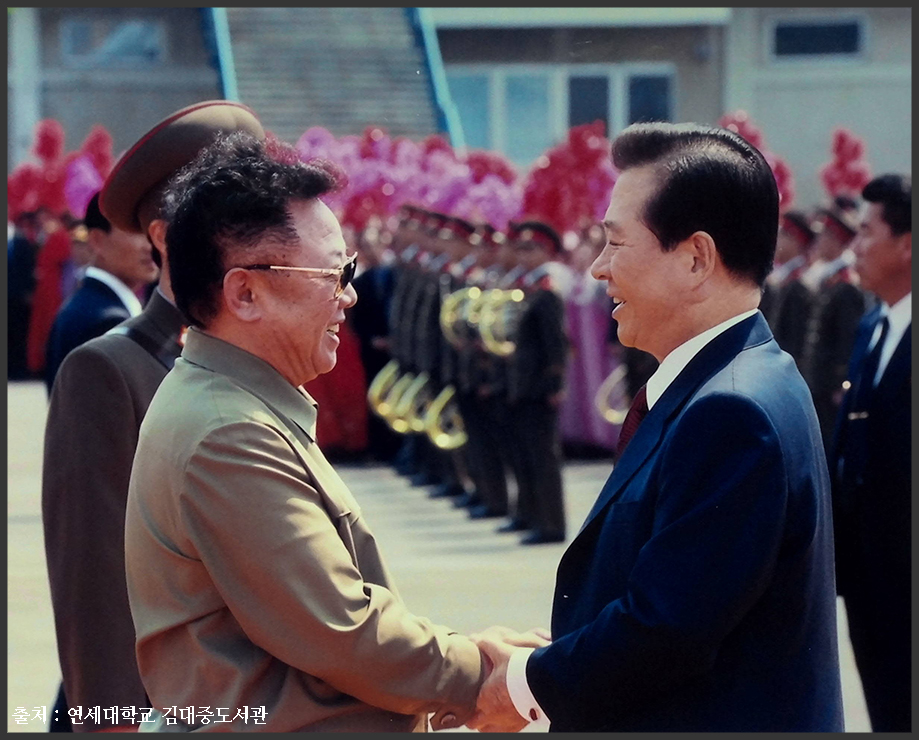
Against this backdrop, the June 15 Joint Declaration, announced at the dawn of the twenty-first century, represented the first occasion in the 55 years since the division of the Korean Peninsula that the principal parties to the Korean War—North and South Korea—met directly and jointly declared their commitment to reconciliation and cooperation before both domestic and international audiences. Its significance is particularly profound because it marked the first historic summit meeting between the leaders of the two Koreas.
Twenty-six years have passed since the adoption of the June 15 Joint Declaration, providing more a substantial historical record from which to assess its significance and impact. Although this may be difficult to imagine from today’s perspective—particularly in light of North Korea’s adoption of the “two hostile states” doctrine—the declaration served as the foundation for major inter-Korean cooperation initiatives, including the Mount Geumgang tourism project and the Gaeseong Industrial Complex. In this regard, it can be argued that the declaration made a significant contribution to the promotion of peace and stability on the Korean Peninsula.
Over the past 26 years, the framework established by the June 15 Joint Declaration has generated a rich body of inter-Korean experiences, ranging from the “visitor certificate” system used in the Mount Geumgang tourism program to the passport presentation procedures implemented during exchanges involving North Korea’s Naegohyang (“My Hometown”) Women’s Football Club. The fundamental spirit of the June 15 Joint Declaration lies in building upon these accumulated experiences and using them as a foundation for generating new momentum and shaping future change.
Must North and South Korea remain two hostile states, as characterized by Chairman Kim Jong-un? Following the June 15 Joint Declaration, the two Koreas entered a period of engagement during which they cooperated as partners in the pursuit of national reunification and the promotion of peace on the Korean Peninsula. This process culminated in a series of landmark agreements, including the October 4 Declaration, the April 27 Panmunjom Declaration, and the September 19 Pyongyang Joint Declaration, each of which built upon the foundation laid by the June 15 Joint Declaration.
Following the collapse of the U.S.–North Korea summit process, however, North Korea fundamentally recalibrated its policy toward South Korea. It erected both physical and psychological barriers between the two Koreas and amended its constitution to incorporate territorial provisions, thereby formally asserting—to domestic and international audiences alike—that it is a sovereign state separate from the Republic of Korea.
In 2026, confronted with this reality, South Korea is compelled to reconsider how peace can be established on the Korean Peninsula and how inter-Korean relations might be restored. Is there any viable alternative to accepting North Korea’s official position and allowing the two Koreas to coexist simply as neighboring states divided by a border—and, more specifically, as hostile neighbors?
If no immediate alternative is available, the fundamental orientation of the current administration’s policy may be understood as a commitment to creating such an alternative for the future and preserving or restoring it whenever it is disrupted. That alternative is a pathway to peace between the two Koreas, one that may reasonably be regarded as an aspiration shared by the Korean people as a whole.
South Korea must address the challenge of establishing peace on the Korean Peninsula from multiple perspectives and formulate practical policy alternatives. First, it is essential to consider the broader international environment. Armed conflicts continue to persist across various regions of the world. The Russia–Ukraine war and the conflict involving the United States, Israel, and Iran have underscored the immense and often incalculable human costs of war and geopolitical confrontation.
Should the “two hostile states” doctrine become the prevailing framework governing inter-Korean relations and tensions continue to intensify, the potential consequences of such confrontation are not difficult to anticipate. To envision a future for the Korean Peninsula founded on anything other than peace would risk imposing profound suffering on future generations of Koreans.
Second, both challenges and opportunities exist at the East Asian regional level. Despite North Korea’s adoption of the “two hostile states” doctrine, South Korea must continue pursuing peace on the Korean Peninsula by cultivating stable and cooperative relations with the region’s major powers, including the United States, China, Japan, and Russia. The highest priority should be the strengthening of the ROK–U.S. alliance and the maintenance of close strategic cooperation with Japan.
At the same time, South Korea should pursue a balanced and pragmatic policy toward China in order to preserve strategic equilibrium. With respect to Russia, Seoul should seek to preserve opportunities for future economic cooperation and prepare for the eventual resumption of engagement with the Russian market following the end of the Russia–Ukraine war. More broadly, efforts should be directed toward preventing the entrenchment of a “new Cold War” order in East Asia characterized by the polarization of a U.S.–Japan–South Korea grouping on one side and a North Korea–China–Russia grouping on the other.
Third, both challenges and opportunities exist at the level of the Korean Peninsula itself. In pursuit of peace, the Lee Jae-myung administration has established “a peaceful two-state relationship oriented toward eventual reunification” as the minimum framework for managing inter-Korean relations. It has further articulated a set of guiding principles, including respect for the North Korean regime, a commitment not to pursue absorption-based reunification, and a pledge to refrain from hostile actions.
Together, these principles are intended to maintain peace and stability on the Korean Peninsula. This approach may be understood as a pragmatic strategy that recognizes reunification as a long-term objective while placing greater emphasis on the preservation of peace and stability than on the pursuit of reunification at the risk of provoking conflict.
The restoration of inter-Korean relations constitutes the first step toward preventing conflict and reducing tensions on the Korean Peninsula, and the fundamental spirit guiding this endeavor is embodied in the June 15 Joint Declaration. At its core, the declaration affirms the principle of peaceful coexistence between the two Koreas.
The two Koreas have experienced decades of antagonistic relations. Nevertheless, successive South Korean governments have consistently sought to move beyond a state of unmitigated hostility and toward a relationship characterized by the coexistence of both hostile and non-hostile elements. Notably, the two Koreas have repeatedly demonstrated an ability to achieve significant paradigm shifts toward peaceful coexistence, even amid periods of heightened tension and confrontation.
Historical experience demonstrates that periods of heightened tension need not preclude meaningful inter-Korean engagement. For example, despite serious incidents such as North Korea’s submarine infiltration operations and the First Battle of Yeonpyeong in 1999, the two Koreas were ultimately able to reach the June 15 Joint Declaration. A similar precedent can be found in the July 4 North–South Joint Statement.
In the late 1960s, North Korea dispatched special operatives, including Kim Shin-jo, to South Korea in an attempt to assassinate President Park Chung-hee. Yet, by the early 1970s, the two Koreas had moved beyond this period of acute confrontation and adopted the July 4 North–South Joint Statement. At that time, inter-Korean relations were no less tense and volatile than they are today, and the peninsula appeared perilously close to military conflict. Nevertheless, the two sides succeeded in reopening dialogue and laying the groundwork for improved relations.
A similar pattern emerged prior to the restoration of inter-Korean relations in the wake of the 2018 PyeongChang Winter Olympics. At the time, the security environment on the Korean Peninsula was highly unstable, and concerns about a potential military confrontation were widespread due to North Korea’s nuclear tests and missile activities. Historical experience also demonstrates that the two Koreas have been capable of overcoming periods of profound hostility.
Following the Rangoon (Aung San) terrorist bombing, for example, the two sides eventually restored relations, leading to the first reunions of separated families. Likewise, they succeeded in creating a new momentum for dialogue that contributed to the conclusion of the Inter-Korean Basic Agreement in the aftermath of the Cold War and the collapse of the socialist bloc. The common thread running through these developments was the shared recognition that the two Koreas must coexist peacefully on the Korean Peninsula.
Against this backdrop, what course is the Lee Jae-myung administration seeking to pursue? Its objective is to transform the current hostile relationship between the two Koreas into a non-hostile one and, ultimately, into a genuinely peaceful relationship. This objective is clearly articulated in the recently published White Paper on Unification. The document emphasizes that the government will not passively accept North Korea’s “two hostile states” doctrine as the defining framework for the future of inter-Korean relations, but will instead work to ensure that a discourse of peace prevails.
The National Community Unification Formula, which provides a framework for the coexistence of the two Koreas, envisions an intermediate stage of inter-Korean confederation in the form of a loose confederative arrangement. The underlying rationale is that mutual recognition, peaceful coexistence, and the restoration of a sense of national community are essential prerequisites for advancing toward such a stage. In this regard, it is worth recalling the foresight embodied in the June 15 Joint Declaration, which recognized the common ground between South Korea’s proposal for a confederation and North Korea’s proposal for a low-level federation.
However, the Lee Jae-myung administration’s commitment to reunification and peace-building should extend beyond these initial efforts. Over the years, a variety of concepts—including “mediator,” “facilitator,” “leader,” “steerer,” and, more recently, “pace-setter”—have been employed to characterize South Korea’s role in promoting peace on the Korean Peninsula.
Although South Korea has urged President Trump to act as a “peacemaker” amid the current impasse in both inter-Korean and U.S.–North Korea relations, lasting progress will ultimately require South Korea itself to assume a more active role in overcoming these challenges. In this respect, Seoul must be prepared not only to support peace-building efforts but also to share responsibility for shaping and sustaining peace on the Korean Peninsula.
-
PREV [Issue Analysis]
-
NEXT [Current Affairs Analysis]