

K-Defense: To the Four Major Powers—Export an “Innovation System,” Not Weapons
— A Major Shift in National Security: Designing K-Defense’s Next Leap Through Asymmetric K-RMA —

Chi-beom Shin
Professor of Military Science Konyang University
Director of External Cooperation Future Society, Inc.
The global defense industry is undergoing a fundamental transformation. The protracted Russia-Ukraine war, the spread of conflicts in the Middle East, strategic competition between the United States and China, and the fragmentation of global supply chains have blurred the boundaries among security, the economy, technology, and industry. Once a specialized sector supporting national security, the defense industry has evolved into a strategic national industry that integrates military power, advanced technology, manufacturing, exports, diplomacy, and supply chains.
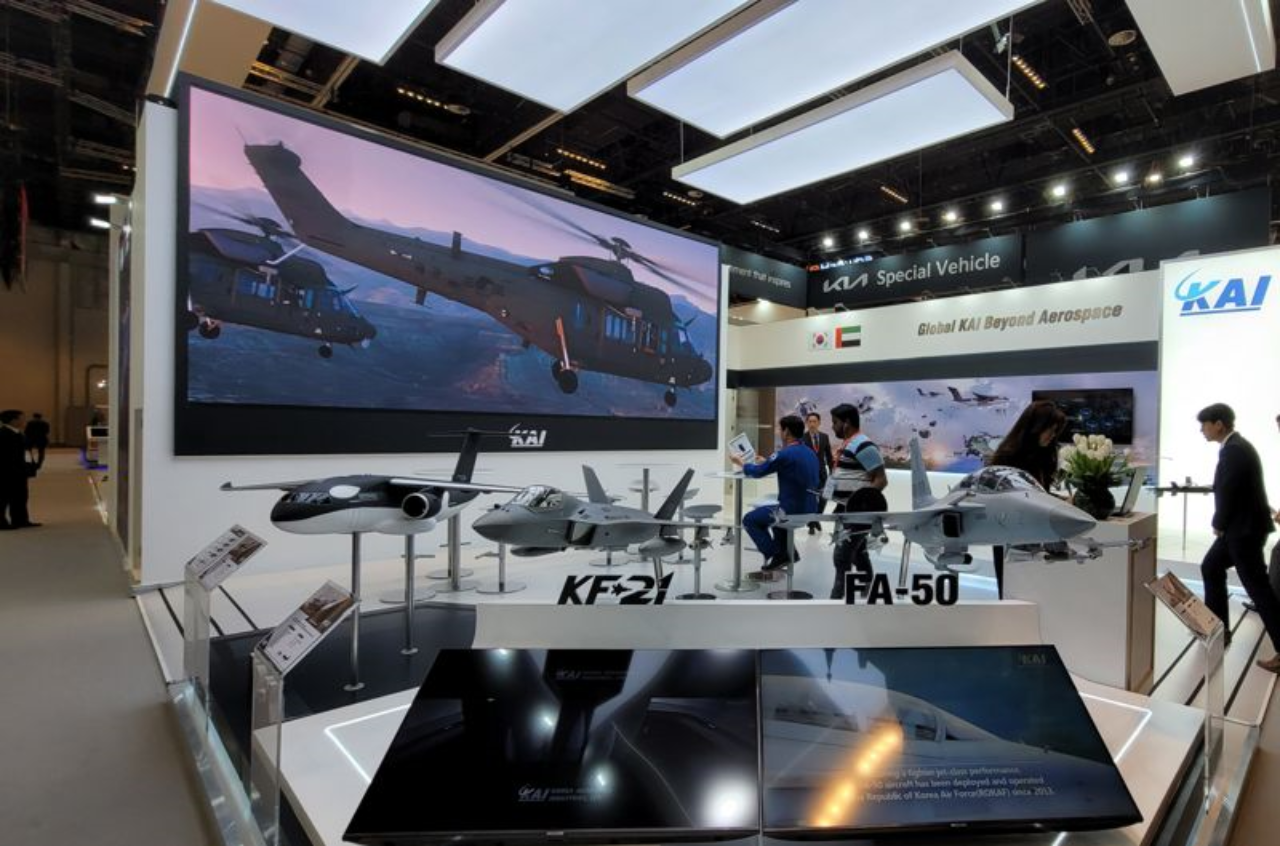
Amid this far-reaching transformation in the security environment, the South Korean defense industry has achieved remarkable results. The K2 main battle tank, K9 self-propelled howitzer, Chunmoo multiple rocket launcher, and FA-50 light attack aircraft have demonstrated their competitiveness in global markets through their performance, competitive pricing, rapid delivery, and follow-on support. Yet current achievements do not guarantee future success. Although K-Defense’s strengths today lie in advanced weapons systems and manufacturing capabilities, its future competitiveness will depend on how quickly lessons from the battlefield can be translated into new technologies, tested, refined, and integrated into operational forces.
This is precisely the point I have consistently emphasized in Fostering the K-Defense Industry Based on Defense Innovation During a Major Security Transition, a book I recently co-authored, as well as in various columns. For the Korean defense industry to join the ranks of the world’s four leading defense powers, it must move beyond being an “industry that produces good weapons” and become a “defense innovation ecosystem that learns from changes in warfare and continuously evolves.”
The Real Strength of a Drone Lies in the System That Evolves
The battlefield in Ukraine has demonstrated that the key to future warfare does not lie in any single weapons system. The combined use of commercial drones, artificial intelligence, satellite communications, electronic warfare, and precision-strike systems has exposed vulnerabilities in expensive tanks, armored vehicles, and air defense systems. At the same time, even drones that have proved effective on the battlefield can rapidly lose some of their utility when adversaries employ jamming, decoys, and counter-drone systems.

This means that a learning system capable of continuously improving drones is more important than the drones themselves. What is needed is a cycle in which combat units identify operational problems, companies and research institutions develop solutions, those solutions are tested in realistic operational environments, and the resulting improvements are fed back to the units. Ultimately, military strength and defense-industry competitiveness depend not only on the performance of individual weapons, but also on the speed of the “observe–learn–test–improve–deploy” cycle.
Ukraine’s BRAVE1 program brings together the military, government, defense contractors, startups, and investors to translate battlefield requirements into technological development and procurement. The U.S. Army’s Project Convergence likewise brings together joint forces, allies, and industry partners to repeatedly validate multi-domain operational concepts, command and control, unmanned systems, and artificial intelligence in realistic environments. Project Convergence Capstone 6, conducted in 2026, involved approximately 10,000 participants who tested more than 90 technologies, concepts, and force structures. The results of these experiments will inform future acquisition decisions and force-structure development.
NATO has also identified the rapid adoption of technology as a key priority. The “Rapid Adoption Action Plan,” adopted in 2025, aims, in principle, to identify, test, and integrate new technologies into member states’ armed forces within 24 months. The message conveyed by these developments is clear.
Supremacy in future warfare will not belong to the country that spends the most time developing the most sophisticated weapons. It will belong to the country that can rapidly experiment with emerging technologies—even imperfect ones—learn from failure, and turn those lessons into improved capabilities.
Combining Asymmetric K-RMA with the K-Defense Industry
South Korea cannot match the scale of defense spending and military resources available to countries such as the United States and China. Rather than competing quantitatively across every domain, South Korea needs an asymmetric approach that identifies areas in which it has advantages and exploits an adversary’s structural vulnerabilities. This is the starting point for what I call “Asymmetric Korean Military Innovation,” or Asymmetric K-RMA.
Asymmetric K-RMA is not simply a concept focused on acquiring asymmetric weapons. It is an innovation strategy designed to maximize strategic effectiveness with limited resources by combining operational concepts that are difficult for an adversary to anticipate, rapid decision-making, cognitive superiority, manned-unmanned teaming (MUM-T), and the military application of advanced civilian technologies. Rather than merely imitating an adversary’s strengths, it seeks to create new forms of competition that are difficult for an adversary to counter by leveraging South Korea’s operational environment and its industrial and technological foundations.
From this perspective, the South Korean defense industry must do more than sell finished platforms. It must offer “asymmetric solutions” that integrate operational concepts, weapons systems, education and training, logistics support, and local production, tailored to the threats, terrain, military structures, and budgets of individual export customers. Representative examples include a “high-low mix” that combines high-cost, cutting-edge systems with low-cost unmanned systems that can be deployed at scale; the coordinated employment of crewed tanks alongside unmanned drones and robots; AI-enabled target identification and command-and-control decision support; and electronic warfare and counter-drone systems.
The competitive unit of the K-Defense industry must also be an ecosystem, rather than an individual company or weapons system. The systems-integration capabilities of major corporations, the innovative technologies of small and medium-sized enterprises and startups, the specialized expertise and foundational research of universities, the military’s operational knowledge, and the government’s institutional and diplomatic support must be integrated into a cohesive whole. Overseas customers are seeking not a single weapon, but a sustainable capability to address their own national security challenges.
For Defense AI, Operational Context Matters More Than Algorithms
A major transformation in defense AI is now underway. The government is also developing defense-specific AI foundation models, standards for dual-use civilian-military drones, civilian-military demonstration systems, and defense-export support systems through interministerial coordination. This is a sound direction. However, simply transferring AI systems whose performance has been demonstrated in the civilian sector to military settings will not, by itself, transform combat capabilities.
On the battlefield, data is often incomplete, scarce, and unreliable because of deception and electronic warfare. Commanders must make decisions by synthesizing not only a target’s location, but also the adversary’s intentions, the missions and capabilities of friendly forces, terrain and weather conditions, rules of engagement, and the commander’s operational intent. Future command-and-control systems must therefore move beyond simply incorporating large language models (LLMs) and retrieval-augmented generation (RAG) toward a “Runtime Operational Ontology” that structures changes in the operational situation in real time.
AI should do more than summarize large volumes of information. It must help commanders answer questions such as: “What has changed just now?” “How does that change affect the operation?” and “Which decision should take priority?” Only then can AI enhance the accuracy and speed of anticipation, decision-making, and preemptive action, while substantially increasing operational tempo. The final judgment and responsibility, however, must remain with human commanders. The core purpose of defense AI is not to replace human decision-making with automation, but to augment human judgment through human-AI collaboration.
The Acquisition System Must Shift from “Purchasing the Right Answer” to “Managing Evolution”
AI, drones, robots, and software evolve far more rapidly than traditional weapons systems. The existing acquisition system—which proceeds from defining required performance specifications through development, testing and evaluation, and mass production—resembles the purchase of a finished “right answer.” By the time a project is completed, however, the technology may already be outdated, or battlefield requirements may have changed.
Expanding rapid-demonstration projects and the use of civilian technology is not enough. A clear path must connect technologies proven effective in pilot operations to actual fielding and follow-on procurement. The system must also formally recognize that software and AI models are not products finalized after a single round of testing and evaluation, but capabilities that require continuous updating.
The linear acquisition process of “requirements submission–development–testing–mass production” must therefore be transformed into a cycle of “identifying operational problems–developing minimum capabilities–real-world experimentation–user evaluation–rapid fielding–continuous improvement.” Rather than defining perfect performance requirements at the outset, this approach would rapidly provide combat units with minimum operational capabilities and iteratively improve them by incorporating feedback from service members and data from field experiments. We must also move away from a culture that treats failure solely as grounds for accountability. Controlled failure is not a waste of resources; it is a learning cost that can help prevent more serious failures on the battlefield.
K-Defense: Joining the Ranks of the Four Leading Global Powers by Building an Innovation Ecosystem, Not by Chasing Export Figures
The sustainability of the K-Defense industry cannot be assessed solely by short-term export figures or the number of contracts awarded. It must also be capable of supporting local production and technical cooperation after an export, as well as providing education and training, logistics support, performance upgrades, and supply-chain stability. Defense exports go beyond business-to-business transactions; they mark the beginning of long-term security cooperation between nations.
Exporting an innovation ecosystem is not merely an abstract slogan. It means conducting joint combat trials with the partner country, establishing a technology cooperation network involving local universities and companies, and continuously improving performance based on operational data. When weapons sales are accompanied by joint trials, specialized training, and follow-on technology development, the K-Defense industry can move beyond the role of a one-time supplier and become a defense innovation partner to the partner country.
More importantly, exports must not be separated from the enhancement of South Korea’s own military capabilities. We must establish a virtuous cycle in which operational data and requests for improvement from overseas users inform domestic capability development, while the results of realistic testing by the South Korean military, in turn, strengthen export competitiveness. The military is the first user and the most rigorous tester; it is also a key institution in ensuring the reliability of K-Defense.
The questions guiding K-Defense policy must now change as well. We must move beyond asking, “How many weapons have we exported?” and instead ask: “How quickly have we identified emerging threats?” “How rapidly have we translated operational requirements into technology?” “Have test results led to actual procurement and exports?” and “How effectively have we shared operational data with our allies?”
The future of the K-Defense industry will not be forged solely within factory walls. It will be realized only when the problem-solving mindset of combat units, the knowledge of universities and research institutions, the experimentation of startups, the manufacturing capabilities of defense companies, and the government’s policies and diplomacy are brought together within a single innovation ecosystem. What South Korea needs is not a longer list of cutting-edge weapons, but a national capacity to learn, experiment, and evolve more rapidly.
The speed of innovation matters more than weapon performance alone. What is stronger than a drone is the experimental system that continuously improves it; what is stronger than AI is the military expertise required to apply it effectively in an operational context. If the Korean defense industry can export this innovation ecosystem, South Korea can move beyond simply manufacturing weapons and become a global defense powerhouse offering solutions for future warfare.