

From Traditional Security to an “Alliance of Technology, Industry, and Security”: Opening a New Horizon for Mutual Prosperity Between South Korea and the United States

Won-mok Choi
Professor
Ewha Womans University Law School
The global economic order is undergoing a fundamental transformation. Global supply chains are being rapidly restructured, while strategic competition between the United States and China is blurring the boundaries between the economy, technology, and security. As competition over advanced technologies—including artificial intelligence (AI), semiconductors, biotechnology, and aerospace—intensifies, technological capacity and industrial competitiveness have become central elements of national security.
In the past, military security was the central pillar of international alliances. Today, however, military cooperation alone is no longer sufficient to ensure an alliance’s long-term sustainability. A nation’s security and resilience are increasingly tied to who controls critical technologies, who can maintain reliable supply chains, and how quickly its economy and industries can recover from a crisis.
Against this backdrop, the ROK-U.S. alliance, which has endured for more than 70 years, is approaching a new turning point. It must evolve into a comprehensive strategic partnership that extends beyond military and security cooperation to encompass industry, technology, supply chains, economic security, and shared democratic values. By combining South Korea’s world-class manufacturing and information and communications technology (ICT) capabilities with the United States’ advanced technologies and innovation ecosystem, the two countries can move beyond conventional cooperation and become partners in shaping the future of the global industrial order.
The Technological Alliance Is Already Taking Shape on the Factory Floor
The transformation of South Korea-U.S. industrial cooperation is not merely an abstract aspiration. New value chains are already emerging as the technologies, capital, and manufacturing capabilities of the two countries converge across key industries.
The AI semiconductor sector is a prominent example. U.S.-based NVIDIA leads the global AI semiconductor market in chip design and computing platforms, while South Korean semiconductor companies have established a competitive position in the manufacturing and mass production of key components, including high-bandwidth memory (HBM). The combination of U.S. core technologies and South Korea’s manufacturing and mass-production expertise is helping build a critical ecosystem for the global AI industry.
The collaboration between SK hynix and NVIDIA is a notable example of this technological alliance. In the high-performance memory sector, which is essential to the performance of AI accelerators, the integration of South Korean manufacturing expertise with U.S. AI design and platform technologies is strengthening the competitiveness of companies in both countries.
The partnership between LG Electronics and NVIDIA is also expanding the convergence of the future mobility and AI industries. As cooperation extends to automotive electronics, autonomous driving, and AI-enabled smart homes, a new industrial ecosystem is taking shape—one that integrates automobiles, home appliances, and software.
The partnership between Naver and NVIDIA illustrates how this technological alliance is expanding into software and platform development. As the capabilities of the two countries converge in AI models, data centers, and cloud infrastructure, cooperation is extending beyond hardware to encompass the broader AI ecosystem.
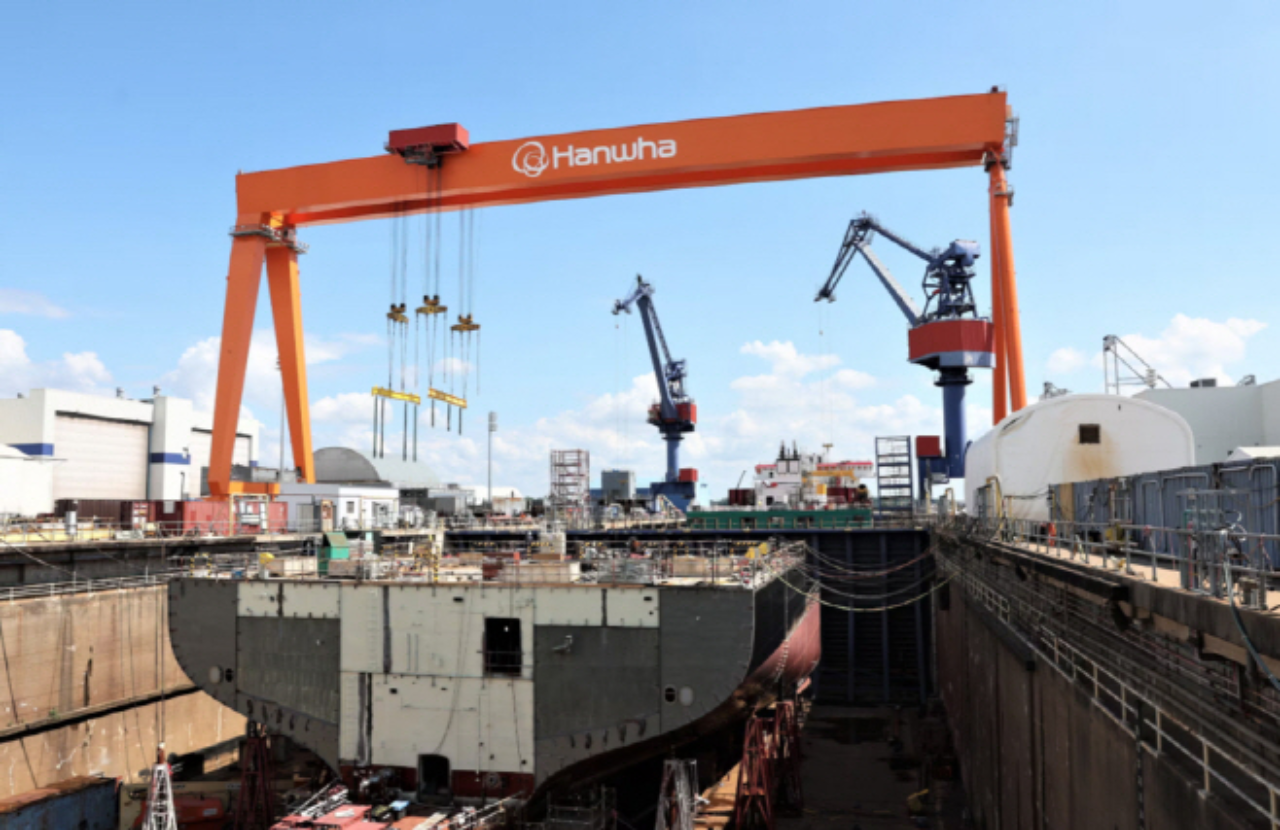
Investments by South Korean companies in the United States should be understood in the same context. The expansion of Korean production facilities in strategic industries such as semiconductors, batteries, and biotechnology can strengthen U.S. manufacturing competitiveness while creating new business opportunities for Korean companies in the world’s largest market. The more effectively the two countries combine their respective strengths, the greater the potential for mutual benefit.
It Is Time to Move Beyond “Factory Relocation” Toward Joint Innovation
As industrial cooperation deepens, however, new challenges are emerging. Above all, the two countries must reduce policy uncertainty and create an environment in which companies can make long-term investment decisions with greater confidence.
U.S. industrial policies, including the Inflation Reduction Act (IRA) and the CHIPS and Science Act, are encouraging investment in the United States and significantly influencing the investment strategies of global companies. The South Korean government should closely assess these shifts in U.S. industrial policy and strengthen sophisticated trade diplomacy that engages both the public and private sectors, so that Korean companies are not subjected to unreasonable discrimination or unexpected disadvantages.
At the same time, South Korea and the United States must deepen their technological cooperation. It is not enough for Korean companies simply to establish factories in the United States and secure access to the U.S. market. The two countries should expand joint research and development (R&D) frameworks involving governments, universities, research institutions, and businesses, and work together to secure leading positions in critical technologies and international standards for emerging industries such as next-generation AI, semiconductors, biotechnology, and aerospace.
Supply-chain cooperation must also be treated as a matter of national security, not merely economic policy. The two countries should reduce excessive dependence on any single country for critical minerals, materials, and components while establishing an integrated supply-chain early-warning system. Institutional mechanisms for rapidly sharing information and coordinating responses to disruptions in global supply chains would provide a practical foundation for the technology alliance.
We Must Evolve into a “Security Alliance” That Protects Democracy
As technology becomes central to national competitiveness, the concept of security is also changing rapidly. Whereas security once focused primarily on military threats crossing national borders, less visible threats—including cyberattacks, information manipulation, deepfakes, and AI-driven interference in public opinion—can now undermine both democratic institutions and national security.
South Korea and the United States, in particular, must develop a common understanding of the risk that external actors could exploit cyberspace and advanced technologies to unlawfully interfere with democratic institutions and electoral processes. This does not mean singling out a particular country or exaggerating the threat. Rather, it means establishing a joint defense framework through which democratic nations can protect institutional trust from unlawful or undue external interference.
To that end, the two countries should strengthen the security of election-related information and communications systems and expand technical cooperation to rapidly detect and analyze deepfakes and AI-generated disinformation. Cooperation between their intelligence and cybersecurity agencies should also be further institutionalized.
The ROK-U.S. alliance must evolve beyond a partnership focused exclusively on responding to military threats and become an alliance that protects shared values, including democracy, the rule of law, and freedom. If technology can be used to threaten democracy, it must also be harnessed to protect it.
The Future of the ROK-U.S. Alliance Depends on People and Knowledge
Ultimately, people will determine the long-term sustainability of a technological alliance. No matter how effective industrial policies or R&D systems may be, the partnership cannot endure without the talent needed to advance it.
In strategic industries such as AI, semiconductors, aerospace, and biotechnology, South Korea and the United States should expand exchanges of master’s and doctoral researchers and develop joint-degree programs. They should also establish a stronger foundation for universities and research institutions in both countries to conduct joint research and enable young researchers to collaborate across borders.
An institutional framework that facilitates the mobility of skilled professionals is equally important. Korean professionals should be able to contribute to advanced industries in the United States, while American technical personnel should be able to participate in South Korea’s R&D ecosystem. To support these objectives, the two countries should continue to pursue improvements to visa procedures for Korean professionals entering the U.S. market, along with appropriate institutional support from the U.S. Congress.
The future of the ROK-U.S. alliance will not be built solely through summit meetings or intergovernmental agreements. The alliance can become deeply rooted across both societies only when researchers, business leaders, students, experts, local governments, and local communities are connected through sustained engagement.
New Diplomacy Through K-Culture and Local Communities
In this regard, exchanges at the private-sector and local-government levels are becoming increasingly important. Expanding cultural exchanges and corporate social responsibility (CSR) initiatives in U.S. states and local communities where Korean companies operate can strengthen the social foundation of South Korea-U.S. relations.
The influence of Korean culture—including K-pop, K-food, and K-content—is already spreading across American society. When this cultural engagement is combined with Korean companies’ CSR activities and community involvement, it can support a new form of public diplomacy that goes beyond cultural exports and helps build trust among local communities.
Cooperation between state and local governments should also be expanded. While diplomacy at the national level coordinates strategic priorities, exchanges among state and local governments and communities can connect people in both countries through their daily lives and workplaces. As these multilayered networks grow, the ROK-U.S. alliance can become more deeply rooted and sustainable.
We Must Prepare for the Next 70 Years of the ROK-U.S. Alliance
The ROK-U.S. alliance now stands at a critical juncture. For more than 70 years, it has focused on deterring war and safeguarding peace and stability on the Korean Peninsula. The alliance of the future must build on that foundation and move beyond preserving peace to creating shared prosperity.
Technology and industry will be central to this effort. By combining U.S. core technologies and innovation capabilities with South Korea’s manufacturing capacity, mass-production expertise, and industrial ecosystem, the two countries can jointly establish new standards in future industries such as AI, semiconductors, batteries, biotechnology, and space. By extending this cooperation to supply-chain security, cybersecurity, and the protection of democracy, the ROK-U.S. alliance can evolve into a genuine “alliance of technology, industry, and security.”
Achieving this transformation will require coordinated efforts: sophisticated trade diplomacy by the government, bold technological innovation by businesses, joint research by universities and research institutions, and active engagement by civil society and local communities. The future of the ROK-U.S. alliance does not depend simply on signing more agreements. It depends on creating a framework in which the two countries combine their strengths, address each other’s vulnerabilities, respond jointly to shared crises, and invest together in common opportunities.
If the ROK-U.S. alliance succeeds in this evolution, the two countries can become more than allies navigating a changing international order. They can become strategic partners that help shape the future. This is a practical and forward-looking path toward preparing the alliance for the next 70 years.