

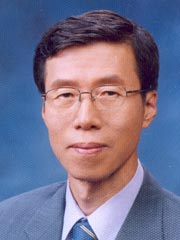
Kim Tae-hoon
Chairman of the North Korean Human Rights Association,
Honorary Chairman of Lawyers for Human Rights and Unification of Korea
April 25th marks the 60th Law Day, yet the Korean Peninsula is currently experiencing a severe human rights crisis due to two laws that violate human rights: South Korea's ban on sending propaganda leaflets to North Korea and North Korea's law on rejecting reactionary ideology and culture.
The United Nations Commission of Inquiry (COI), established ten years ago, recommended that the United Nations Security Council (UNSC) refer the situation in North Korea to the International Criminal Court (ICC) to hold North Korea accountable for its serious human rights abuses, which amount to crimes against humanity. On April 4th, the 52nd session of the United Nations Human Rights Council adopted a North Korean human rights resolution with the same content for the 21st consecutive year.
This year's Human Rights Council resolution was adopted by consensus without a vote. It included a new content that specifically urged the improvement of North Korea's Law on rejecting reactionary ideology and culture, by clearly pointing out the infringement of the right to access information, which is among the human rights violations that North Korean residents are experiencing.
The law on rejecting reactionary ideology and culture, strictly prohibits any content produced outside of North Korea, including South Korea. It was enacted on December 4th, 2020, and was revised on August 19th, 2022. However, the Moon Jae-in government did not take measures to address the issue of the North Korean government's enactment of the law, but instead actively supported it by amending the law on the promotion of South-North Korean relations. In other words, the law criminalizing the launching of propaganda leaflets was passed on the same day.
In response, civil society groups such as the lawyers for human rights and unification of Korea immediately filed a constitutional complaint seeking a declaration of the unconstitutionality of the law criminalizing the launching of propaganda leaflets on December 29, 2020, but the Constitutional Court of Korea has been postponing its decision for three years. The North Korean Human Rights Law, enacted seven years ago, has been trivialized due to the delay in appointing directors to the North Korean Human Rights Foundation. Furthermore, history textbooks under the education policy of the Moon Jae-in government depict Kim Jong-un, who has committed human rights abuses, as a person who revitalized the North Korean economy.
North Korean communism is not simply a political issue. Violence such as torture and mass killings are just a part of it. The true terror of the North Korean regime lies in the collapse of human dignity and the establishment of an unbreakable ideological control. It is a great mistake to think that we have defeated North Korea just because our country has achieved economic success.
North Korea has indoctrinated its ideology through organizations such as the General Federation of Trade Unions of Korea (GFTUK) for decades, and the consequences are evident throughout our society. We must acknowledge the severe human rights violations in North Korea and its failure, while South Korea, declared by the UN 75 years ago as the only legitimate government on the Korean peninsula, has developed into a democratic and economically advanced country. Extraordinary efforts are necessary to address the human rights crises in both North and South Korea.
-
PREV [North Korean Glossary]
-
NEXT [Guest Essays]