

Interview with Former Minister of Unification, Kang In-deok (Part 1) featuring 78th National Liberation Day
- He Talks About National Liberation Day of Korea, Division, and Unification
" 'North Korean residents enjoyed freedom for ten days before the entry of Soviet forces after liberation in August 1945,' he said."
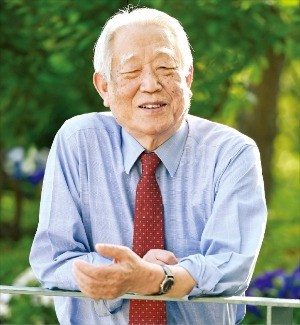
As the Korean Peninsula gears up to celebrate its 78th anniversary of liberation from Japanese colonial rule on August 15th, the divergent paths taken by the two Koreas since National Liberation Day of Korea come into focus. South Korea's remarkable journey toward liberal democracy, industrialization, and democratization has catapulted it into the ranks of the world's top 10 economies. Meanwhile, North Korea's choice of a communist system has led it down a very different road, marked by a three-generation dictatorship, abysmal human rights records, and widespread poverty. With the 78th National Liberation Day upon us, it is an opportune moment to reflect on the significance of liberation and division and explore the possibilities for Korean Peninsula reunification. To gain valuable insights into these issues, an interview was conducted with Kang In-deok, former Minister of Unification, whose expertise on North Korea provides vivid testimonies of history and expert analysis.
Kang In-deok, the former Minister of Unification, now aged 91, witnessed firsthand the events of liberation and division in his hometown, Pyongyang, back in August 1945. With an illustrious career in intelligence and psychological warfare related to North Korea, Kang's unique perspective offers valuable insights into the complexities of the Korean Peninsula. His wealth of experience includes hosting over 5,000 broadcasts on North Korea and serving as the first Minister of Unification under the Kim Dae-jung administration. Currently holding the position of Board Chairman at the Institute for Far Eastern Studies at Kyungnam University, Kang's memoir "Life of a Korean Central Intelligence Agency Analyst" sheds light on his remarkable journey.
On July 21st, we had the opportunity to meet with Kang at the Institute for Far Eastern Studies in Samcheong-dong, Jongno-gu, Seoul.

Kang's recollections of Liberation Day 78 years ago remain vivid. As a first-grade student at Pyongyang the 3rd Middle School, he recalls the moment when the broadcast announced the end of Japanese rule. For Kang's family, it meant the end of a difficult chapter as his imprisoned brothers were released, and the days of forced labor were replaced by a sense of freedom and hope. As a powerful symbol of Japanese colonialism in Pyongyang, Moranbong Shrine was engulfed in flames. Reflecting on those momentous days, Kang emphasized that National Liberation Day of Korea held profound significance, both for his family and the entire nation.
Kang described how the residents of Pyongyang experienced genuine freedom for ten days from August 15, 1945, until the arrival of Soviet forces on the 25th. In the aftermath of liberation, national leader Cho Man-sik took the initiative to establish the Pyongyang Provincial Preparatory Committee for Founding the Nation, attracting the participation of intellectuals and young individuals. As a student at Pyongyang 3rd Middle School during that time, Kang actively engaged in public safety activities guided by Cho Man-sik. For those ten days, nationalist forces held control over Pyongyang, instilling hope for a new beginning.
However, the situation took a sharp turn with the entrance of the Soviet 25th Army on August 25. Backed by the Soviet Army, communist forces swiftly rose to power, and their activities took on a full-fledged form. Subsequently, looting and upheaval ensued as Japanese residents were arrested and transported to Siberia, while some were coerced into assisting with moving looted goods. In the following months, Kim Il-sung returned to Pyongyang, leading to the establishment of the North Korean Workers' Party in October and the Moscow 3rd Conference. The December Trustee Government Movement marked a turning point, leading to the oppression of Cho Man-sik, nationalist forces, capitalists, and Christian communities.
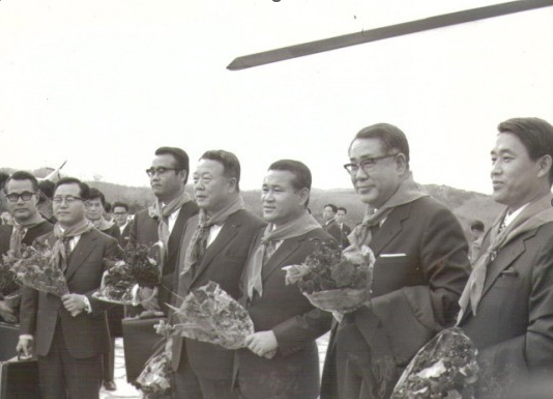
South-North Coordinating Committee meeting in Pyongyang, November 3, 1972 – from right: Kang In-deok, Choi Kyu-hah, Lee Hu-rak, and Chang Ki-young – Photo by Kang In-deok)"
Those who survived, including capitalists, nationalist forces, and Christians, fled to the South. Kang, said, "The freedom of the people in Pyongyang lasted only ten days." He mentioned that North Koreans have never experienced true liberal democracy under the three-generation dictatorship of Kim Il-sung, Kim Jong-il, and Kim Jong-un.
In 1950, during the Korean War, Kang followed the UN forces as they entered Pyongyang. Many years later, in 1972, while working for the Central Intelligence Agency, he returned to Pyongyang to participate in inter-Korean talks. It was during this visit that he received the heartbreaking news of his parents' passing in 1962 and 1963. Kang also shared a story about encountering Kim Il-sung during his visit to Pyongyang. On that occasion, Kim Il-sung inquired if there were any individuals from Pyongyang among the South Korean delegation. It was Lee Hu-rak, the head of the South Korean delegation and the intelligence chief, who introduced Kang In-deok as one of those hailing from Pyongyang.
Kang, who has dedicated his entire life to analyzing North Korean information and engaging in psychological warfare, strongly criticized the nature of North Korea's three-generation dictatorship. He described it as a one-man hereditary system centered around the 'Juche idea,' which he likened to a totalitarian slave mentality. According to Kang, as long as North Korea adheres to the 'Juche idea,' it will inevitably maintain a hostile stance towards South Korea, and there would be little chance for any significant change within the country. Drawing comparisons with historical examples, Kang pointed out how China underwent a shift in direction after Mao Zedong's death, when Deng Xiaoping introduced new policies. Similarly, the Soviet Union experienced changes under Nikita Khrushchev, who advocated coexistence and peaceful cohabitation with the West after Joseph Stalin's death. Kang attributed these transformations to the absence of dictators, which allowed for new ideas and approaches to emerge.
Kang stated that North Korea's ongoing pursuit of nuclear development is driven by Kim Jong-un's goal of establishing a nuclear-armed dictatorship. This approach, according to Kang, is a continuation of the military-first policies initiated during Kim Il-sung's era and perpetuated by Kim Jong-il's military-first politics. Kang emphasized that North Korea's nuclear weapons are considered essential for the survival of the regime, making it highly unlikely for them to relinquish these weapons voluntarily. He identified the ultimate resolution to the nuclear issue as dismantling the hereditary succession.