

[Defectors’ Podium] Rural Development and the Daily Struggles of North Korean Farmers
Cho Chung-hui
Director of Good Farmers and Ph.D. in North Korean Studies,
Former North Korean Government Official
It's the busiest time of the farming season. In South Korea, where machines take care of all the agricultural work, you might only see a single harvester in an extensive, eerily quiet field. However, North Korean farmers still start their day at dawn and don’t return home until 9 p.m.
The Workers' Party of Korea (WPK) has recently intensified its focus on reshaping farmers' mindsets as a key part of rural development. This raises an important question: Are the perceived deficiencies in farmers' loyalty or cultural awareness actual obstacles to progress? Today, I'll highlight the daily challenges faced by farmers in rural North Korea.
North Korea's stringent political, economic, cultural, and social structures profoundly shape farmers' lives. The government pledges to improve the economy for all to enjoy "rice and meat soup," highlighting food. Yet, farmers endure immense pressure for loyalty and sacrifice, despite the promised benefits.
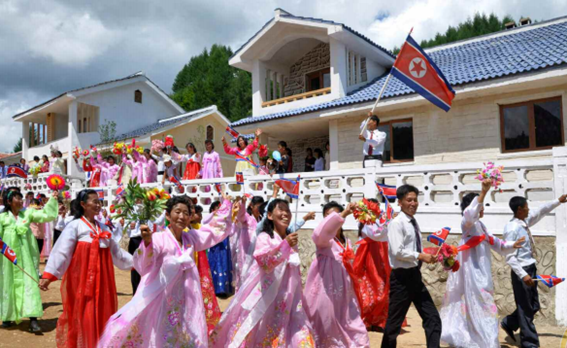
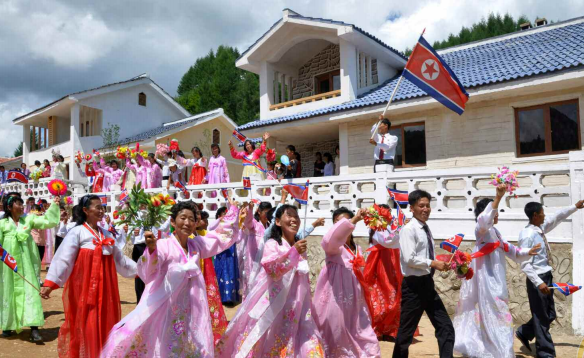
North Korean media feature a housewarming party celebrating the 'New Era of Rural Development.' (Image: Rodong Sinmun)
Looking back, farmers in the post-liberation era were less focused on profits and productivity than those of today. They farmed primarily to sustain themselves, leading a relatively relaxed agricultural lifestyle. The land reforms that were enacted based on the demands of these farmers brought significant improvements, allowing them to become landowners rather than mere tenants.
Agriculture was predominantly a small-scale, family-based activity, free from the compulsory social organizations like the party or labor groups. This environment enabled a more vibrant and livable rural life after liberation, but the advent of collective farming post-war devastated the farmers' lives.
Today, 'agricultural collectivization' is the main cause of hardship in the daily lives of North Korean farmers. It leads to social, financial, and psychological difficulties due to the dominance of the party and the collective farming system.
For centuries, South Korean farmers operated independently, valuing ownership of their tools and produce as sacrosanct. This perspective is now challenged by forced collective farming, which is promoted as more productive than individual management, diminishing their traditional values and subjecting them to collective interests.
Collectivization has thrust North Korean farmers into a two-fold existence, where communal obligations overshadow personal pursuits. With organizational duties taking center stage, they have little opportunity for individual endeavors. The immense burden of securing the nation's food supply leaves them physically drained, bound to the fields throughout the year.

In October 2019, residents of the Namyang Workers' District in North Hamgyong Province, North Korea, were photographed while transporting cabbage in a field using a bullock cart. (Image: KBS North-South Windows)
They're obliged to attend reviews conducted by the party and agricultural union every ten days, with scheduled rest days falling on the 1st, 11th, and 21st, but these breaks are often overlooked during peak farming seasons.
There have been notable changes. During the economic difficulties of the 1990s, North Korea's economic structure transformed into a dual system, integrating both planned and market economies. This shift also brought changes to the daily lives of some rural farmers, who began engaging in personal side businesses and generating profit through the distribution of agricultural products.
Faced with the disadvantages of not participating in organized activities, some farmers opt to either tolerate them or alleviate them by allocating a portion of their profits to gain favor with farm bureaucrats. This emerging dual economy allows farmers to pursue personal endeavors, often yielding higher profits than communal earnings, thereby diminishing their dependence on and control by collective farm organizations.
Yet, with Kim Jong-un's recent policies aiming to reshape farmers' mindsets, daily life is reverting to the severe hardships experienced before economic reforms. This is especially challenging for ordinary farmers lacking special skills or connections, who struggle to escape the constraints of cooperative life, even if they own personal land.
Currently, North Korean farmers oscillate between active engagement and passive resistance, experiencing a range of behaviors including cooperation, compliance, compromise, and passive resistance.
When assessing North Korea's rural landscape today, it's crucial to not only focus on the influence of party authorities hindering farmers' daily life changes but also to understand how farmers perceive and manage their demanding circumstances. Identifying the underlying reasons and considering possible solutions are essential. Drawing insights from their daily experiences aids in understanding their culture and envisioning strategies to alleviate the burdens faced by North Korean farmers.