

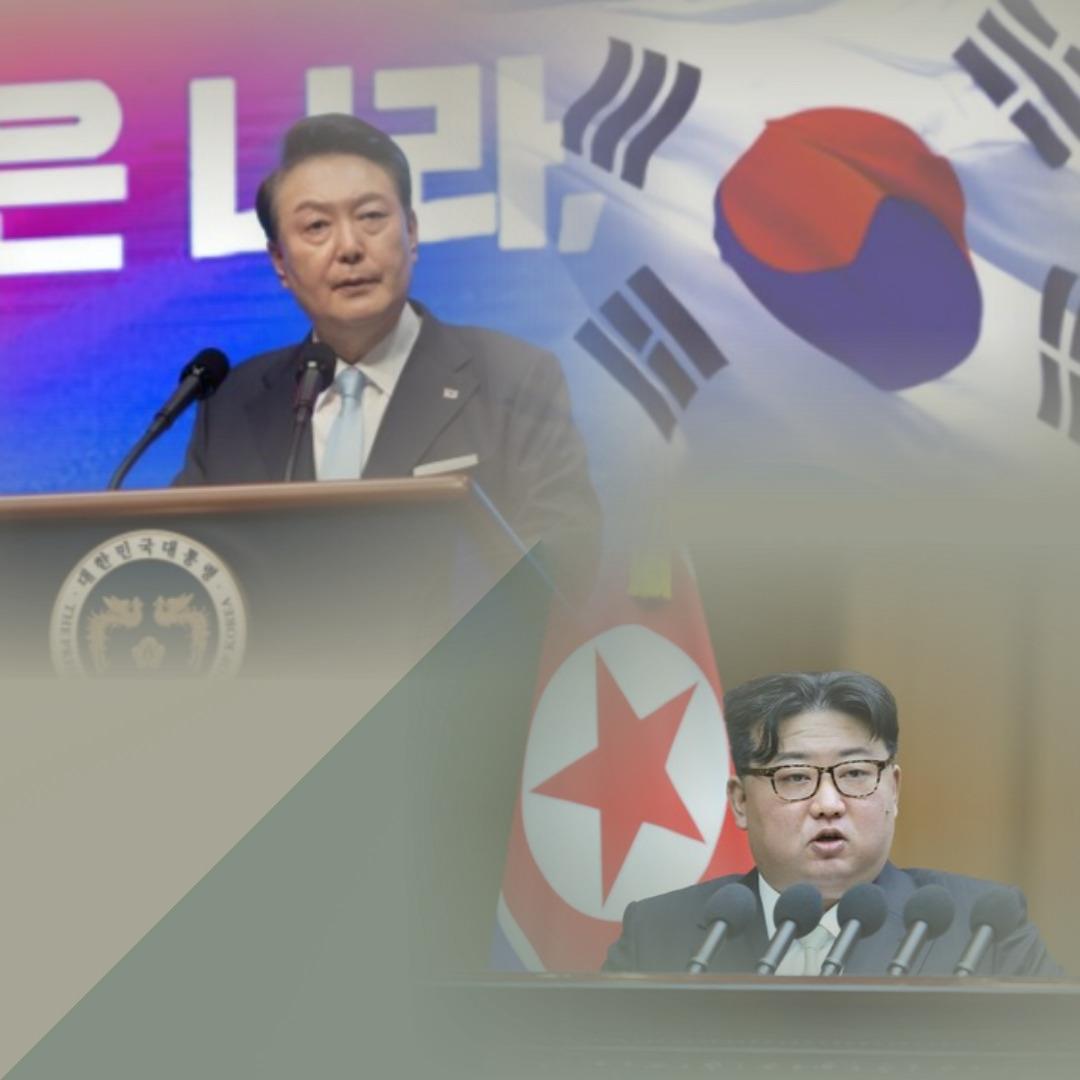
Anticipating North Korea’s Reaction to the ‘August 15 Unification Doctrine’ and Its Outlook
Kim Hyung-seok
Former Vice Minister of Unification
On August 15th, President Yoon Suk-yeol of South Korea delivered a speech for the 79th Liberation Day, introducing the ‘August 15 Unification Doctrine’ under the theme ‘Challenges and Responses for Freedom and Unification.’ This doctrine builds upon the 1994 'National Community Unification Formula,' updating it to reflect the current situation on the Korean Peninsula and outlining clear strategies and plans for unification.
The key points of the ‘August 15 Unification Doctrine’ are: South Korea's complete liberation requires the establishment of a unified, democratic state on the Korean Peninsula. Unification has long been seen as a critical historical task, needing three main elements: commitment to unification values and capabilities, desire for unification among North Koreans, and international solidarity.
South Korea aims to drive change in North Korea by promoting democracy and freedom, continuing humanitarian aid, and improving human rights. This includes setting up an international conference on North Korean human rights and a ‘North Korean Freedom and Human Rights Fund.’ South Korea remains open to dialogue with North Korea and proposes setting up a ‘dialogue consultative body’ to address various issues such as reducing military and political tensions, economic cooperation, cultural and humanitarian exchanges, and responses to disasters and climate change. Additionally, South Korea aims to create an ‘International Korean Peninsula Forum’ with its allies and partners to build global support for its unification vision and advance the unification process.
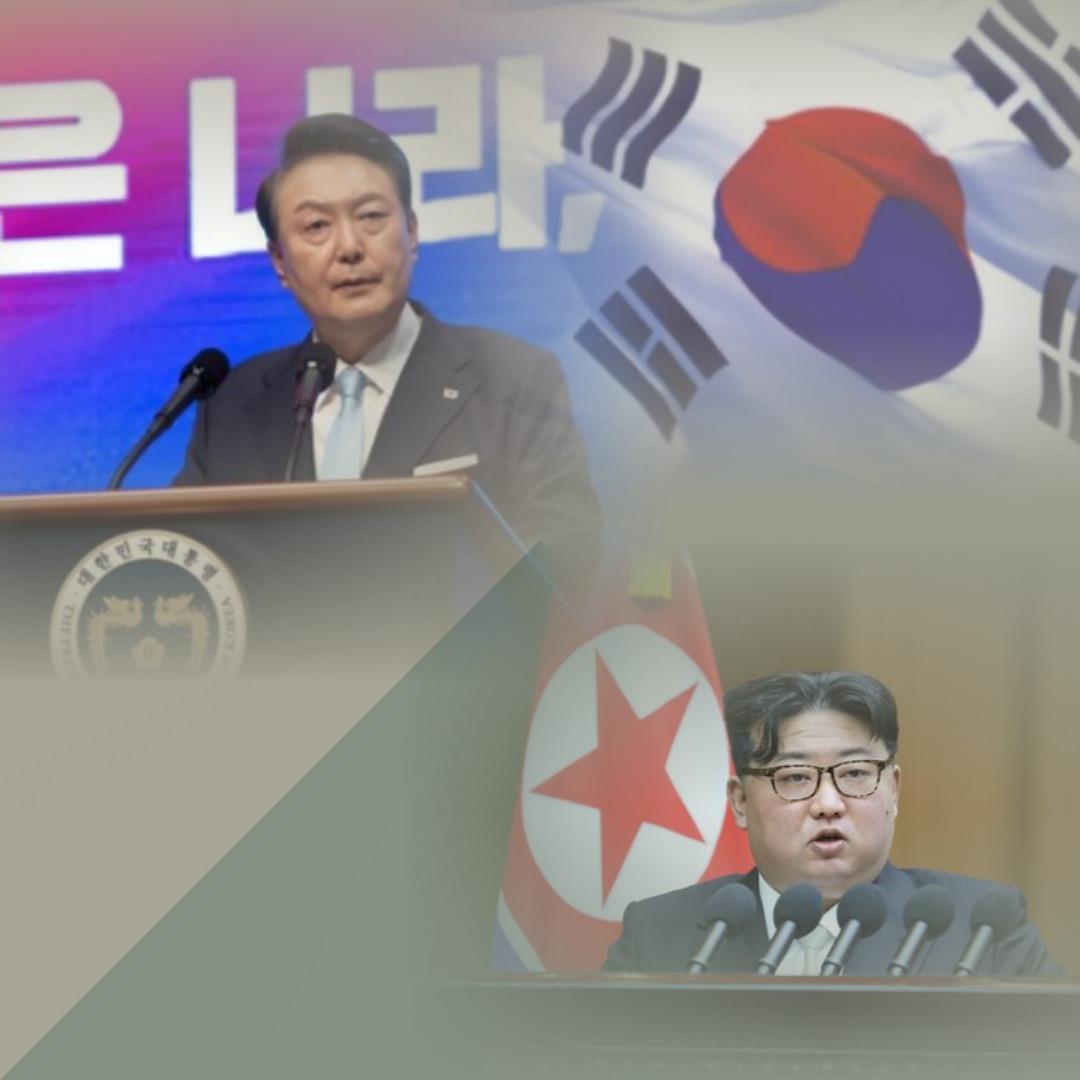
President Yoon aims to make 2024 a significant year for achieving a ‘Unified Korea of Freedom, Peace, and Prosperity’ under this doctrine.
Since its start in 2022, the Yoon administration has followed a unification policy called the ‘Denuclearization, Peace, and Prosperity Policy for the Korean Peninsula,’ focusing on humanitarian aid, economic cooperation, and normalization of relations, based on North Korea's denuclearization. North Korea has rejected this approach as unrealistic and maintains a confrontational stance, backed by China and Russia. In 2017, North Korea declared it had completed its nuclear program and sought to negotiate with the U.S. to lift sanctions, which led to a brief period of warming relations between the Koreas.
After the 2019 North Korea–United States Hanoi Summit ended without an agreement and Donald Trump, who had a close relationship with Kim Jong-un, lost his bid for a second term, North Korea’s stance shifted significantly. It began to view inter-Korean relations as adversarial, dismantling agreements between the two Koreas and, by 2023, publicly declared the existence of ‘two hostile states’ rather than a unified identity of ‘our people’.
Since then, North Korea has been eliminating references to 'nation' and 'unification' from its rhetoric, including disbanding organizations like the ‘National Committee for the Peaceful Reunification of the Fatherland.’ It has also enacted laws like the Reactionary Ideology and Culture Rejection Law and the Pyongyang Cultural Language Protection Law to curb South Korean cultural influence, especially among the youth, to maintain regime control. Given these actions, North Korea's response to the Yoon administration's ‘August 15th Unification Doctrine’ is predictable.
North Korea, after its two summits with the U.S., seems to view South Korea as a follower of the U.S. rather than a neutral mediator, favoring direct negotiations with the U.S. instead. Given its nuclear status, North Korea sees little benefit in engaging with non-nuclear South Korea, opting instead to negotiate directly with the U.S.
Some criticize the Yoon administration for proposing an ‘August 15 Unification Doctrine’ that seems unlikely to gain North Korea's support. However, it's important to recognize that Korean unification is a gradual process that requires patience and a consistent approach. Even if North Korea rejects the vision of freedom, human rights, and prosperity that benefits all Koreans, presenting this vision is essential to avoid ambiguity, misunderstandings, and unnecessary tensions in the unification process. In this regard, regardless of North Korea's response, the ‘August 15th Unification Doctrine’ is important for clearly and publicly demonstrating South Korea’s commitment to unification.
Over the 79 years of division, South Korea has made various efforts toward unification, from advocating for ‘"Marching North for Unification" and prioritizing development before unification to promoting unification through competition, dialogue, and cooperation. However, unification has not been achieved due to North Korea's rigid stance and provocative actions. Instead of progressing toward unification, North Korea remains isolated in the 21st century, where real-time communication is common, yet South Koreans cannot visit relatives just across the border. Inter-Korean relations are so strained that even at non-political events like the Paris Olympics, South and North Korean athletes avoid exchanging greetings and feel uneasy taking selfies together on the podium.
Considering North Korea's focus on ‘Power for Power,’ ‘Frontal Confrontation,’ and ‘Self-Reliance,’ and its promotion of a ‘Two-Korea Policy,’ it's unlikely North Korea will embrace the path to peaceful unification proposed in the doctrine. Still, change is possible. If geopolitical tensions ease and North Korea's internal challenges grow, its leadership may be forced to reconsider its stance.
The international community, including South Korea, does not recognize North Korea’s nuclear weapons but does not oppose its regime. It is hoped that North Korea’s leadership will recognize this and pursue cooperation with the international community, similar to China and Vietnam. If North Korea begins to open up, the ‘August 15 Unification Doctrine’ could serve as a valuable guide for its future.
-
PREV [Feature Article]
-
NEXT [Feature Article]