

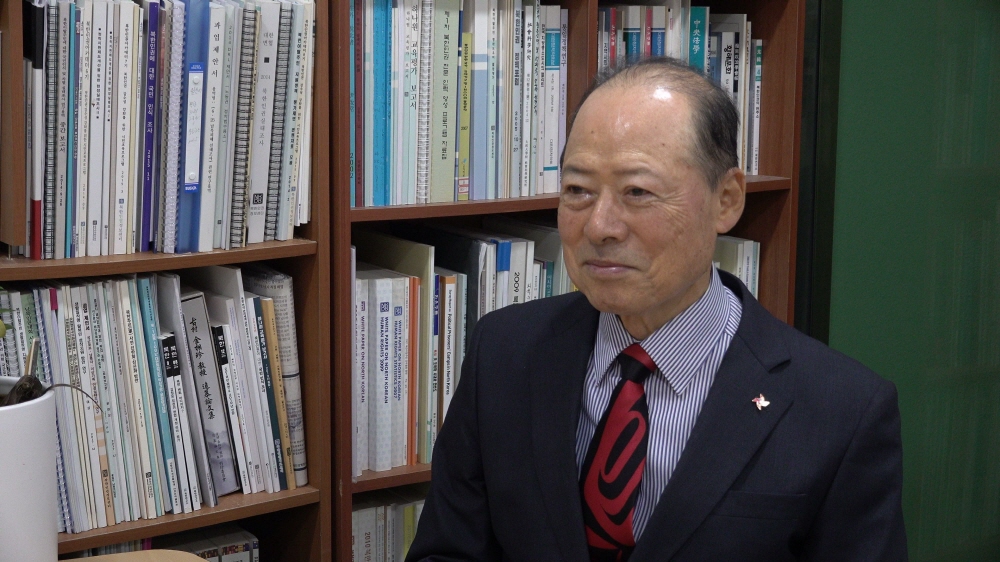
Former South Korean Ambassador to Russia Lee Jae-choon Predicts Russia-Ukraine War Will Mark the End of the Vladimir Putin Era
Lee Jae-choon
former South Korean Ambassador to Russia
Lee Jae-choon, former South Korean Ambassador to Russia, predicts that the Russia-Ukraine conflict will mark the end of the Vladimir Putin era. In a recent interview with the SAND Newsletter team, conducted on the 4th at The North Korean Human Rights Museum in Seoul’s Sinyeong Building, Lee remarked, “Over the past two years and eight months, hundreds of thousands of Russian soldiers have perished. Putin is struggling to handle the rising public frustration.” He continued, “The fact that Putin, once dismissive of Kim Jong-un, is now seeking his help underscores his desperation.” Lee further projected, “The longer this costly, unproductive war drags on, the more precarious Putin’s political position will become, ultimately leading to a crisis.”
What Was Vladimir Putin Like When You Met Him as Ambassador to Russia?
I served as South Korea's Ambassador to Russia from March 2000 to February 2002, during that time becoming acquainted with President Vladimir Putin, who had just come to power. In the March 2000 election, Putin campaigned on restoring law and order and secured the presidency by May.
At that time, in my observation, Putin appeared physically small yet resolute, with sharp judgment reminiscent of a former South Korean president who led the nation’s economic transformation. I often briefed him on South Korea’s economic development, encouraging him to consider our model for reviving Russia’s economy. Early in his presidency, he welcomed advice from others, including myself, earning him praise. However, he eventually revealed the limitations of his KGB background, steering Russia away from democratic market principles toward a more authoritarian economy.
How Do You Assess Putin's Actions in Crimea and Ukraine?
Russia is powerful in terms of military and defense industries, yet lacks strength in its domestic economy. Putin’s invasion of Ukraine was a major misstep, effectively sanctioning himself. His initial mistake, however, was in 2014, when he occupied and annexed Crimea. It’s regrettable that then-U.S. President Barack Obama and the Democratic Party didn’t respond more decisively to Putin’s actions.
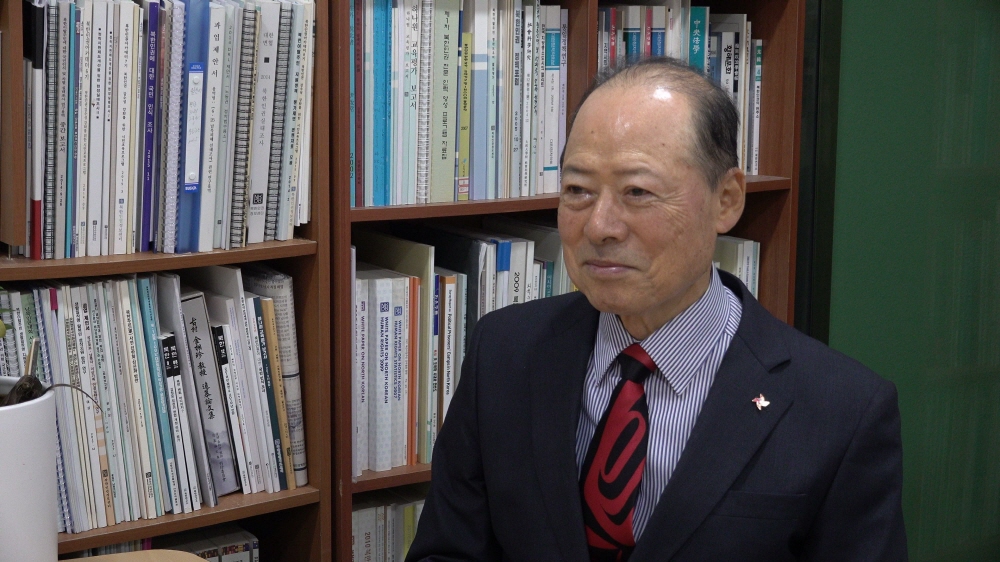
Lee Jae-choon, former South Korean Ambassador to Russia, predicts
Putin’s current invasion brings him no clear benefit, yet he persists, seeing Ukraine as a buffer against NATO. Had the war ended swiftly, as in 2014, his ambitions might have solidified while the U.S. and NATO hesitated. This time, however, Russia lacks the resources to counter Ukraine’s strong defense. Since the annexation of Crimea, Russia has faced severe sanctions, stunting its economic growth to the point that, despite a population of 140 million, its GDP is now smaller than South Korea’s. Today, Putin is grappling not only with shortages in manpower and equipment but also with funding. A swift conclusion to the war might have limited the losses, but instead, he finds himself bogged down in Ukraine. The prolonged sacrifice of Russian soldiers has stirred public discontent, which will be difficult for Putin to manage. This war may very well mark the final chapter of the Putin era.
What Are Your Thoughts on North Korean Troops Being Sent to Russia?
A foreign policy expert group had anticipated the deployment of North Korean soldiers to Russia as early as a year and a half ago. The death of Prigozhin, leader of the Wagner Group, worsened Russia’s manpower crisis, making it almost inevitable that North Korean troops would be called in. Despite Putin's authoritarian rule, public discontent is high over the loss of some 700,000 soldiers in this war. Since Wagner forces mostly consisted of criminals, their deaths attracted little attention, but the loss of regular soldiers, who are entitled to higher compensation, has become a more sensitive issue. Many young Russians have fled the country, and rising opposition to the war has made it difficult to replenish the regular army. North Korean soldiers now in Russia are likely a consequence of the Wagner Group’s collapse, and further military support from North Korea seems likely in the near future.
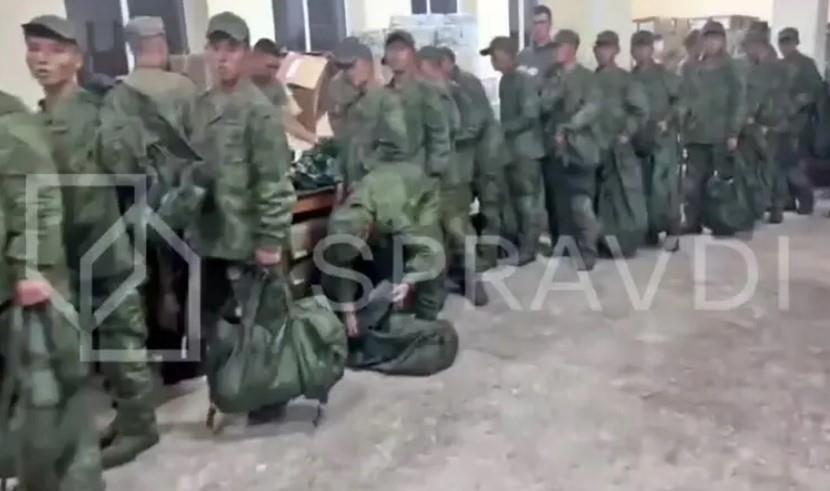
As the war drags on, more North Korean soldiers may be pulled into the conflict. Russia, having lost around 700,000 soldiers, now faces a critical manpower shortage. In desperation, Putin has turned to Kim Jong-un for both weapons and troops, with Kim effectively selling North Korean youth for a modest price. Putin is likely to keep requesting reinforcements, and Kim may continue to comply. Although exact payment details are unclear, reports suggest a significant increase to around $2,000 per mercenary. Still, given Putin’s financial constraints, there’s no guarantee he’ll pay Kim in dollars, nor can North Korea indefinitely sustain this support.
Even if North Korean troops are deployed, reclaiming strategic areas like Kursk would be challenging. The North Korean military lacks real combat experience and would struggle against Ukraine’s well-equipped, battle-tested forces. Kursk has become a hub for advanced Western weaponry, including drones and modern fighter jets, making it unlikely that North Korean troops could assist in retaking Russian-held territories. Additionally, the outdated weapons provided by North Korea, mostly from the 1960s and 70s, are poorly suited to modern warfare.
What Is the Internal Reaction in Russia to the Prolonged War?
The loss of Kursk may prompt Russians to question Putin’s decision to invade Ukraine, especially as they start to see their own territory slipping away. If Kursk isn’t reclaimed, citizens may ask, “Why start this war only to lose Russian land in the first place?” Ongoing setbacks will inevitably weaken Putin’s political standing.
Currently, Ukraine has mounted an effective counterattack, with President Zelensky even beginning to view parts of the Kursk region as Ukrainian territory. This mirrors Putin’s own strategy in Crimea, adding political pressure on him. Although official polls suggest 70% to 80% of Russians support Putin, genuine public opinion is likely suppressed in an authoritarian environment.
Putin now faces a significant dilemma, criticized over the loss of territory, resources, and lives without meaningful gains from the war. Although he initially received support from Iran, that assistance has dwindled as Iran is now heavily involved in its own conflicts, backing Hamas, Hezbollah, and Houthi rebels against Israel in the Middle East, leaving it with limited resources to support Russia. As a result, North Korea has become Russia’s sole remaining ally. Domestically, Putin is under fire for reducing Russia to a diminished state, tarnishing its reputation as a permanent member of the United Nations Security Council by relying on support from a rogue state like North Korea. In short, Putin has embarrassed the Russian people. Historically, the House of Romanov fell in 1917 following a peasant uprising that led to the Soviet regime’s rise, and after the Soviet Union’s collapse, Putin emerged with a long-standing autocratic rule. Now, however, his rule appears to be weakening due to the Russia-Ukraine war.
About Former South Korean Ambassador to Russia Lee Jae-choon
Former Ambassador Lee Jae-choon served as South Korea's Ambassador Extraordinary and Plenipotentiary to Russia from March 2000 to February 2002 and retired from the Ministry of Foreign Affairs and Trade in 2003. That April, he received the Order of Service Merit (Red Stripes).
Career Highlights:
△Director, Northeast Asia Division 1 (1981)
△Counsellor, Korean Embassy in the U.S. (1983)
△Director-General, Asian Affairs Bureau, Ministry of Foreign Affairs (1991)
△Deputy Minister, Ministry of Foreign Affairs (1995)
△Ambassador to the EU (1996)
△Ambassador to Belgium and the EU (1998)
△Ambassador to Russia (2000–2003)
-
PREV [Defectors' Podium]
-
NEXT [Column]