

North Korean Defector as Prosecutor Leads Mock Trial Against Kim Jong-un:
What ICC Charges Could Mean
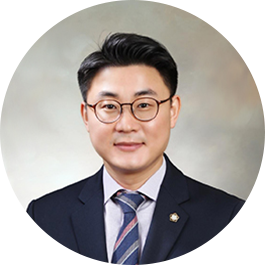
Lawyer Lee Young-hyun, Corporate Law Firm IRE
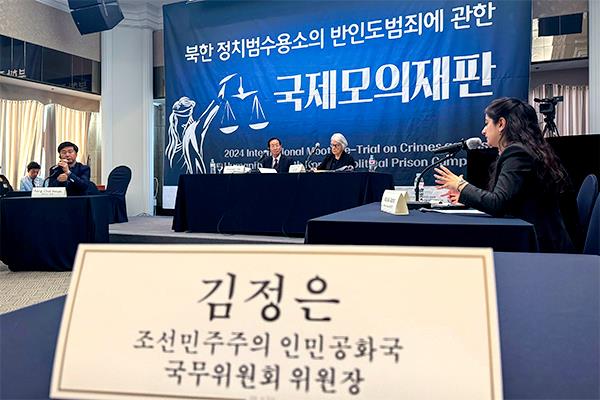
A recent international mock trial in Seoul addressed crimes against humanity in North Korean political prison camps, marking the first event of its kind in the city. Organized to commemorate the 10th anniversary of the 2014 UN COI report, it renewed global calls to hold Kim Jong-un criminally accountable.
The tribunal included prominent former international judges, such as Silvia Rose Cartwright of the Extraordinary Chambers in the Courts of Cambodia (ECCC), with prosecutors and defense attorneys from South Korea, the United States, and the United Kingdom. North Korean leader Kim Jong-un was the subject of a pre-trial hearing to assess whether the International Criminal Court (ICC) could proceed with a formal trial for his alleged crimes against humanity.
The pre-trial tribunal found substantial evidence implicating Kim Jong-un in crimes such as murder, enslavement, imprisonment, sexual violence, persecution, and enforced disappearances within political prison camps. The case was referred to the trial chamber, although the ruling carries no legal weight, such as res judicata or binding authority.
The ICC, established as the first permanent international court to prosecute individuals for serious crimes against humanity, has since the 2000s addressed cases involving political leaders from eight countries, including the Democratic Republic of Congo, Sudan, and Kenya.
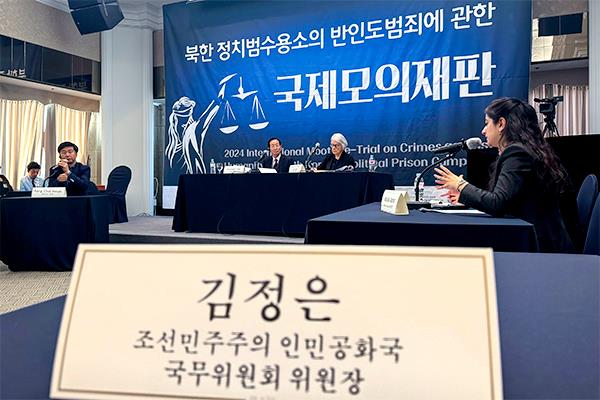
Judge Joo Kwang-il and Judge Sylvia Rose Cartwright are conducting an international mock trial on the "anti-humanitarian
crime in North Korea's political prison camps" at the Press Center in Jung-gu, Seoul on the 26th. /PSCORE
Notable cases include Sudan’s Omar al-Bashir and Libya’s Abdullah Al-Senussi, referred by UN Security Council resolutions, as well as Kenya’s Mzee Jomo Kenyatta and Côte d'Ivoire’s Laurent Gbagbo, tried through ICC initiatives. In March 2023, the ICC issued an arrest warrant for Russian President Vladimir Putin over alleged war crimes in Ukraine.
A decade ago, the UN COI on North Korea concluded that the regime systematically violated human rights on a massive scale, many of which qualified as crimes against humanity under international law. The report urged the UN Security Council to refer these violations to the ICC for action.
Bringing Kim Jong-un to trial at the ICC is seen as a powerful mechanism to hold dictatorial regimes accountable for systemic human rights abuses. The potential prosecution of Kim Jong-un serves not only as a call for justice but also as a catalyst for improving North Korea’s dire human rights situation. The implications can be summarized in three key points:
First, prosecuting Kim Jong-un would exert immense pressure on the North Korean regime. Since the release of the COI report in 2014, North Korea has displayed subtle yet significant changes. The global strategy of "naming and shaming," which aims to publicly expose and embarrass human rights violators, has shown gradual but discernible impact. While North Korea outwardly responds with a hardline stance, it has secretly reduced public executions, moved them to hidden locations, and made superficial adjustments to its criminal justice system to placate international critics. These reactions highlight the regime’s sensitivity to global scrutiny and demonstrate the effectiveness of persistent pressure.
Additionally, whether or not ICC charges materialize, merely bringing the issue to light can create substantial political and psychological pressure on Kim Jong-un. An ICC referral would act as a constant reminder of potential accountability, symbolizing a lifetime burden for him. The prospect of being punished as a criminal would weigh heavily on North Korea’s leadership, where Kim is revered as the "supreme dignity." An indictment could destabilize the regime by creating cracks in its power structure. Under certain circumstances, factions within the regime might even seek to detain Kim and hand him over to international authorities.
Second, taking this step would offer hope to North Korean citizens who continue to suffer under systemic human rights abuses. Kim Jong-un holds ultimate responsibility for a regime that has turned the nation into a prison-like society. Political prison camps that lasted 12 years under Adolf Hitler and 32 years under Joseph Stalin dissolved after their deaths, yet North Korea’s camps have endured for over 70 years across three generations of hereditary rule. Without meaningful international intervention, these atrocities are unlikely to cease. As human rights advocate Pierre Rigoulot has noted, referring Kim Jong-un to the ICC might be the only viable way to free North Korea’s people from their dire circumstances.
Third, prosecuting Kim Jong-un would strengthen the global consensus that crimes against humanity in North Korea cannot be tolerated, opening the door for more effective UN interventions to address these violations. Greater international focus on North Korea’s human rights abuses and efforts to hold perpetrators accountable, combined with the ICC’s role in collecting evidence for future prosecutions, carry substantial significance.
This attention could also increase political and psychological pressure on China and Russia. As global condemnation grows, these nations may find it increasingly difficult to justify vetoing resolutions that refer Kim Jong-un to the ICC. The ICC’s involvement not only underscores the importance of pursuing international justice but also strengthens the broader call for accountability.
While prosecuting Kim Jong-un is essential to achieving justice, significant challenges remain. North Korea has not joined the Rome Statute or accepted ICC jurisdiction. Additionally, China and Russia, as North Korea’s key allies and permanent members of the UN Security Council, continue to block efforts to bring North Korea’s crimes before the ICC. At present, obstacles to prosecuting, arresting, and convicting Kim Jong-un are substantial. However, the pursuit of accountability must persist to ensure justice for his crimes against humanity.
History has shown that major turning points often arrive unexpectedly. It is crucial to remain prepared for the day when Kim Jong-un and others responsible for North Korea’s atrocities are brought to justice. The recent international mock trial served as a vital step toward this goal, laying the groundwork for future efforts. Sustained initiatives like this, both domestically and internationally, will be key to achieving justice and change.
-
PREV [Defectors' Podium]
-
NEXT [Defectors' Podium]