

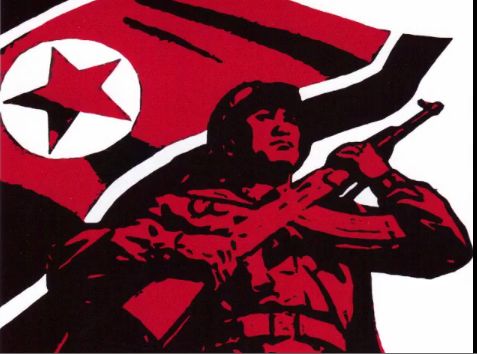
What the Hostile Two-State Theory Really Is and Why It’s Advocated:
A Strategy to Escape Korean Ethnic Unity and Justify Nuclear Threats

Kim Yeolsoo
Director of the Security Strategy Office, Korea Institute for Military Affairs
Kim Jong-un's Reports at the Central Committee of WPK Meetings and Speeches at the Supreme People's Assembly.
Kim Jong-un’s Reports at Key Meetings and Speeches
At the 9th Plenary Meeting of the 8th Central Committee of the Workers' Party of Korea held in December 2023, Kim Jong-un defined inter-Korean relations as “a relationship between two hostile, warring nations.” He announced a transition to a “confrontational policy” toward South Korea, stressing the need to prepare for a massive upheaval by mobilizing all available forces, including nuclear capabilities, to seize control of South Korea's entire territory.
In January 2024, during a Supreme People's Assembly speech, Kim expanded on this stance, declaring the need to “bring an end to 80 years of inter-Korean relations.” He ordered intensified education to portray South Korea as North Korea’s unchanging and primary enemy. Kim Jong-un added that any intrusion into North Korea's land, airspace, or waters—no matter how minuscule—would be treated as an act of war. He further urged legal preparations to ensure that, in case of war, South Korea would be fully occupied, subdued, and incorporated into North Korean territory.
Kim Jong-un’s reports and speeches can be summarized as follows:
A denial of Korean ethnic unity, redefining North and South Korea as two hostile nations at war. Plans to occupy South Korea through all means necessary, including nuclear force, and absorb it into North Korea’s territory.
Let us explore the measures aligned with this two-state theory and the proposed nuclear strategy.
Actions Taken Under the Hostile Two-State Theory
In his reports and speeches, Kim Jong-un laid out specific measures rooted in the hostile two-state theory. These measures included internal policy shifts and physical severance of inter-Korean connections.
North Korea systematically removed terms and symbols linked to Korean ethnic identity and peaceful unification. Expressions like 'Beautiful Land of Korea' (Samcheolli Geumsugangsan), '80 million compatriots,' and phrases such as *---
North Korea dismantled several organizations involved in inter-Korean negotiations and dialogue, including the National Committee for the Peaceful Reunification of the Fatherland, the National Economic Cooperation Committee, the Kumgangsan International Tourism Bureau, the National Reconciliation Council, the June 15th South–North Joint Declaration Implementation Committee (North Korean branch), the Pan-Korean Alliance for Reunification (North Korean headquarters), and the Tangun National Reunification Council. However, the United Front Department of the WPK was not dismantled; instead, it was reorganized as the 10th Bureau of the Central Committee of the WPK. Additionally, North Korea shut down its propaganda websites targeting South Korea, such as 'Uriminzokkiri (Among Our People),' 'Echo of Unification,' and 'DPRK Today.'
North Korea began highlighting South Korean territory in black on weather reports. The national anthem's title and lyrics were also altered, renaming it to 'Democratic People’s Republic of Korea' and replacing 'My Country, Beautiful Samcheolli' with 'My Country, Beautiful in This World.'
The subway station 'Tongil Station (Unification Station)' was renamed 'Moranbong Station.' Furthermore, the 'Monument to the Three-Point Charter for National Reunification,' built in 2001 to honor Kim Il-sung's unification legacy, was dismantled. These actions reflect Kim Jong-un’s complete rejection of the unification policies of Kim Il-sung and Kim Jong-il.
To physically sever inter-Korean relations, North Korea began planting large quantities of landmines along the Gyeongui and Donghae Line roads in December 2023. By spring 2024, it had installed landmines, anti-tank barriers, and other structures along the front line, removed streetlights on these roads, and dismantled tracks and sleepers on the corresponding railway lines.
On October 15, North Korea demolished sections of the Gyeongui and Donghae Line roads north of the Military Demarcation Line (MDL), creating 5-meter-deep trenches and constructing 11-meter-high earthen mounds and anti-tank obstacles. It also severed power transmission lines supplying electricity to the Kaesong Industrial Region and collapsed the transmission towers. With these actions, North Korea nearly completed its physical severance measures with South Korea. During the Supreme People's Assembly on October 7–8, North Korea appeared to incorporate the Hostile Two-State Theory into its constitution, although specific details remain undisclosed.
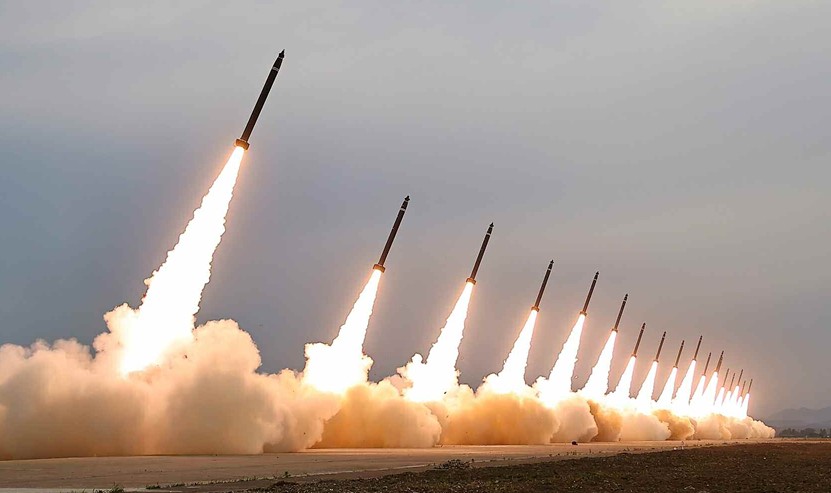
Plan for the Use of Nuclear Forces to Occupy, Dominate, and Seize Territory from South Korea
Kim Jong-un’s conclusion from 80 years of inter-Korean dynamics is that South Korea has always sought North Korea’s collapse and “absorption unification,” regardless of its political identity. He described South Korea as a “colonial puppet of the United States” and declared it a target for military subjugation rather than peaceful dialogue.
North Korea has repeatedly threatened South Korea with nuclear force. In September 2022, it enacted its nuclear force policy into law, outlining five conditions for nuclear use, emphasizing arbitrary use and preemptive strikes. Kim Jong-un often stressed nuclear forces must serve a 'secondary mission' of preemptive strikes beyond mere deterrence. In his recent speech, he declared nuclear forces would be used to occupy, pacify, and annex South Korea into North Korean territory—marking a shift from peaceful to forceful unification through nuclear weapons.
Reasons for Advocating the Hostile Two-State Theory
Kim Jong-un’s support for the Hostile Two-State Theory can be attributed to two main reasons. First, North Korea recognizes the significant power gap between itself and South Korea and views the widespread influence of the Hallyu (Korean Wave) as a threat to its regime’s survival. This led to the introduction of laws such as the “Reactionary Ideology and Culture Rejection Law” in 2020, the “Youth Education Guarantee Law” in 2021, and the “Pyongyang Cultural Language Protection Law” in 2022.
Despite these efforts, North Korea struggled to completely block South Korea’s influence. To counter this, Kim Jong-un proposed the Hostile Two-State Theory, severing all ties with South Korea and implementing hostile policies. North Korea believes this approach enables it to strengthen ideological control and prevent regime collapse.
The second reason is to redefine Korean ethnicity and justify the use of nuclear weapons. North Korea judged that deploying nuclear weapons against the same ethnic group could cause enduring trauma, even after forced unification. During Kim Jong-il’s rule, the idea of “By Our Nation Itself” prevented such actions. To bypass this, Kim Jong-un replaced the concept of shared ethnicity with the Hostile Two-State Theory, legitimizing nuclear threats against South Korea.
Conclusion
Kim Jong-un refers to North Korea as the "Kim Il-sung nation" and treats South Korea, which he calls the "Republic of Korea," as if it were an entirely separate country. However, no matter what he claims, one ethnic group cannot simply become two different peoples. He’s merely denying the reality. There’s no need to give weight to North Korea’s rhetoric. Instead of acknowledging North Korea’s two-state theory, South Korea should stay committed to its Constitution, which calls for "establishing and pursuing a peaceful unification policy based on liberal democratic principles." At the same time, it’s crucial to address North Korea’s nuclear-backed territorial threats with a strong security response.
-
PREV [Defectors' Podium]
-
NEXT [Feature Article Series]