


Ishiba Shigeru’s North Korea Policy and Shifting Japan-North Korea Relations:
Rejecting South Korea’s Role in Peninsula Affairs

Yoon Suk-jung, Professor, Korea National Diplomatic Academy
"The abduction issue is a humanitarian matter with critical time constraints, as victims and their families are aging. It cannot be neglected and remains the administration’s highest priority," declared Prime Minister Ishiba Shigeru in his policy speech after his re-election on November 29, 2024. This stance aligns with Japan's long-held position on North Korea’s abduction of its citizens, previously framed by the Kishida Fumio administration as a "human rights matter requiring urgent resolution due to time constraints."
This framing highlights a strategic diplomatic approach that separates the abduction issue from North Korea’s nuclear and missile threats. By presenting it as a distinct humanitarian concern, Japan opens the door for dialogue with North Korea. Ishiba Shigeru’s position demonstrates continuity with the Kishida administration's policy.
The abduction issue has been a central topic of public interest in Japan, deeply influencing the government’s North Korea policy. Ishiba Shigeru's administration reflects this societal focus. Kishida Fumio, for instance, emphasized dialogue with North Korea over the abduction issue to strengthen public support for his administration. Similarly, the Ishiba administration likely considers engaging with North Korea—including on the abduction issue—a key strategy for maintaining political stability.
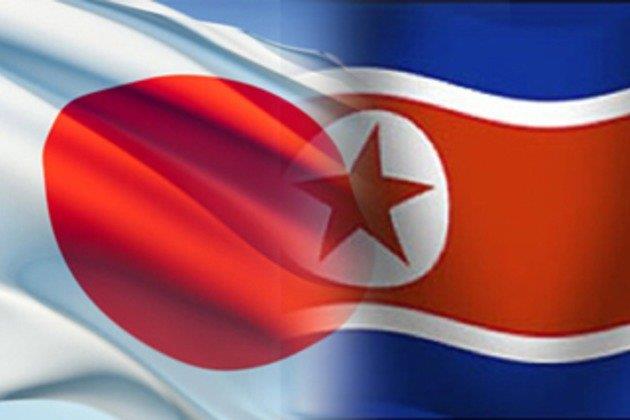
Although Ishiba Shigeru’s policy largely aligns with previous Japanese administrations, it also introduces notable distinctions. For instance, during the Liberal Democratic Party’s presidential election in September, Ishiba proposed setting up liaison offices in Tokyo and Pyongyang to advance resolution of the abduction issue. In his October 4 policy speech, he pledged to “return to the principles of the Japan-North Korea Pyongyang Declaration” and pursue the full repatriation of all abductees while addressing other unresolved matters with North Korea.
The Declaration, agreed upon in 2002, remains a cornerstone of their bilateral relations, outlining commitments to address nuclear and missile development, abductions, and historical grievances to achieve normalized diplomatic ties. While tangible progress has been limited since the agreement, both nations still regard it as a valid framework. Ishiba’s reference to the Declaration highlights his acknowledgment of its significance in pursuing normalization with North Korea.
Ishiba’s North Korea policy seems to go beyond domestic political strategies. As a member of the Parliamentary League for the Promotion of Japan-North Korea Diplomatic Normalization, his statements carry substantial weight. The idea of establishing liaison offices reportedly originated from this league, which includes prominent figures in Ishiba’s administration, such as Moriyama Hiroshi (Liberal Democratic Party Secretary-General), Sakamoto Tetsushi (Diet Affairs Committee Chairman), Iwaya Takeshi (Foreign Minister), and Nakatani Gen (Defense Minister). This indicates a serious commitment among both party and cabinet members to advancing diplomatic normalization with North Korea.
The Ishiba administration's North Korea policy reflects structural shifts in Japan-North Korea relations. According to Professor Park Jung-jin, these changes indicate a growing dynamic where Japan and North Korea interact more independently, diminishing South Korea's influence in the process. Despite the unresolved abduction issue remaining a barrier, Japan's engagement with North Korea is driven by necessity, even amid North Korea's ongoing nuclear and missile developments.
Historically, the abduction issue has enabled direct Japan-North Korea engagement, leading to two summits and numerous working-level talks, including the 2014 Stockholm Agreement. These interactions demonstrate the issue's persistence in bilateral dialogue.
At the same time, inter-Korean relations shifted significantly with South and North Korea’s joint admission to the United Nations, marking mutual recognition—a sharp contrast to the Cold War era of mutual denial. In this context, Japan and North Korea encounter fewer legal and political barriers to rapprochement.
North Korea’s "Two Hostile States Theory" is driving shifts in Japan-North Korea relations. In December 2023, leader Kim Jong-un described inter-Korean ties as hostile, no longer based on shared identity or unity. This theory reflects North Korea's rejection of South Korea as a key player in Korean Peninsula affairs, signaling a shift away from using South Korea as a mediator in its negotiations with the United States and other Western nations.
The return of a Donald Trump administration in the U.S. has renewed prospects for North Korea-U.S. talks. In this context, North Korea may prioritize its ties with Japan, which has consistently engaged on issues like abductions. Ishiba Shigeru’s North Korea policy reflects this shifting dynamic, making it crucial for South Korea to monitor his approach, as it could reshape the Korean Peninsula's geopolitical landscape.
-
PREV [Opinion]
-
NEXT [Defectors' Podium]