

Lunar New Year in Koreas: South Enjoys Travel and Long Holidays, While North Faces Restrict-ed and Short Celebrations
Ryu Seong-hyun
Former North Korean Soldier (Defected across the DMZ in 2019)
Lunar New Year is a major traditional holiday celebrated across many East Asian countries. In North Korea, the recognition of New Year has changed over time. At one point, they celebrated the start of the calendar year on January 1, while at other times, they observed Lunar New Year. In 2025, January 29 is marked as New Year on the North Korean calendar, reflecting a greater emphasis on Lunar New Year.
For a time, North Korea recognized the start of the calendar year as the primary New Year, distanc-ing itself from Lunar New Year due to its connection with China. In North Korea, it is widely known that China celebrates Lunar New Year for 15 days, ending with the Lantern Festival, which marks the first full moon of the lunar year. To assert its independence from Chinese traditions, the Work-ers' Party of Korea (WPK) restricted New Year celebrations to just one day.
In North Korea today, New Year’s holidays typically last two to three days. However, the short break and travel restrictions make hometown visits nearly impossible, so people celebrate locally with family and neighbors. Traditionally, the government used to provide holiday foods like soju and pork to enhance the festive spirit, but in recent years, dwindling state provisions have forced families to handle holiday preparations on their own.
Food traditions in North Korea vary slightly by region, but dumpling soup with pork broth remains a staple in most households. In areas near South Korea, such as Hwanghae Province, Gangwon Prov-ince, and Kaesong City, some families also prepare rice cake soup. Popular New Year dishes include tofu, sundae (blood sausage), and a variety of rice cakes. Harsh winters make fresh vegetables scarce, apart from cabbage and radishes, so side dishes are often made with dried vegetables pre-served earlier in the year. Growing up in Cheorwon, I fondly remember honoring ancestors, sharing meals with relatives, and visiting teachers' homes as a student, spending time with friends during the holiday.
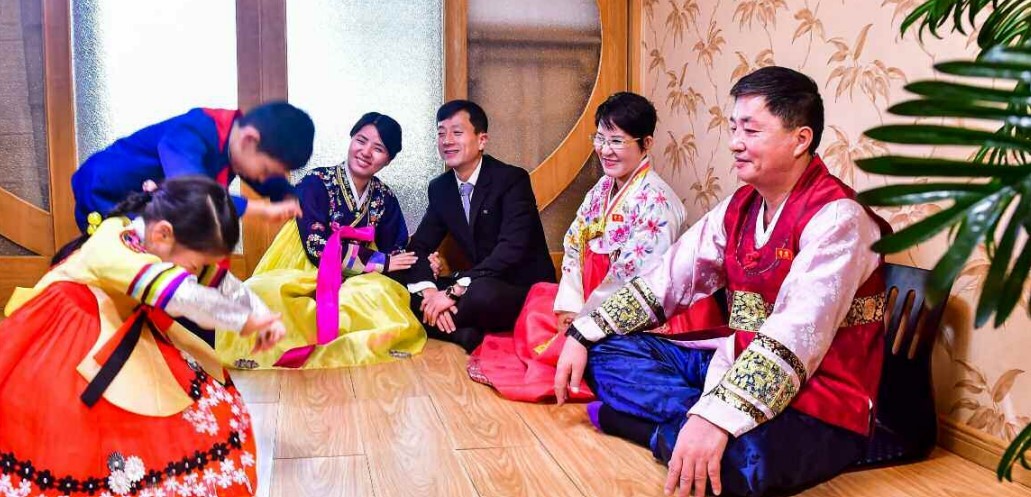
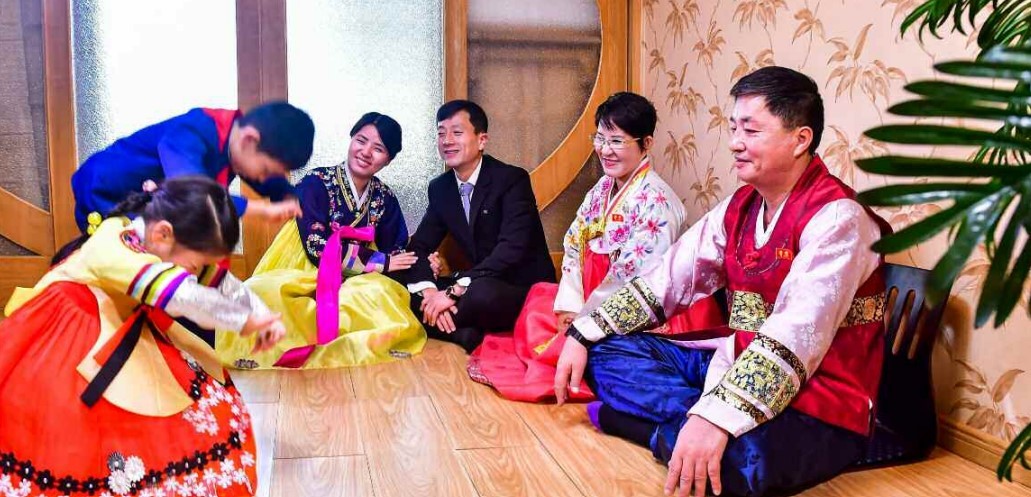
In January last year, a family in Pyongyang, Lunar New Year, received a bow. /The Rodong Sinmun
From my experience, New Year celebrations in North Korea were more exciting and eagerly anticipated than those in South Korea. This was likely because having dumpling soup with rice and meat for a holiday breakfast was a rare and special treat. The holiday offered a welcome break from routine, allowing families to prepare and enjoy festive meals together. Even usually frowned-upon behaviors, like wandering around drunk, were tolerated on this day. Villagers roamed with flushed faces and cheerful spirits, which may be why those memories still hold a special place in my heart.
New year celebrations also included activities such as folk games and sports tournaments organized by workplaces or communities. Games like kite flying, ice skating races, jegichagi, and top spinning were especially memorable. I remember skating on frozen rivers and lakes, though with thinner ice in recent years, such activities are becoming harder to enjoy.
In contrast, South Korea, despite its shared cultural roots, now celebrates New Year’s holidays quite differently. Since rice and meat are staples in everyday meals, the New Year breakfast in South Korea doesn’t feel particularly special. Instead, the holiday is seen as a chance to relax, much like a weekend, with the addition of some festive dishes and the tradition of visiting hometowns.
This year, Lunar New Year falls between weekends, encouraging many South Koreans to plan trips. While North Koreans see eating, sleeping, and enjoying time locally as a fulfilling holiday, South Koreans consider visiting family or traveling long distances essential to the celebration. However, spending hours navigating crowded roads often becomes part of the holiday experience, though it can also make the occasion feel tiring.
Time has brought significant changes to life in both North and South Korea. While the North seems frozen in time, the South continues to evolve rapidly, further emphasizing the growing divide between the two. It’s hard to predict how much further apart they may grow, but one thing is certain: despite sharing the same name for the holiday, the cultural and economic gap will only deepen the differences in how Lunar New Year is celebrated in the future.
-
PREV [Analysis of issues]
-
NEXT [Defectors' Podium]