

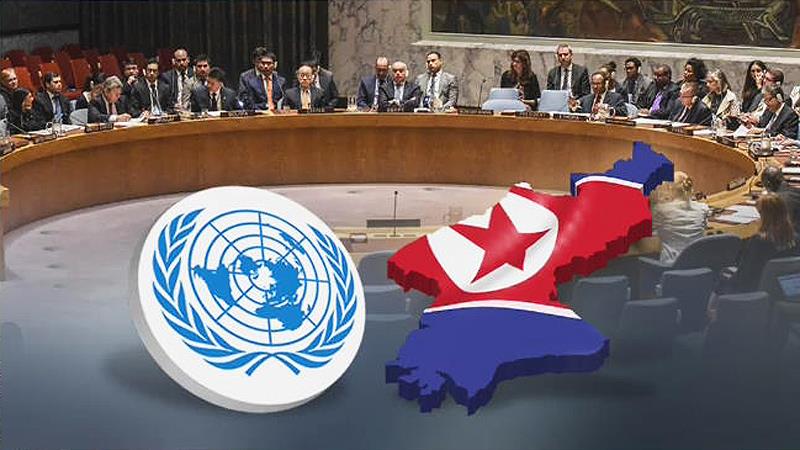
The UN Report on North Korean Human Rights: Key Insights and Global Action

Kim Tae-hoon
Attorney
On February 6, the Office of the United Nations High Commissioner for Human Rights (OHCHR) released Promoting Accountability in the Democratic People’s Republic of Korea, set for submission to the 58th UN Human Rights Council (UNHRC) session in Geneva on the 24th. As mandated by UNHRC resolutions (52/28, 55/21), OHCHR publishes a biennial report on North Korea’s human rights situation and accountability efforts. This edition covers November 2022 to October 2024, drawing on interviews with 175 defectors and 229 stakeholders.
In August 2023, North Korea partially reopened its borders, but strict restrictions on movement and emigration persisted. As a result, the number of defectors dropped sharply from 1,047 in 2019 to just 196 in 2023 and 181 between January and September 2024. Before COVID-19, most defectors were women, but recently, more men have escaped after being sent abroad as laborers.
The report examines human rights violations in North Korea through international legal standards, focusing on freedom of expression and the right to food. It also assesses efforts to enhance, institutionalize, and advance accountability while fostering consultative processes.
OHCHR is expanding its central information repository to document human rights conditions in North Korea and strengthen evidence preservation. It contains interview materials, satellite imagery, internal government documents, court rulings, academic research, and testimony records.
OHCHR examines the collected data to identify potential international crimes and works with UN and global investigative bodies to improve digital tools and evidence management. These efforts are vital for future criminal trials and truth and justice initiatives.
OHCHR calls on member states to use universal jurisdiction to investigate and prosecute North Korean perpetrators of international crimes. While progress is slow, some countries have pursued civil and criminal cases. Though no criminal prosecutions have occurred, civil lawsuits by victims and civil society groups in domestic courts have seen some success.
OHCHR welcomes the growth of non-judicial accountability efforts, such as truth-seeking, memorialization, and education. It stresses the need for North Korea to be held accountable and for victim-centered justice. To support victims, OHCHR recommends legal reforms, psychological and legal aid, amplifying their voices, and raising awareness.
OHCHR has identified major human rights violations in North Korea, including arbitrary detention, torture, forced labor, inhumane treatment, enforced disappearances, abduction, forced labor abroad, and human trafficking. Arbitrary arrest and detention were the most frequently reported abuses by defectors.
Many female defectors were trafficked, forcibly repatriated, and detained, making them the primary sources of detention facility abuse reports. Over half of the victims experienced forced labor, torture, inhumane conditions, and food shortages. The most frequently mentioned detention centers were operated by the Ministry of State Security and the Ministry of Social Security near the North Korea-China border.
OHCHR has confirmed at least 295 cases of detained repatriated defectors. North Korean authorities treat those fleeing to South Korea as political prisoners, subjecting them to torture, imprisonment in labor camps, or execution. OHCHR warns that forced repatriation leads to severe human rights violations and urges the international community to uphold the principle of non-refoulement (prohibition of forced return).
OHCHR voiced deep concerns over North Korea’s severe restrictions on information access and suppression of free expression. A frequently reported issue was the violation of the right to food. All interviewees who endured the 1990s famine described extreme hardship after the public distribution system collapsed.
Victims consulted by OHCHR stressed the importance of criminal prosecution but also prioritized legal aid, psychological support, restoring honor, compensation, and preserving historical records. They also expressed concern over declining youth interest due to the politicization of North Korean human rights issues.
OHCHR supports victim organizations by enhancing their capacity through international law education, interview training, and evidence collection methods, improving access to UN human rights mechanisms. In August 2023, it hosted an international conference on enforced disappearances and, in collaboration with Japanese victim families, submitted 290 cases to the UN.
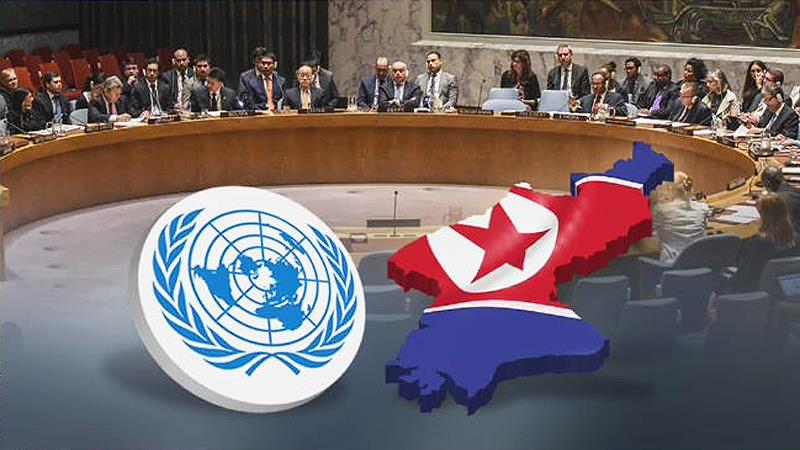
OHCHR urged North Korea and the international community to take the following actions: (1) Refer North Korea’s case to the International Criminal Court (ICC) via the UN Security Council (UNSC). (2) Make human rights a priority in Korean Peninsula peace efforts and uphold victims' rights to truth, justice, reparation, and non-recurrence. (3) Investigate and prosecute international crimes using universal jurisdiction. (4) Implement non-judicial measures like compensation, truth-seeking, and memorialization, along with victim registration and a reparations fund. (5) Support OHCHR’s ongoing defector interviews, evidence collection, and international information-sharing on North Korean human rights.
On February 4, U.S. President Donald Trump announced via executive order his administration’s decision to withdraw from the UNHRC again, following the first withdrawal in June 2018. With the U.S. also exiting the World Health Organization (WHO), concerns have grown over its retreat from international leadership.
Beyond domestic human rights abuses, North Korea has aided Russia since its February 2022 invasion of Ukraine by supplying ammunition and missiles used to attack civilian infrastructure, amounting to war crimes. More recently, it has reportedly deployed troops to the frontlines, endangering the lives of North Korean youth as "cannon fodder.“
The U.S. and the international community must uphold OHCHR’s recommendations, actively intervening to hold North Korea accountable for its grave human rights violations and potential international crimes while protecting victims' rights.
-
PREV [Defectors' Podium]
-
NEXT [NK Focus]