

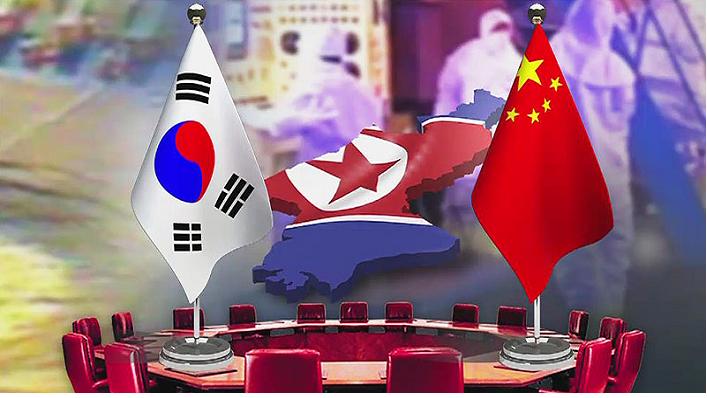
North Korea’s Nuclear Issue and China’s Role

Yoo Seong-ok
Chairman, Institute for National Security Strategy
1. The Strategic Significance of Nuclear Weapons in North Korea and the Risks of Its Nuclear Strategy
North Korea regards nuclear weapons as an "almighty sword," a force Kim Jong-il asserted could make anything possible. Domestically, they help secure Kim’s grip on power. Internationally, they serve as leverage to pressure the U.S. into normalizing relations and withdrawing troops from South Korea. Against the South, they act as a hostage mechanism, reinforcing Pyongyang’s push for forced reunification under a communist regime. For North Korea, nuclear weapons are more than military assets—they are an "absolute weapon" with multifaceted strategic significance.
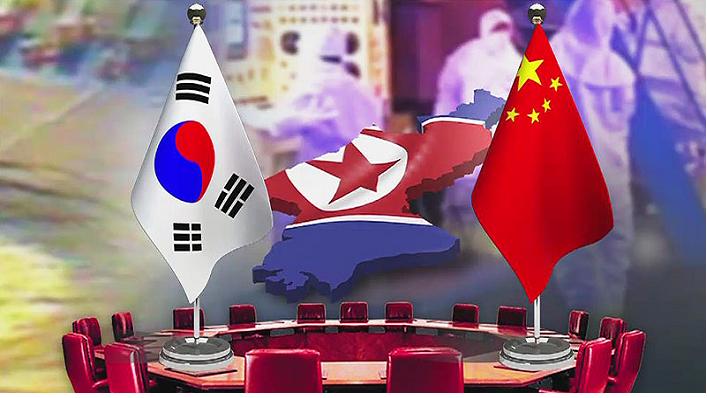
Nuclear weapons are often seen as military, political, and psychological tools, frequently called the “poor man’s weapon.” For economically struggling North Korea, they offer a crucial strategic edge over South Korea’s conventional military. Its nuclear development follows a typical rogue-state pattern: (1) deception—hiding its activities, (2) repeated violations of agreements like the Joint Declaration on Denuclearization, the Agreed Framework, and the September 19 Joint Statement, and (3) illicit funding, including cryptocurrency theft.
North Korea claims that Kim Jong-un’s nuclear advancements have freed its people from the fear of war, bringing them prosperity for the first time. This narrative masks economic failures and silences public discontent. As Kim himself has emphasized, nuclear weapons are not just military assets but the very foundation of the state.
Given their direct link to the regime’s survival, it is virtually impossible for North Korea to give them up voluntarily or through negotiations. This underscores the need for a more calculated and strategic approach to resolving the North Korean nuclear issue.
North Korea’s nuclear strategy became more defined with the enactment of the Nuclear Forces Policy Law in September 2022. Key aspects of this law include: (1) declaring that the primary mission of its nuclear forces is deterrence, and (2) specifying that their "operational mission" includes repelling aggression and achieving a decisive military victory should deterrence fail—explicitly outlining an offensive role for nuclear weapons.
The law also details five conditions under which nuclear weapons may be used, significantly lowering the threshold for deployment. It further asserts that preemptive nuclear strikes are always an option, and even conventional military threats could warrant a nuclear response. This aggressive stance makes North Korea’s nuclear strategy exceptionally reckless compared to other nuclear-armed states.
2. Concerns Over U.S.–North Korea Nuclear Negotiations Under a Second Trump Administration
After beginning his second term, Donald Trump called North Korea a "Nuclear Power" and reiterated his intent to "build a good relationship with Kim Jong-un." While his administration reaffirmed its commitment to "complete denuclearization" (as stated in the February 15 U.S.-South Korea-Japan meeting), it is likely to pursue closer U.S.–North Korea ties.
Once urgent global issues like the Russia-Ukraine war and Middle East conflicts are resolved, Trump is expected to push for normalized ties with North Korea. While the failed Hanoi summit may give him pause, his ambition for a Nobel Peace Prize could strongly influence his approach.
Despite efforts to improve U.S.–North Korea relations, the issue of denuclearization cannot be ignored. North Korea will only engage in negotiations if the U.S. recognizes it as a nuclear state and abandons its so-called hostile policies.
To rekindle his “bromance” with Kim Jong-un, Trump may seriously consider these demands. If another Trump-Kim summit occurs, negotiations will likely focus on a small-scale agreement rather than a sweeping "big deal."
The concern is that such a deal could see North Korea dismantle only its strategic nukes threatening the U.S. while keeping its tactical arsenal targeting South Korea and Japan—gaining de facto recognition as a nuclear state. In return, the U.S. might ease sanctions, end hostile policies, and normalize ties.
During a February 26 visit to South Korea, Kevin Kim, Deputy Assistant Secretary of State, suggested that Trump’s second-term negotiations with North Korea might focus on freezing select nuclear facilities in exchange for partial sanctions relief—a shift from the 2019 Hanoi summit approach. However, such limited steps are unlikely to bring North Korea back to the table.
The bigger risk is that, in its haste to improve relations, the U.S. could end up legitimizing North Korea’s nuclear status, leaving South Korea perpetually exposed to its threats. Moreover, Trump’s administration cannot guarantee that the extended deterrence promised under the Washington Declaration will be enough to address South Korea’s security concerns.
Surveys indicate that about 70% of South Koreans support developing an independent nuclear arsenal. If the U.S. recognizes North Korea as a nuclear state, demands for South Korea’s own deterrent will likely surge, potentially driving the country toward nuclear armament. This could trigger a regional arms race, with Japan and Taiwan following suit. A poorly negotiated small deal between the U.S. and North Korea risks destabilizing East Asia and sparking a major security crisis.
3. China’s Role in North Korea’s Denuclearization and the Importance of South Korea-China Cooperation
Since the Six-Party Talks began in 2003, China has played a key role in diplomatic efforts to resolve North Korea’s nuclear issue. These efforts led to the 2005 9.19 Joint Statement, where North Korea pledged to abandon all nuclear weapons and return to compliance with the Nuclear Non-Proliferation Treaty (NPT) and International Atomic Energy Agency (IAEA) safeguards. However, Pyongyang later reneged on the agreement and conducted its first nuclear test in 2006, effectively nullifying the deal. As of March 2025, North Korea is estimated to possess around 50 nuclear warheads, with projections exceeding 100 by 2030.
China has consistently upheld three core principles regarding the Korean Peninsula: (1) peace and stability, (2) denuclearization, and (3) resolving disputes through dialogue. It has joined international sanctions and condemned North Korea’s provocations as a permanent member of the United Nations Security Council (UNSC). However, as U.S.-China strategic competition intensifies and a global divide emerges between democratic and authoritarian blocs, China’s stance on North Korea has shifted—partly due to its alignment with Russia, which opposes Western sanctions over the Ukraine war.
China’s shift from its previous role in addressing North Korea’s nuclear issue became evident when it aligned with Russia’s strategic interests. By siding with Moscow, China has weakened UNSC-led sanctions on North Korea, undermining the global non-proliferation regime and rendering the Nuclear Non-Proliferation Treaty (NPT) ineffective. This has raised international concerns that China, despite being a P-5 member and a self-proclaimed global peace leader (G-2 nation), is neglecting its responsibility in nuclear non-proliferation.
Russia effectively recognized North Korea as a de facto nuclear state by signing the Comprehensive Strategic Partnership Treaty with Pyongyang in June 2024. If Donald Trump and Kim Jong-un strike a small deal allowing North Korea to keep tactical nuclear weapons, it could trigger the collapse of the NPT system. A nuclear domino effect may follow in Northeast Asia, with Japan and Taiwan pursuing nuclear armament alongside South Korea.
Even in Xi Jinping’s third term, regional peace and stability remain crucial for China’s vision of "national rejuvenation" and its goal of becoming a modern socialist superpower by 2049. The May 2024 trilateral summit between China, Japan, and another nation reaffirmed that peace, stability, and prosperity in the region are shared interests and responsibilities, reflecting China’s position. For its own security and long-term prosperity, China must take a "responsible power" approach and actively seek solutions to the North Korean nuclear issue, which is destabilizing Northeast Asia.
North Korea’s ongoing nuclear and missile provocations are heightening tensions, inevitably strengthening U.S.-led military cooperation in the region. This, in turn, intensifies bloc-based confrontations that put pressure on China.
Premier Li Qiang has emphasized China’s opposition to bloc-based alliances and geopolitical divisions, yet continued inaction on North Korea’s nuclear issue risks reinforcing the China-Russia-North Korea axis, pushing the world toward a new Cold War. The deepening security ties among U.S. allies in the region are largely a response to China’s passive stance on North Korea’s growing nuclear threats. China cannot ignore its responsibility in this dynamic. If it moves away from shielding North Korea and adopts a more pragmatic approach to denuclearization, it will help restore stability while also serving its own security and national interests.
As 2025 begins, the Chinese Ministry of Foreign Affairs has outlined five key diplomatic priorities—peace, unity, openness, justice, and inclusiveness—signaling China’s intent to play a more active role on the global stage.
In his New Year’s address, President Xi Jinping reiterated the Responsible Power Theory first introduced in 1997. To uphold this principle, China must present a clear vision for global peace and, most urgently, take concrete steps toward resolving the North Korean nuclear issue. Demonstrating a proactive commitment to this challenge is essential for China to earn the trust of the international community and assert its leadership. In particular, close cooperation with regional partners directly affected by North Korea’s nuclear threat is vital in leading a peaceful resolution and ensuring long-term stability in Northeast Asia.
-
PREV [Defectors' Podium]
-
NEXT [Analysis and Suggestion]