

Can North Korea’s Final Bet on Financing Loyalty Withstand New Realities?

Sukeui SOHN
Northeast Asian History Foundation
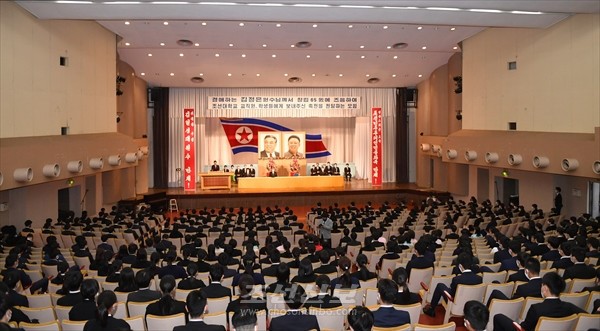
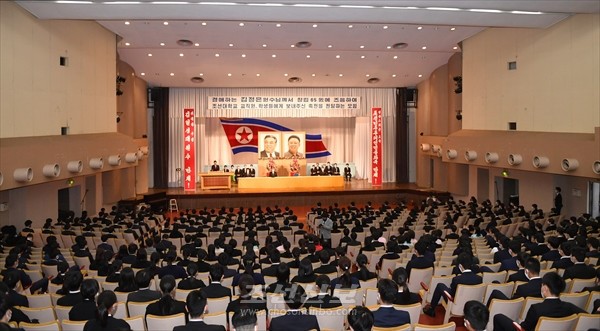
In April 2025, Yonhap News reported that Kim Jong-un, the North Korean leader, sent two million dollars to Chongryon (or Sōren), a pro-North Korean residential organization in Japan. This "scholarship" was the 171st of its kind since the era of Kim Il-sung, under the pretext of encouraging "democratic and nationalist education for Zainichi Korean children."
Nationalist education has always been one of the core missions of Chongryon's organizational directives. Chongryon operates about 100 Chōsen gakkō, or North Korean schools, across Japan, where approximately 5,000 students of Korean heritage continue their studies.
The Japanese government categorizes these schools as "miscellaneous schools," which prevents Chōsen gakkō from receiving financial support from the Japanese government.
While some local governments have continued to provide limited support, Japan–North Korea relations have deteriorated since the 2000s due to abduction incidents and North Korea’s ongoing provocations. Consequently, support has been steadily shrinking. It is not difficult to imagine the distressed state of North Korean schools—financially and otherwise.
Little has been revealed about the financial sources sustaining Chōsen gakkō, but it is speculated that donations from the Zainichi Korean community play a major role, along with the aforementioned "scholarships" sent from North Korea.
Sankei Shimbun recently reported that Chongryon also receives financial support from a South Korean civil organization—even after North Korea's constitutional revision declaring the Republic of Korea "a thoroughly hostile state."
It may seem only natural to suspect a "fishy" financial network linking the North Korean regime, Chongryon, Chōsen gakkō, and progressive South Korean civil organizations, where the indoctrination of North Korean ideology at ethnic schools is sponsored by Kim Jong-un and pro-North groups in both Japan and South Korea. Yet such claims are also difficult to conclusively disprove.
However, the reality is far more complex. North Korea’s constitutional revision, which labeled the Republic of Korea "a hostile state," had a profound and disconcerting impact on the North Korean community in Japan.
"Peaceful unification" and "one nation" policies have long underpinned the hopes and beliefs that give meaning to both individual and communal identities among Zainichi Koreans. Despite periodic diplomatic and political tensions at the governmental level, which have hampered communications between the two Zainichi communities, Koreans in Japan are now more interconnected than ever.
Confrontations and sheer antipathy toward one another between Mindan and Chongryon may still exist, but mostly at the organizational level. One reason for this is the shrinking number of so-called "Old Comers"—the Korean and Taiwanese descendants of those whose "Japanese nationality" was revoked at the dawn of Japan's regaining state sovereignty in 1952. It has become increasingly difficult for the Zainichi community, whether pro-South or pro-North, to maintain ethnic networks.
Such changes have led to unexpected transformations within the Zainichi Korean communities. Once rigorously divided, ethnic "Old Comers" can no longer afford to stick to old labels such as "pro-Mindan" and "pro-Sōren."
The distrust toward the two nationalist organizations has certainly played a part in generating grassroots-level interdependence, but it was a long-term process for the two sides to come to terms with cooperating, despite confronting political differences.
One Zainichi owner of a yakiniku restaurant told me that the local chamber of Zainichi business owners now has both pro-Mindan and pro- Sōren members on the executive board, because they can no longer find replacements from their communities. In fact, it was a process of "incidental unification" forced upon the Zainichi due to changing socioeconomic circumstances surrounding the ethnic group.
Given these developments, North Korea’s recent declaration of the Republic of Korea as a "hostile state," along with its directives to remove terms such as "unification" and "one nation" from school curricula, runs counter to the increasingly complex relations among Zainichi communities.
It is not only anachronistic to attempt to reinstitute ideological confrontations, but its effectiveness is also highly questionable, to say the least.
Kim Jong-un’s attempts to maintain the loyalty of younger Zainichi Koreans toward the regime by "financing" Chōsen gakkō are clear, but the children are well aware of the sacrifices their communities have made to sustain the ethnic integrity.
Moreover, progressive local governments and civil activists in Japan have provided significant support to help these schools integrate into broader Japanese society.
Perhaps even more so than the situation on the peninsula, the confrontations between pro-North and pro-South Zainichi Koreans were direct throughout postwar history in Japan.
Their physical proximity, combined with the fact that many lived in relatively closed, isolated communities, fostered hostile and confrontational relations, distrust, and even hatred between the two camps, each of which claimed legitimacy in leading the unification of the Korean people.
At the same time, they shared a common identity as "aliens" in a foreign land and held onto the imagination of being "one nation," destined to reunify by overcoming the division of their homeland.
What has perhaps been overlooked is their shared experience of survival—enduring socio-political injustices, the loss of homeland, and severe economic hardships brought about by their unique historical circumstances. Over time, ideological divisions came to matter less, and communal segregation gradually loosened.
Kim Jong-un’s continued support for ethnic education reflects the regime’s last grasp at maintaining attachment to the old-style ideological loyalty to the Kim legacy.
Yet it was precisely the burden of loyalty that older generations of Zainichi sought to shoulder, hoping to spare their children from its weight. Ultimately, it is the sense of commonality, rather than division, that has endured—and there appears little prospect of this reality shifting in the foreseeable future.
-
PREV [Defectors' Podium]
-
NEXT [Defectors' Podium]