

Three Months Under the Korean People’s Army:
How Public Sentiment in the South Turned During the Korean War

Ra Jong-il
Distinguished Professor, Dongguk University
This year marks the 75th anniversary of the Korean War. I was just six years old when it broke out, but the terror of those days—and the three months we spent under the rule of the Korean People’s Army—remain etched in my memory.
When Seoul fell to North Korean forces on June 28, 1950, my family fled to Jeongdong-ri, a secluded mountain village in Hadong County, Gyeongsangnam-do. That summer, we didn’t see any soldiers in the area until a group calling itself the North Korean “Political Operations Unit”—a term we’d never heard before—suddenly appeared.
This unit quickly established a “People’s Committee” in our village. It recruited young men into a neighborhood security team and organized the women under a new group called the “Women’s League.” Only later did I realize that this was part of North Korea’s strategy to impose its governance model all the way down to the smallest villages.
What struck me most at the time was the Women’s League. Women who had previously stayed quiet and confined to their homes gathered at the village hall, held meetings, elected leaders, and raised their voices. To a young boy, it was a surprisingly novel and vivid sight.
For the first time, it felt as though change was stirring in Jeongdong-ri—a village that had remained untouched for generations. Women began stepping into public life with a sense of newfound energy and purpose. Naturally, the older men muttered their disapproval, uneasy with the sight of women out and about.
Though I was school age, what passed for education was purely political. There were no real subjects—just revolutionary songs and chants praising ‘General Kim Il-sung’. Before long, shelling shut the school down completely. As the front lines drew near, American fighter planes began streaking across the sky daily.
I also saw American POWs for the first time. Half-naked, dressed only in underwear, they were locked in a makeshift station. We children watched them with innocent curiosity. From their confiscated rations came strange new things—canned goods and chocolate—revealing to me how vast and unfamiliar the world truly was.
Among the most haunting figures were the so-called “Disguised Operatives.” Disguised as civilians or farmers, they would approach American troops pretending to be refugees, then suddenly attack—killing soldiers, sabotaging equipment, and boasting of their exploits. As an adult, I learned these tactics contributed to tragic consequences, making U.S. forces distrust real refugees and resulting in civilian massacres.
Over time, public support for the Korean People’s Army faded. At first seen as liberators, their image quickly soured as they began seizing food, livestock, and grain with little more than a vague promise of reimbursement. Villagers quietly compared them to the Japanese forces who once exploited them—and fell.
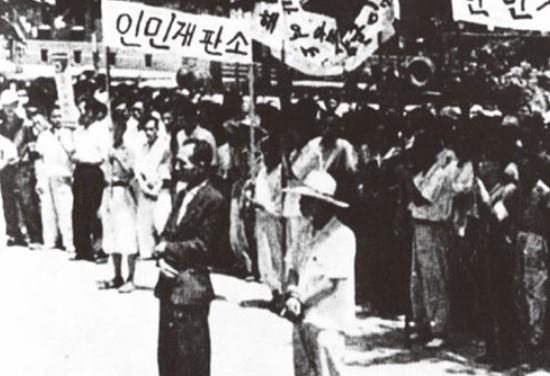
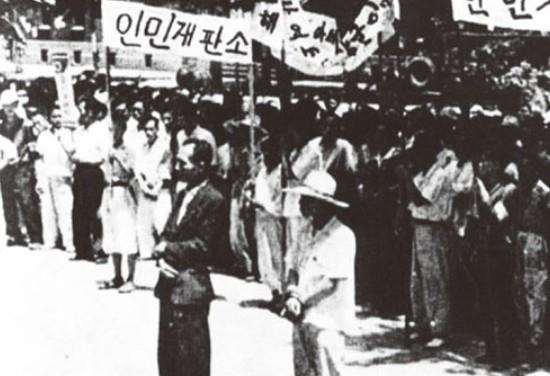
Propaganda posters shouting “Long Live the People’s Republic” appeared everywhere, and neighbors donned red armbands. But beneath the surface of these supposed reforms—equal pay, labor insurance, maternity protection—was a climate of fear. At “people’s trials,” one shout of “reactionary element” could lead to instant execution. It felt like witnessing the French Revolution, only now the guillotine was in Seoul. It took less than a month for disillusionment to set in.
Above all, war meant hunger. We carried jars of preserved meat on our backs to feed the soldiers at the front, dodging bullets from American jets. I saw jet planes for the first time then, and napalm as well. I vividly remember climbing the hills with others, clutching propaganda leaflets dropped from the sky before the air raids began.
Even under the threat of bombing, villagers waved white cloths toward the sky. Those fluttering flags were silent prayers—a desperate hope for the return of South Korea, even at the risk of death. War took so much from us. But even in that devastation, change began to take root. As a child,
I was unknowingly learning about war, the world, and what it means to be human. That boy from Jeongdong-ri would one day stand on the frontlines of diplomacy and national security. Now, as we commemorate the 75th anniversary of the Korean War, the past poses a powerful question: What kind of world will we leave for the children who come after us?
-
PREV [Column]
-
NEXT [Defector's Podium]