

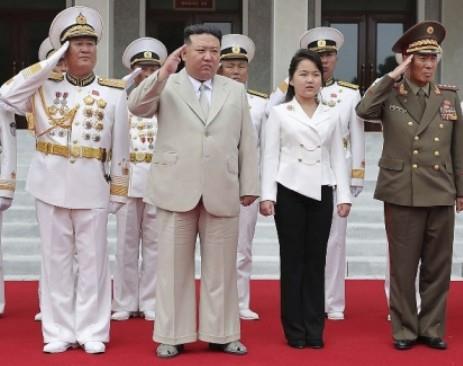
Echoes from Inside North Korea — “Our Leader’s Daughter Wears Pants, So Why Can’t We?” Rising Public Discontent
Lee Jong-woo,
Former Official in Charge of Judicial and Prosecution Affairs
at the Workers' Party of Korea
“Our leader’s daughter wears pants—why can’t we?”
This question, echoing growing frustration, is being heard more often among North Korean women. The uproar began when Kim Ju-ae, daughter of leader Kim Jong-un, appeared publicly in pantsuits—while ordinary women are still forced to wear skirts and maintain traditional hairstyles.
Multiple inside sources report that each time Kim Ju-ae steps out in pants at military or celebratory events, murmurs of discontent ripple through the crowd. A common refrain is, “Why is this acceptable for our leader’s family, but not for the rest of us?”
One woman from Pyongyang shared, “If you go out in pants these days, people confront you, asking whose daughter you are, and you can even face ideological checks. Young women, especially, feel stifled by this.”

Under the Reactionary Ideology and Culture Rejection Law, North Korean authorities strictly control both clothing and hairstyles. Students are required to braid their hair, and wearing it loose can lead to immediate reprimands—sometimes even involving their parents.
Adult women are no exception. According to locals, women with long hair are often stopped in public and warned; in some cases, their hair is even cut on the spot.
One resident shared, “I was carrying my baby with my hair down when they stopped me for an ID check, claiming it was brushing the baby’s face.” Such incidents reveal how deeply the regime intrudes into even the smallest details of daily life.
Back when smuggled Chinese jeans and foreign clothes were more accessible, some young women took the risk of wearing them to express their style. But in recent years, enforcement has become harsher.
At a clothing expo in Pyongsong, one woman questioned the absence of women’s pants. She showed up wearing them, inspiring others to do the same—but authorities quickly cracked down again.
A source familiar with the regime remarked, “The North Korean government uses dress codes to suppress discontent and enforce control. Allowing the leader’s daughter freedom in dress while restricting the public is a textbook example of its authoritarianism.”
Yet Kim Ju-ae’s pantsuits seem to be backfiring on the regime. Rather than reinforcing control, they’re fueling a quiet pushback among women who now say, “We should be able to wear pants too.”
The growing desire among North Korean women to wear pants goes far beyond fashion. It signals a deeper unrest—a subtle but telling expression of their yearning for freedom, equality, and a life without constant repression.