

When will the Korean War end?

Sukjoon Yoon
Captain, ROKN retired
Senior fellow, KIMA
The North and South Korean militaries have been building up their capabilities for many decades. But the threat of mutually assured destruction, whether by conventional or nuclear weapons, is inherently unstable, such that a small error or misunderstanding could be disastrous.
The legacy of the Cold War
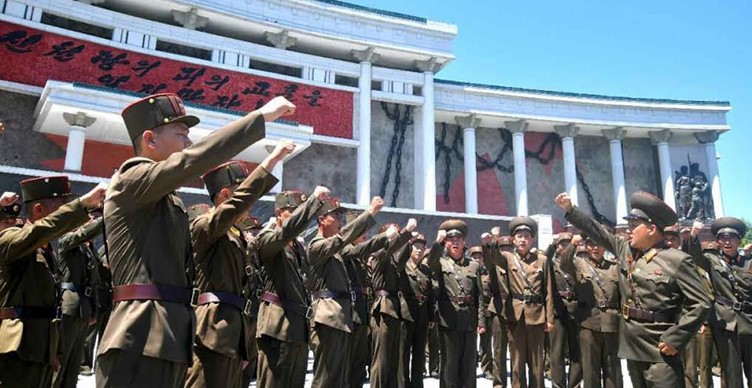
The Korean War of 1950-3 was effectively a proxy war between the Soviet Union and the United States. It ended with an armistice, not with a real peace, and without any kind of arms control mechanism both sides have remained on a war footing. North Korea has a huge army, though their weapons are mostly obsolescent, but they do have nuclear arms. South Korea retains military service for all young men, which has become socially disruptive, and is belatedly modernizing its military platforms.
Confrontations trigger an arms-race
The threat from North Korea’s large-caliber artillery and Hwasong-7 medium-range ballistic missiles led to South Korea establishing the ROK/US Combined Forces Command in 1978 to deter and, if necessary, defeat North Korean aggression.
There have been several serious confrontations between the two Koreas: in 1996 a North Korean submarine landed an infiltration team near Gangneung, in 1999 and 2003 there were naval skirmishes near the Northern Limit Line, in March 2010 the ROKS Cheonan was sunk by a torpedo from a North Korean submarine, and in November 2010 Yeonpyeong Island was bombarded by North Korean artillery.
In response, South Korea invested heavily in its defense industries, leveraging its superior economic and technological power to develop advanced and sophisticated weapons. This project has been very successful, to the extent that South Korea is now a major arms exporter, and the balance of conventional weapons has now tilted in South Korea’s favor.
North Korea develops nuclear weapons
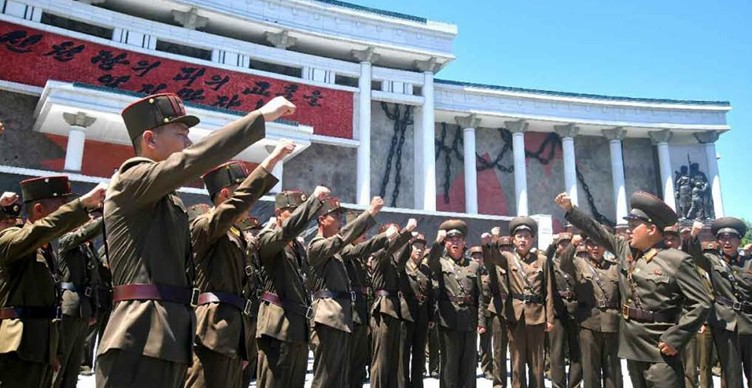
Unable to compete in conventional weaponry, North Korea went all out to develop nuclear weapons, regarding these as the most cost-effective counter-measure against South Korea and its US ally. North Korea now has a variety of integrated nuclear and conventional weapons, including indigenous nuclear warheads mounted on large, nuclear-capable Intercontinental Ballistic Missiles (ICBMs) like the Hwasong-17 and Hwasong-18, super-large 600mm long-range artillery, KN-23/24 short-range missiles, and Pukguksong-series Submarine-Launched Ballistic Missiles (SLBMs).
North Korea is also working on hypersonic glide vehicles, and is developing solid-fuel technology to enable faster launches. South Korea has its own indigenous ballistic and cruise missiles, the Hyunmoo-series, their most powerful strategic weapon and an essential component of the ‘Three-Kill’ mechanism intended to deter and interdict North Korean conventional and nuclear threats.
Western military analysts believe that North Korea has about 50 nuclear warheads, and the recently revealed Hwasong-20 appears capable of carrying multiple warheads or perhaps a multiple independently targetable reentry vehicle (MIRV) which allows a single missile to strike several targets.
Since 2022, North Korean has participated in the Russia-Ukraine War by providing troops, ammunition, drones and missiles. In return, Russia has supplied technical support of various kinds, with many modernized conventional weapons on display at a military parade in Pyongyang on October 10, 2025, and most significantly, North Korea has produced its first-ever destroyer, the 5,000-ton Aegis-style Choe Hyon, launched April 24, 2025 from Nampo shipyard.
The ROK-US alliance responds
The threat from North Korea has dramatically expanded, including the possibility of nuclear attacks against the ROK and US regional targets, perhaps even against the continental US. South Korea is more dependent than ever on the US nuclear umbrella, but there is widespread skepticism about the US commitment, and strong support for an independent nuclear capability.
In response, the ROK-US Nuclear Consultative Group (NCG) was established in April 2023, to reinforce the alliance by providing a mechanism for closer coordination. Given the imbalance between South Korea’s conventional weapons and the US nuclear capabilities, the allies have subsequently held a table top exercise in Conventional-Nuclear Integration, but South Korean domestic opinion remains deeply concerned.
Conclusions
South Koreans have lived their whole lives under the threat of North Korean attack, and young people especially would like to see a different kind of future. The welfare of the North Korean people has long been sacrificed to militarism, but now that the Kim regime has an effective nuclear deterrent it is surely time to reconsider.
The last conflict of the Cold War is still continuing, on the Korean Peninsula, but all wars finally come to an end, and there is now an opportunity for both sides to step away from their inveterate enmity. Enough is enough: it is time to move on from this ever-escalating arm race.
-
PREV [Thematic Analysis]
-
NEXT [Feature Article]