

North Korea’s Demand for the Withdrawal of ‘Hostile Policy’ as a Precondition for Dialogue with the United States
- Current Status and Outlook of U.S.–North Korea Relations -

Youngho Park
former Senior Fellow at Korea Institute for National Unification
Nearly one year has passed since President Trump began his second term. In retrospect, the past year has brought profound disruptions to the existing international order. The Trump administration’s approach has transformed not only the global diplomatic and security landscape but has also reshaped global trade and the international economic system. Under the renewed banner of “Make America Great Again” (MAGA), President Trump appears determined to restore the United States to the position of unchallenged superpower that the country enjoyed following the end of the Cold War.
Recalling the post–World War II era, when the United States produced more than half of global GDP and American culture and values rapidly spread across the world, President Trump is likely to remain assertive, unpredictable, and at times even destabilizing in pursuing MAGA for the remainder of his term.
The MAGA strategy prioritizes U.S. national interests above all else, moving the United States away from its traditional role as global policeman. In economic and trade policy, the Trump administration has embraced protectionist measures aimed at revitalizing U.S. manufacturing and protecting the domestic workforce, particularly in response to China’s rise as a strategic competitor. Socially and culturally, MAGA seeks to reaffirm traditionally conservative values and reassert American identity. Ironically, the pursuit of these aims challenges the very liberal international order the United States has led since the end of World War II.
The tariffs and trade conflict with China, initiated during Trump’s first term, have not only intensified but expanded globally, with implications for U.S. allies and partners. In this context, the “America First” approach has compelled countries that relied on the U.S.-led alliance network for security and economic development to reassess their strategic priorities, increase defense spending, and adjust trade policies.
South Korea, as a trade-dependent nation and a key U.S. ally, is no exception. The ROK–U.S. tariff agreement announced on November 14 exemplifies this broader realignment.
The deal calls for a South Korean investment of $350 billion into the United States, outlines steps for the modernization of the U.S.–ROK alliance, and identifies new areas of bilateral cooperation in maritime policy and nuclear energy.
Regarding Korean Peninsula security, the agreement reaffirms the U.S. commitment to extended deterrence, calls for an increase in South Korea’s defense spending to 3.5 percent of GDP, emphasizes the complete denuclearization of North Korea as a shared goal, and reinforces trilateral cooperation among South Korea, the United States, and Japan. It also allows South Korea to enrich uranium for civilian use, reprocess spent nuclear fuel, and construct nuclear-powered submarines.
These measures, along with South Korea’s expanded nuclear-related capabilities, have become important variables affecting U.S.–North Korea relations, which have remained stalled since the failure of the 2019 Hanoi summit. At the same time, they have deepened North Korea’s antagonism toward South Korea.
Following the failed Hanoi summit, Kim Jong Un, frustrated by his inability to secure sanctions relief, adopted a markedly more confrontational posture toward both Washington and Seoul. In January 2020, Kim launched what he called a “frontal breakthrough campaign,” declaring that “if the United States persists in its hostile policy toward the DPRK, denuclearization of the Korean Peninsula will never occur,” and began accelerating the development of nuclear and missile capabilities, including ICBMs.
At the 8th Congress of the Workers’ Party of Korea (WPK) in January 2021, North Korea reaffirmed its commitment to advancing strategic and tactical nuclear weapons programs. Citing U.S. nuclear threats, Pyongyang left open the possibility of preemptive nuclear strikes as part of its operational doctrine. As a result, South Korea became increasingly vulnerable to North Korea’s nuclear coercion, complicating the peninsula’s security environment.
The Biden administration adopted a policy of “strategic engagement” toward North Korea and repeatedly offered dialogue. However, Pyongyang responded with what amounted to strategic indifference. North Korea insisted that the withdrawal of Washington’s “hostile policy” toward the DPRK must precede any talks, effectively shutting down U.S.–North Korea dialogue.
During this period, the scope and sophistication of North Korea’s nuclear and missile programs expanded significantly. North Korea has seemingly achieved mass production of tactical nuclear weapons, expanded its nuclear warhead stockpile, developed hypersonic missiles, SLBMs, solid-fuel propulsion, and MIRV-capable ICBMs, and advanced reconnaissance satellite and nuclear submarine capabilities. Simultaneously, Pyongyang continued modernizing its conventional forces.
By the final months of the Biden administration, during a period of uncertainty ahead of a potential second Trump administration, the strategic direction of the Kim Jong Un regime had become clear: to “consistently uphold the principle of confrontational struggle against the United States, a head-on contest of strength against strength.” Pyongyang maintained that U.S.–North Korea relations would not change regardless of who occupied the White House unless Washington abandoned its “hostile policy.”
At the end of 2023, Kim Jong Un warned that the notion of “war” on the Korean Peninsula had become a “realistic reality,” pledging to subdue South Korea by all means, including nuclear weapons, in the event of a crisis. By late 2024, he announced that North Korea would adopt a “maximum hardline counterstrategy” against the United States, characterizing it as a ”nation whose national policy is anti-communism,” labeling the U.S.–ROK–Japan security alignment as an “aggressive nuclear military bloc,” and depicting South Korea as an “anti-communist U.S. outpost.”
Following the inauguration of President Trump’s second term, Kim Jong Un articulated North Korea’s security doctrine as “peace through strength, security through strength.” He asserted that nuclear weapons constitute the “guarantee for sovereignty, national interests, developmental rights, and survival,” and therefore must be continually strengthened. For the Kim regime, nuclear weapons are synonymous with sovereignty and treated as a constitutionally legitimate means of self-defense.
Kim Yo-jong further declared that North Korea’s nuclear policy had been “formalized as basic law,” emphasizing the need to strengthen “self-defensive deterrence against nuclear war.” Consequently, Pyongyang proclaimed that any external reference to North Korean denuclearization is “unconstitutional” and tantamount to coercion to amend its constitution.
In essence, even under the second Trump administration, Pyongyang is likely to maintain, if not harden, its current posture toward Washington, a posture that has intensified since the collapse of the Hanoi summit. While North Korea may refrain from personal criticism of President Trump, it will continue to argue that the U.S. strategy to bring down the North Korean regime and subvert its system remains unchanged. For Kim Jong Un, nuclear weapons are not merely instruments of deterrence but the fundamental guarantor of regime stability, national survival, and strategic identity as a “de facto” nuclear power. Nuclear weapons underpin both Kim’s domestic governance and external statecraft. Understanding this dynamic is essential for grasping the nature of the North Korean system under Kim Jong Un.
At the outset of Trump’s second term, some expressed cautious optimism about a possible breakthrough in U.S.–North Korea relations. These expectations stem partly from Trump’s campaign rhetoric, during which he referred to North Korea as a nuclear power, expressed personal goodwill toward Kim Jong Un, and hinted at renewed engagement.
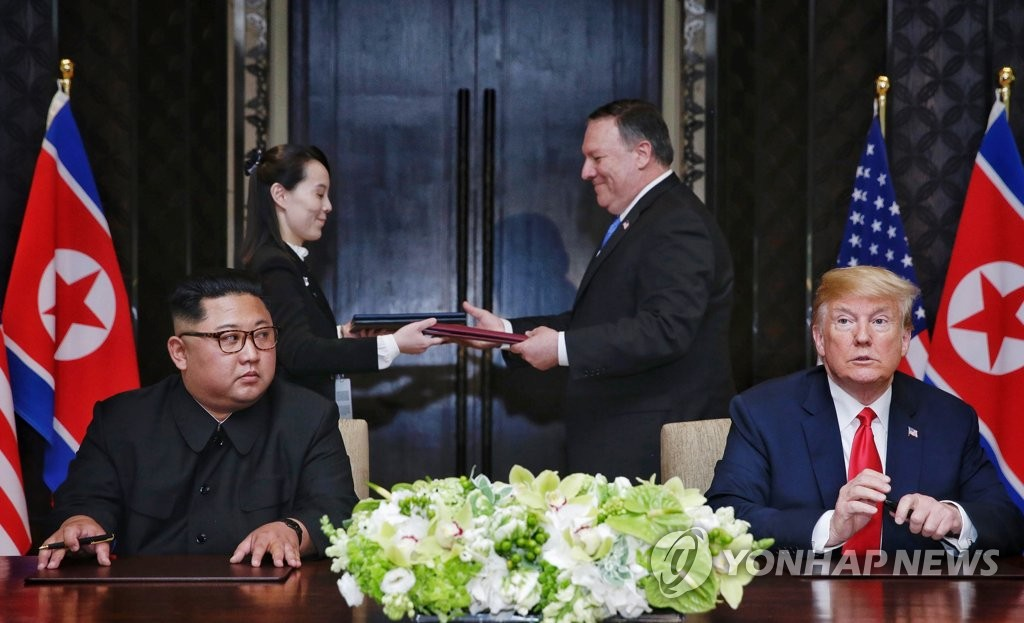
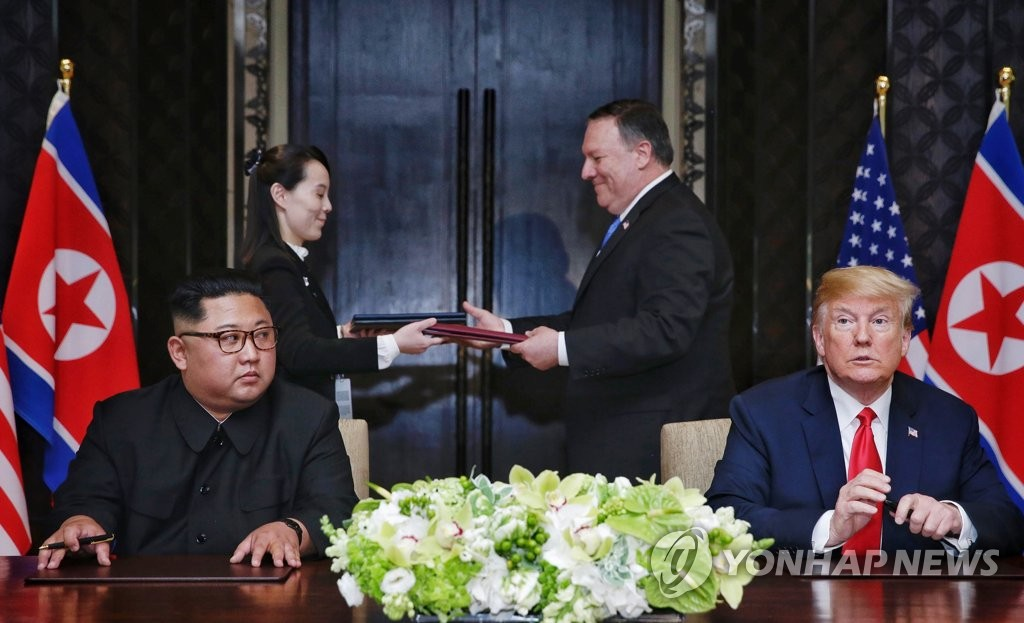
Such expectations, however, amount to wishful thinking when measured against North Korea’s strategic calculus and the Trump administration’s broader national strategy. While Trump’s unilateral and personalized leadership style does not entirely preclude a reprise of the Singapore summit, an assessment of his foreign policy over the past year suggests that the likelihood of major diplomatic progress in U.S.–DPRK relations is extremely low. There are three main reasons.
First, the Trump administration’s foreign and security doctrine is firmly rooted in “peace through strength,” emphasizing the protection of core U.S. national interests and traditional values. It seeks to preserve peace by maintaining superior power through military rebuilding. Economic security is viewed as national security, with tariffs serving as a central policy tool.
Key objectives include:
Containing China’s rise as a hegemonic power
Defending Taiwan
Rebuilding U.S. military capabilities and alliances
Defeating terrorism
Strengthening U.S. missile defense systems (e.g.Iron Dome)
Revitalizing the U.S. defense industrial base
Enhancing U.S. economic, military, and diplomatic capacity
Curbing illegal mass migration and reinforcing
border security
Countering information suppression and combating
malign propaganda
North Korea is listed among President Trump’s priority concerns, alongside China, Russia, Iran, and Venezuela, but recent developments indicate it is not a top-tier strategic priority. The administration does not intend to recognize North Korea as a de facto nuclear-weapons state but seeks primarily to deter military conflict. Although North Korea’s ICBMs pose a threat to the U.S. mainland, Trump’s assessment is that the threat is manageable. Unless North Korea offers significant concessions, substantive improvement in U.S.–DPRK relations is unlikely.
Second, North Korea has significantly deepened its strategic cooperation with China and Russia. By providing military support to Russia, at the cost of sending North Korean soldiers and civilians to the war in Ukraine, Kim Jong Un has secured economic, military, technological, and diplomatic backing from Moscow, thereby gaining limited leverage vis-à-vis Beijing. Unlike during the Cold War, when Pyongyang balanced between China and the Soviet Union, today Kim is building a stable support platform for a nuclear-armed DPRK by maintaining its traditional alliance with China while forging a new one with Russia.
The presence of top-ranking Chinese and Russian representatives at the military parade celebrating the 80th anniversary of the Workers’ Party of Korea symbolized this shift. Pyongyang is now operating within a near-alliance framework with both Beijing and Moscow, as well as within trilateral coordination among North Korea, China, and Russia. As strategic competition intensifies between the United States and China, and as U.S.–ROK and U.S.–ROK–Japan security cooperation expands, the Korean Peninsula is being drawn into a new Cold War–style bloc confrontation. While Washington, Seoul, and Tokyo continue to uphold North Korea’s denuclearization as their common goal, Beijing and Moscow effectively tolerate its nuclear status. Given this geopolitical backdrop, Pyongyang currently has little incentive to engage Washington seriously.
Third, North Korea sees no incentive in improving relations with South Korea. The current South Korean administration emphasizes peace and advocates bilateral engagement, calling for the resumption of suspended inter-Korean exchanges and cooperation. Yet the Kim regime no longer views the South as a partner for dialogue or a party to discuss unification. It has shifted to an “offensive” policy toward Seoul, abandoning the unification framework of the Kim Il-sung and Kim Jong-il eras and portraying inter-Korean relations as those between “two hostile states.” Pyongyang instead highlights its readiness for the “complete subjugation of the entire territory of South Korea” using military means, including nuclear weapons.
In response to the reference to “complete denuclearization of North Korea” in the South Korea–U.S. tariff negotiations, Pyongyang argued that it “denies the existence of our state” and demonstrates that “U.S. hostile intent toward the DPRK is consistent and enduring across its administrations.” It also denounced what it called the “master–servant relationship” between Washington and Seoul and criticized the expansion of the U.S.–ROK alliance beyond a regional framework. Moreover, North Korea’s current economic situation no longer depends heavily on resources from the South, as it once did.
In conclusion, the Kim Jong Un regime views “North Korean denuclearization” as synonymous with the “abandonment of its sovereignty and right to survive” and as an “unconstitutional act.” For Pyongyang, nuclear weapons constitute national law, national policy, sovereignty, and survival. So long as the regime and system maintain their current character, North Korea will not relinquish its nuclear arsenal. Any change in its position appears exceedingly unlikely. The Trump administration’s “peace through strength” strategy and the Kim regime’s own “peace through strength” policy are therefore poised for direct confrontation. North Korea is likely to respond to U.S. pressure with its familiar pattern of tit-for-tat offensive diplomacy.
While tensions could rise, both sides are expected to avoid triggering an uncontrollable escalation. China and Russia will act as counterweights to U.S. pressure, and North Korea will continue to leverage that support. Above all, Pyongyang will persist in demanding the withdrawal of Washington’s “hostile policy,” which it regards as the essential prerequisite for any improvement in U.S.–North Korea relations.
-
PREV [News&Issue]
-
NEXT [Column]