

Sino–Japanese Confrontation and the Korean Peninsula in a Transitional Global Order: Assessing the Impact of Prime Minister Takaichi’s Taiwan Contingency Statement

Heo Won-young
Research Professor
Asian Culture Research Institute
National Mokpo University
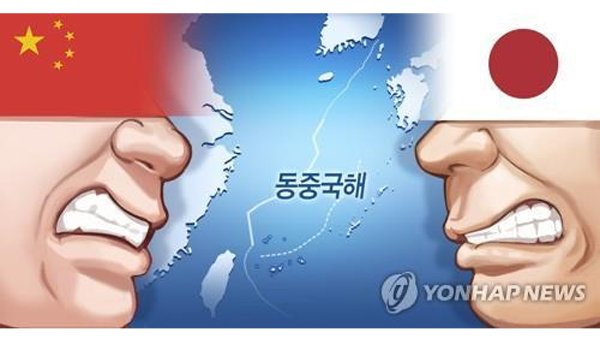
The recent escalation in tensions between China and Japan, sparked by Prime Minister Takaichi Sanae’s remarks in the Japanese Diet, has unfolded rapidly and with wide geopolitical reverberations. Within South Korea, however, the public reaction has largely resembled distant spectatorship, treating the confrontation as an external dispute with limited relevance to the Korean Peninsula.
Such an assessment is misguided. This confrontation is emerging not in a period of international stability but amid a profound transition in the global order. Moreover, the trajectory of Sino-Japanese tensions carries meaningful implications for security dynamics on and around the Korean Peninsula during this volatile period.
The current crisis began when Prime Minister Takaichi, responding to a question from Constitutional Democratic Party (CDP) lawmaker Katsuya Okada during the House of Representatives Budget Committee on November 7, 2025, stated: “If China were to employ naval assets and the use of force against Taiwan, it could constitute an existential crisis for Japan,” adding that Tokyo could respond “including through the exercise of collective self-defense.”
Takaichi’s reference to an “existential crisis situation” traces back to a 2014 Cabinet decision under the second Abe administration. Faced with intensifying regional security challenges, including China’s military rise and North Korea’s advancing nuclear and missile capabilities, Abe sought to loosen the constraints imposed by Article 9 of Japan’s constitution, which renounces war and prohibits maintaining military forces.
Although constitutional revision proved unattainable, his administration established a legal framework enabling Japan to exercise limited collective self-defense when an armed attack on a state “closely related to Japan” threatens the nation’s survival.
This framework effectively opens the door for Japan to use military force when its ally, the United States, is attacked. Still, its application to inadvertent clashes or rapidly unfolding contingencies remains highly constrained, as the constitution limits Japan’s use of force to the “minimum necessary.” For more than a decade, successive prime ministers have avoided presenting concrete scenarios in which the clause might apply.
Against this backdrop, Prime Minister Takaichi’s unusually explicit remarks were widely interpreted as signaling potential Japanese military involvement in a Taiwan contingency. Unsurprisingly, Beijing reacted sharply. On November 8, China’s Consul General in Osaka, Xue Jian, issued a provocative statement—“We cannot help but cut off the dirty neck”—fueling intense public anger in Japan. Soon after, China advised its citizens to avoid travel and study in Japan, while numerous concerts and cultural events involving Japanese performers in China were suspended or canceled.
The fallout has since expanded into economic and security domains. Chinese airlines suspended 16 percent of flights to Japan, and imports of Japanese seafood—only recently resumed—were halted again. On December 4, China mobilized more than 100 naval and coast guard vessels in a show of force. Two days later, Chinese military aircraft reportedly locked radar onto Japanese Air Self-Defense Force jets, deepening the deterioration of bilateral relations.
Two structural factors merit particular attention.
First, China’s hardline response is rooted in the Xi administration’s broader challenge to the postwar regional order established by the San Francisco Peace Treaty. Beijing has recently asserted that the treaty is invalid and that Taiwan is “territory that defeated Japan must return to China.” In this context, Takaichi’s remarks have been leveraged by Beijing to strengthen domestic messaging on cross-strait issues, an area in which China is unlikely to compromise.
Second, the factors driving Prime Minister Takaichi’s refusal to retract her remarks extend beyond her personal views. Japanese public sentiment has grown markedly hawkish since the early 2010s, shaped by repeated confrontations over the Senkaku Islands and a deepening sense of strategic vulnerability. A firm posture toward China now offers political advantage and strong public resonance.
Moreover, the decline of pro-China factions within the Liberal Democratic Party and the exit of Komeito, historically a channel for Japan–China communication, from the governing coalition have eroded Tokyo’s diplomatic flexibility. These developments suggest that the current confrontation may persist for the foreseeable future.
More broadly, the Sino-Japanese confrontation is unfolding amid a larger shift in U.S.–China competition and a reconfiguration of the international system itself. This broader context yields three key implications for the Korean Peninsula.
First, the crisis underscores the erosion of the “Indo-Pacific” framework that centered on constraining China. The newly released National Security Strategy (NSS) of the second Trump administration emphasizes the importance of the Taiwan issue but adopts a noticeably restrained tone regarding China’s military threat. It reiterates President Trump’s long-standing view that alliances are not inherently beneficial and must be justified through greater burden sharing. The administration has offered no meaningful backing for Prime Minister Takaichi’s remarks.
These trends suggest that the U.S.-led liberal international order, dominant since the end of the Cold War, is hollowing out beyond the economic domain. With the United States redefining the Western Hemisphere as its core strategic interest, and with the latest NSS making no reference to North Korea, global politics are increasingly characterized by raw power dynamics.
In such an environment, the strategic preferences of great powers, particularly the United States, China, and Russia, will carry greater weight than the positions of middle powers such as South Korea. Accordingly, Seoul must prepare for a future in which its share of security responsibilities grows significantly.
Second, Seoul must consider the possibility that a Taiwan contingency could intersect with a Korean Peninsula contingency through the dynamics of Sino-Japanese conflict. The current confrontation is driven in part by the globalization of the U.S.–Japan alliance, shaped by Washington’s efforts to reduce its own security burdens, a shift that has transformed Japan’s domestic legal environment.
Parallel debates within the ROK–U.S. alliance, particularly over force modernization and expanded strategic flexibility for U.S. Forces Korea (USFK) under the second Trump administration, are closely linked to these developments. South Korea must recognize that USFK is no longer confined to deterring North Korea alone but may serve as a readily deployable asset in a Taiwan Strait crisis. This necessitates a reassessment of the ROK military’s long-term strategic planning.
Third, Japan’s increasingly extreme anti-China sentiment may affect Korea–Japan relations and broader Peninsula dynamics. Within Japanese society, the political space for moderation or pragmatic engagement on China-related issues is shrinking. As Tokyo’s diplomatic flexibility erodes, tensions across East Asia may rise, creating conditions that could drive North Korea to tighten its alignment with China or Russia.
For South Korea, cooperation with Japan is not a discretionary policy choice but a strategic necessity in this transitional era. Seoul must therefore maintain a balanced posture between China and Japan, reduce bilateral frictions, and strengthen channels for cooperation.
In sum, the Sino-Japanese conflict represents more than a bilateral dispute; it is a critical indicator of the shifting regional and global order. Its evolution will shape the strategic environment of the Korean Peninsula in ways that demand careful, forward-looking preparation by South Korea.
-
PREV [Thematic Analysis]
-
NEXT [Thematic Analysis]