

The Significance and Challenges of the Three Core Objectives in the Lee Jae-myung Administration’s Korean Peninsula Peace Initiative
Jong-cheol Park
Visiting Professor, Daejeon University
I. Strategic Significance of the Three Core Objectives
The year 2025 marks the 80th anniversary of both Korea’s liberation and its subsequent division. Over the past eight decades, profound transformations have occurred in the international order, the global ecological environment, inter-Korean relations, and the nature of the North Korean threat.
The post–Cold War era of U.S. unipolarity has given way to a complex multipolar environment characterized by fragmentation across security, economic, cultural, and global governance domains. At the same time, advances in science and technology, industrial restructuring, climate change, and energy transitions are unfolding in overlapping and mutually reinforcing ways.
Inter-Korean relations, which fluctuated between engagement and confrontation in the post-Cold War period, have entered a prolonged phase of near-total stalemate. North Korea has consolidated its nuclear capabilities as a de facto reality, articulated a doctrine of “two hostile states,” and oriented its strategy toward sustained confrontation with the South.
This convergence of domestic and international shifts necessitates a comprehensive reassessment of South Korea’s North Korea and unification policy. A new paradigm for peace and coexistence is required—one that responds to transformations in the international system and global environment while realistically addressing altered inter-Korean dynamics.
Against this backdrop, President Lee Jae-myung articulated three core objectives for peace on the Korean Peninsula in his 2025 Liberation Day address: (1) institutionalizing peaceful coexistence between the two Korea, (2) restoring the foundations for exchange and cooperation while creating conditions for joint growth, and (3) pursuing a nuclear-free Korean Peninsula through international cooperation.
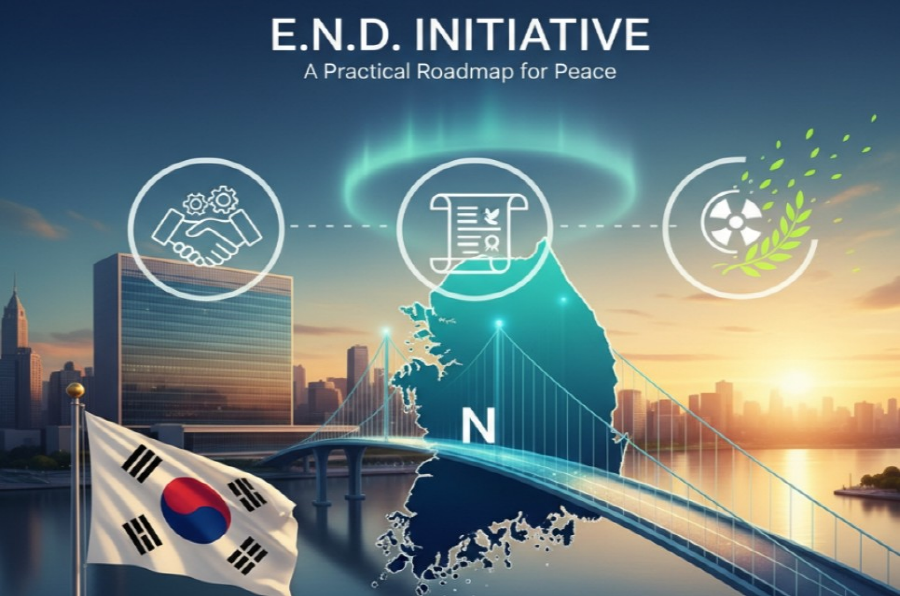
The first objective—institutionalizing peaceful coexistence—seeks to end entrenched hostility and establish durable mechanisms for peace, including the prevention of accidental clashes and the effective management of crises. In this context, President Lee emphasized respect for North Korea’s system, rejection of absorption-based unification, and the exclusion of hostile acts.
The central pillar of this objective is the restoration of trust through sustained dialogue. Accordingly, the administration has undertaken initial confidence-building measures, such as halting leaflet distribution and suspending loudspeaker broadcasts, while signaling its intention to implement more substantive tension-reduction steps.
The administration has also committed to respecting existing inter-Korean agreements reached under previous governments and selectively implementing feasible provisions. In particular, it has proposed a phased restoration of the September 19 Military Agreement as a practical mechanism to prevent accidental clashes and rebuild military confidence. Restoring inter-Korean communication channels, including military crisis management mechanisms, is viewed as essential to consolidating an institutional framework for peace.
The second objective—restoring the foundations for exchange and cooperation and creating conditions for joint growth—seeks to rebuild socio-economic linkages through the resumption of exchanges in daily life, economic activity, and social engagement.
Cooperation is to be pursued on the basis of mutual benefit and shared prosperity, with the goal of increasing interdependence and reinforcing the material foundations of stable peace. By delivering tangible improvements to the lives of both North and South Koreans, this approach aims to enhance the long-term sustainability of peaceful coexistence.
The third objective—achieving a nuclear-free Korean Peninsula through international cooperation—acknowledges that denuclearization is a complex and protracted challenge unlikely to be resolved in the short term. The administration therefore envisions a multi-layered approach combining inter-Korean dialogue, U.S.–North Korea engagement, and coordinated multilateral diplomacy. The peaceful resolution of the nuclear issue is to be pursued through close South Korea–U.S. coordination, renewed North Korea–U.S. dialogue, and sustained international cooperation.
II. Key Policy Tasks Across the Three Objectives
In its 2025 year-end work report, the Ministry of Unification outlined concrete measures aligned with these objectives. Based on the Ministry’s policy direction, the key tasks can be summarized as follows.
1. Institutionalizing Peaceful Coexistence
Restoring inter-Korean communication channels is an immediate priority. The prolonged absence of dialogue has exacerbated misunderstandings and mistrust, underscoring the urgency of reestablishing mechanisms such as the Panmunjom liaison channel and military hotlines. Beyond restoration, jointly agreed procedures and safety protocols are needed to ensure effective crisis management.
The phased reinstatement of the September 19 Military Agreement is particularly important for tension reduction and trust building. Institutionalizing confidence-building measures, such as establishing a joint inter-Korean crisis management center and developing a shared crisis response platform, would further strengthen stability.
Over the medium to long term, a coherent roadmap toward a peace regime is required. Building on prior discussions, this roadmap should articulate sequential steps toward an end-of-war declaration, a peace agreement, and the formal establishment of a peace regime. Additionally, concluding a “Basic Inter-Korean Agreement” defining peaceful relations oriented toward eventual unification would provide a legal and normative foundation. Enacting a “Peaceful Unification Foundation Act” could further facilitate public participation in peacebuilding efforts.
2. Restoring the Foundations for Exchange, Cooperation, and Joint Growth
In light of global ecological changes and growing livelihood concerns, policy innovation is required to identify cooperation projects that deliver tangible benefits to populations on both sides of the border. Healthcare cooperation represents a particularly promising entry point.
Comprehensive action plans addressing infectious diseases, maternal and child health, and healthcare infrastructure should be developed. One option would be to establish a trust fund to support disease eradication, medical supply provision, and pilot hospital modernization projects, implemented in partnership with international organizations and non-governmental actors.
Climate and environmental cooperation could be advanced through multilateral carbon-neutrality frameworks. Given North Korea’s expressed interest in engaging international institutions on climate issues, the two Koreas could pursue cooperation within existing multilateral mechanisms. Similarly, in the area of disaster safety, a Korean Peninsula Disaster Risk Cooperation Program could be developed to facilitate rapid joint responses to natural disasters, drawing on international emergency response frameworks.
Peacebuilding in border regions also holds significant potential. Establishing legislation for the peaceful use of the DMZ, implementing safeguards for border residents, and operationalizing the Special Peace Economy Zone Act would support balanced regional development. In parallel, restoring civilian-centered exchange requires easing restrictions on interpersonal contact and expanding both the scope and utilization of the Inter-Korean Exchange and Cooperation Fund.
3. A Nuclear-Free Korean Peninsula and International Cooperation
Progress on denuclearization is closely linked to prospects for peaceful coexistence and joint growth. A phased approach should be adopted, beginning with initial limitations on nuclear capabilities, followed by gradual reductions over the medium to long term. For each phase, a calibrated package combining security assurances and economic incentives should be articulated.
Efforts to resume U.S.–North Korea dialogue and inter-Korean dialogue must proceed in parallel. South Korea’s role as a facilitator—helping to create conditions conducive to renewed U.S.–North Korea engagement—is critical. This requires close coordination with the United States, as well as the maintenance of constructive relations with China, Russia, and other key stakeholders. To further broaden international support, the appointment of dedicated “Korean Peninsula Peace Envoys” to major capitals could also be considered.
III. Conclusion
The Lee Jae-myung administration’s Korean Peninsula Peace Initiative seeks a structural transformation of inter-Korean relations through peace management, restored exchange and cooperation, and multilateral denuclearization efforts. At its core, the initiative aims to rebuild trust, institutionalize peace through socio-economic interdependence, and expand international cooperation in pursuit of a nuclear-free peninsula.
Realizing these objectives will require a phased and systematic policy package supported by detailed implementation plans. In parallel, sustained efforts to reduce inter-Korean tensions and strengthen international coordination are essential.
Domestically, expanding peace, unification, and democratic citizenship education can help build public consensus for peaceful coexistence. At the same time, strengthening governance through greater transparency, expanded access to North Korea–related materials, and enhanced research infrastructure will be critical to sustaining informed and effective policymaking.
Taken together, these efforts represent a pragmatic attempt to adapt peace policy on the Korean Peninsula to a transformed strategic environment—one in which managing risk, institutionalizing stability, and broadening cooperation are no longer optional but necessary.
-
PREV [Issue Brief]
-
NEXT [Thematic Analysis]