

Envisioning a Joint Inter-Korean Winter Olympics
Jong-hwa Park
Chairman
Peace and Unification Solidarity
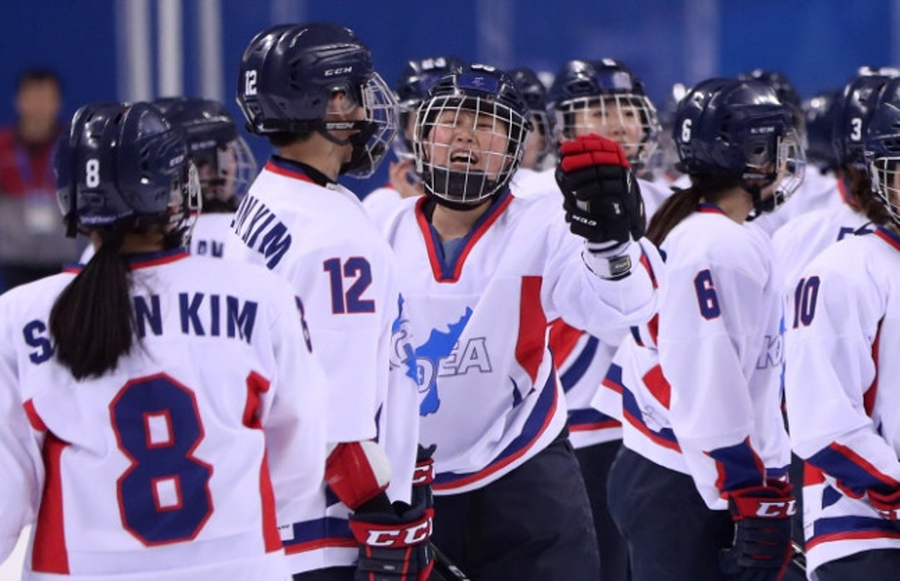
The 2018 PyeongChang Winter Olympics represented a deliberate effort to ease entrenched tensions on the Korean Peninsula and to create diplomatic space for engagement. North Korean officials, athletes, and cheerleaders traveled to PyeongChang, and the Games fostered an atmosphere in which governmental and non-governmental actors alike participated in what may fairly be described as a notable instance of sports diplomacy. The event also set the stage for unprecedented high-level diplomacy, including direct engagement between North Korea and the United States.
While South Korea’s active facilitation was indispensable, the subsequent convening of two U.S.–North Korea summits—the Singapore Summit (June 12, 2018) and the Hanoi Summit (February 27–28, 2019)—also reflected the political incentives of the respective leaders. Both President Donald Trump and Chairman Kim Jong Un demonstrated a willingness to depart from established diplomatic practice, motivated in part by the strategic value of high-visibility engagement on the global stage.
Notwithstanding these developments, the structural realities of the Korean Peninsula remain resistant to rapid transformation. The geopolitical and diplomatic environment differs markedly from the conditions that enabled German reunification.
Since the simultaneous admission of both Koreas to the United Nations in 1991, South Korea has maintained normalized diplomatic and trade relations not only with the United States and Japan but also with China and Russia. By contrast, North Korea continues to lack formal diplomatic relations with the United States and Japan.
At the center of current tensions lies the North Korean nuclear issue—a complex and multidimensional challenge. The two U.S.–North Korea summits concluded without formal agreements. Although both sides articulated broad principles—North Korea’s commitment to “complete denuclearization” and U.S. security guarantees—the resulting joint statements did not specify implementation mechanisms, sequencing, or verification procedures. The absence of such details ultimately limited the durability of those diplomatic efforts.
The absence of a North Korean delegation at the Milan–Cortina Winter Olympics represented a missed opportunity for renewed inter-Korean contact. However, forthcoming diplomatic developments may prove consequential. Should a new opportunity for a U.S.–North Korea summit emerge in connection with President Trump’s anticipated April visit to China, it could create diplomatic momentum with implications for the broader regional environment.
Recent reports following a meeting between South Korean Foreign Minister Hyun-joon Cho and U.S. Secretary of State Marco Rubio indicate that the United States may be open to limited flexibility regarding the UN Security Council sanctions regime established after North Korea’s first nuclear test in 2006 (UNSCR 1718).
In particular, Washington has reportedly signaled openness to humanitarian exceptions, including nutritional assistance, medical supplies, and support for water infrastructure. Given the United States’ central role in sustaining the sanctions framework, such signals may be interpreted as an opening for calibrated engagement.
If the United States and Japan—neither of which maintains diplomatic relations with Pyongyang—were to adopt similarly constructive approaches, such steps would align with Seoul’s longstanding policy objective of fostering inter-Korean exchange, peaceful coexistence, and shared prosperity. Participation by China and Russia in such efforts would also be essential.
Under these circumstances, it may be more productive to focus less on the binary question of formal recognition versus tacit acceptance of North Korea’s nuclear status, and instead to establish the long-term objective of a denuclearized and secure Korean Peninsula as a shared strategic goal. A phased approach—potentially beginning with a verified nuclear freeze—could provide a pragmatic starting point for negotiations.
South Korea, both because of and despite the reality of division, has invested heavily in its national defense capabilities and is widely regarded as possessing one of the world’s leading conventional military forces. It has likewise achieved significant economic, technological, and cultural advancement. North Korea, though economically underdeveloped, has declared itself a nuclear-armed state.
The war in Ukraine has underscored the fragility of security assurances. Ukraine’s decision to relinquish its nuclear arsenal under the 1994 Budapest Memorandum—receiving assurances from Russia, the United States, and the United Kingdom—did not ultimately prevent territorial violation or sustained conflict. This experience inevitably shapes strategic calculations on the Korean Peninsula.
North Korea’s reported military support for Russia—including personnel and materiel—has come at significant human cost, but it has also reportedly provided combat experience as well as economic and strategic compensation. At the same time, the war has demonstrated the immense material and human costs of sustained conflict and the burdens of post-war reconstruction. These lessons may shape long-term security assessments in Pyongyang.
Looking ahead, North Korea may seek to diversify its external partnerships beyond reliance on limited economic support from China, while exploring calibrated engagement with the United States and Japan. For its part, South Korea could interpret North Korea’s declaration of a “hostile two-state relationship” not as a permanent rupture but as a provisional stage consistent with the 1991 Inter-Korean Basic Agreement, which envisioned two systems coexisting within a broader national framework.
Reducing Pyongyang’s concern over potential “absorption unification” and instead promoting peaceful coexistence characterized by constructive competition may create conditions conducive to gradual integration. Unlike the German case—where political absorption preceded social integration—the Korean Peninsula may benefit from a model that prioritizes peaceful coexistence, reciprocal development, and incremental reconciliation. In the context of an increasingly multipolar Northeast Asia, such an approach would emphasize autonomy, prudence, and long-term stability.
Within this broader strategic vision, sports diplomacy retains both symbolic and practical value. If incremental confidence-building measures accumulate, the possibility of a jointly hosted Olympic Games in 2032 could become more realistic. The co-hosting model adopted by Milan and Cortina for the 2026 Winter Olympics demonstrates the viability of geographically distributed arrangements. A Seoul–Pyongyang joint bid, if conditions permit, could serve simultaneously as a symbol and instrument of reduced tensions.
Sport is inherently competitive, and victory is celebrated through medals. Yet the enduring value of sport lies in the discipline, cooperation, and mutual respect cultivated through the process itself. A jointly hosted 2032 Olympic Games would not, in itself, resolve the structural challenges of the Korean Peninsula. It could, however, provide a meaningful platform for reducing tensions, promoting regional stability, and advancing a broader vision of peace and shared prosperity in Northeast Asia.
The aspiration for a Seoul–Pyongyang Olympic Games is therefore not merely symbolic; it reflects a strategic hope that incremental confidence-building, sustained diplomacy, and peaceful coexistence may ultimately create the conditions for a more stable and cooperative Korean Peninsula.
-
PREV [Thematic Analysis]
-
NEXT [Thematic Analysis]