

The Importance of Security and Economic Cooperation
Between South Korea and Southeast Asian Nations
Following the ASEAN Summit

Nam-eun Kim
Professor
Chungnam National University
The 48th ASEAN Summit and the Strategic Challenges Facing South Korean Diplomacy
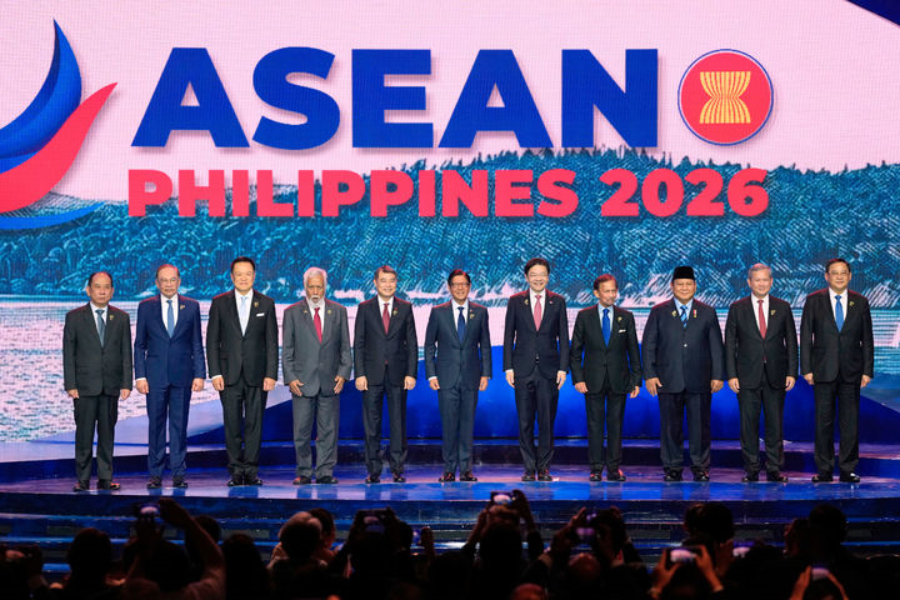
The 48th ASEAN Summit, held on May 8, 2026, in Cebu, Philippines, reaffirmed that Southeast Asia can no longer remain on the periphery of great-power competition. The theme of the summit, “Navigating Our Future, Together,” reflected ASEAN’s determination not to remain a passive object of the regional order, but rather to establish a common direction and proactively shape the future regional cooperative order. Based on this awareness, ASEAN leaders reaffirmed the importance of ASEAN solidarity, centrality, and a rules-based regional order.
Amid the simultaneous emergence of energy and food supply instability, uncertainty surrounding maritime transport routes, tensions in the South China Sea, the situation in Myanmar, financial market volatility, and the growing challenges of climate change and disaster response, this message demonstrated ASEAN’s resolve to address these practical challenges collectively.
The most prominent agenda item at the summit was the issue of energy and food security arising from the Middle East crisis. ASEAN leaders discussed the impact of the deteriorating situation in the Middle East on regional trade, energy prices, air and maritime transportation, and the protection of citizens overseas, while emphasizing the need for a coordinated response.
In particular, initiatives such as regional fuel stockpiling, diversification of crude oil import sources, emergency fuel-sharing arrangements, and power-grid interconnection suggest that ASEAN has begun to view supply shocks not as isolated national problems, but as a shared economic security challenge.
This carries important implications for South Korea as well, given that the South Korean economy remains heavily dependent on energy imports, maritime shipping routes, and supply chains related to semiconductors, batteries, automobiles, and shipbuilding. The stability of Southeast Asia’s supply chains should therefore no longer be viewed as an issue confined to the region, but rather as a matter directly linked to South Korea’s economic security.
Maritime cooperation was another major outcome of the summit. ASEAN leaders adopted a declaration on maritime cooperation and reaffirmed the importance of regional peace and stability, maritime safety, the blue economy, marine environmental protection, and respect for international law.
The declaration is significant in that it approaches maritime issues not merely as matters of territorial disputes or military tensions, but as a comprehensive agenda encompassing freedom of navigation, the stability of maritime transport routes, the sustainable use of marine resources, and maritime risk management. Given that the majority of South Korea’s foreign trade depends on maritime shipping routes, stability in the South China Sea and Southeast Asian waters directly affects the country’s exports and imports, energy security, and supply-chain operations.
These summit outcomes demonstrate that South Korea’s cooperation with Southeast Asia must expand beyond trade promotion and development assistance to encompass regional stability and economic security as well. Southeast Asia is not only a production base and market for South Korean companies, but also a strategic space for cooperation where South Korea’s energy security, maritime transport routes, supply-chain restructuring, and peace diplomacy on the Korean Peninsula converge.
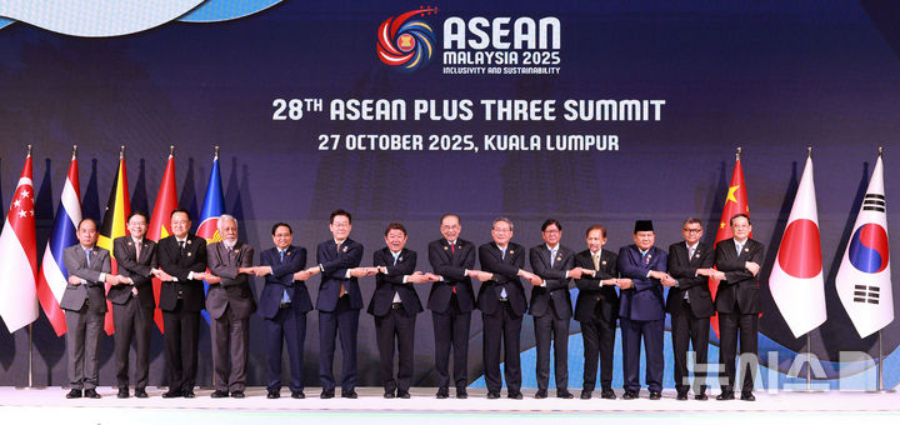
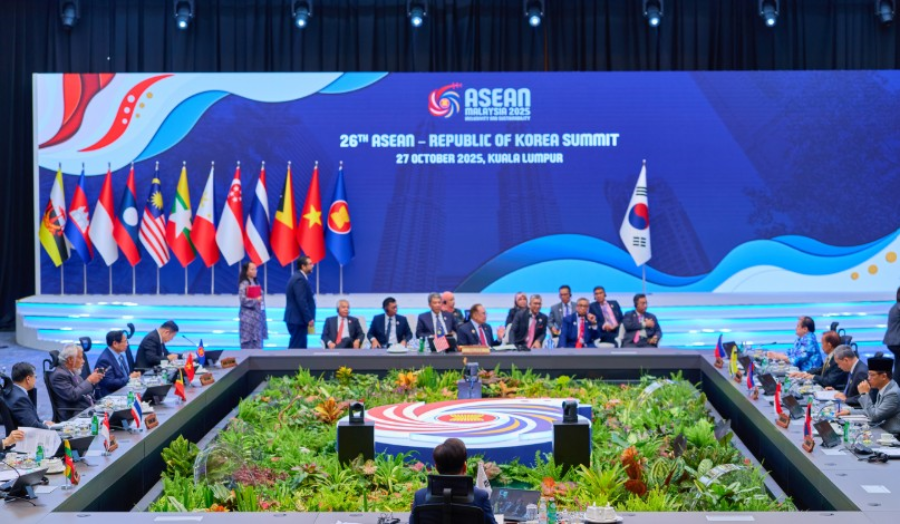
In particular, following the elevation of South Korea–ASEAN relations to a Comprehensive Strategic Partnership in 2024 and the adoption of the 2026–2030 Action Plan, cooperation between South Korea and ASEAN is moving beyond declaratory friendship and entering a phase of practical implementation.
The Action Plan encompasses political and security cooperation, economic cooperation, connectivity, sustainability, and people-to-people exchanges, thereby providing an institutional foundation for advancing South Korea–ASEAN cooperation in parallel with both ASEAN Community-building efforts and South Korea’s broader regional strategy.
Therefore, the task facing South Korean diplomacy following the 48th ASEAN Summit is clear. The challenges highlighted at the summit—energy and food security, maritime cooperation, supply-chain stability, and regional crisis management—also constitute direct strategic and diplomatic challenges for South Korea.
How will South Korea utilize ASEAN as a regional base of support for peace on the Korean Peninsula? How will it build economic security partnerships capable of jointly addressing supply-chain risks? And how will it strengthen Indo-Pacific connectivity through port, rail, and digital logistics networks? The strategic challenges confronting South Korea–Southeast Asia cooperation in the aftermath of the 48th ASEAN Summit stem precisely from these three questions.
Peace on the Korean Peninsula and ASEAN: Strategic Utilization of Spaces for Dialogue
The first strategic challenge for South Korea–Southeast Asia cooperation is to broaden the regional support base for peace on the Korean Peninsula. This ASEAN Summit reaffirmed that ASEAN is a regional cooperative body that has consistently managed complex regional issues—such as energy and food security, maritime cooperation, the situation in Myanmar, and the South China Sea dispute—within a multilateral consultative framework. Although ASEAN is not a security alliance with coercive power, it has played an important role in keeping regional conflicts on the agenda and maintaining channels of dialogue.
The issue of the Korean Peninsula should also be approached within this context. While ASEAN is not a direct party to the conflict, the fact that many of its member states maintain diplomatic relations with both North Korea and South Korea provides a foundation for expanding discussions on peace on the Korean Peninsula to the Southeast Asian level.
In particular, the ASEAN Regional Forum (ARF) holds diplomatic significance as it is virtually the only regional multilateral security consultative body in which North Korea participates. Of course, the ARF is not a negotiating framework capable of directly resolving North Korea’s nuclear and missile issues.
However, it provides a channel through which the Korean Peninsula issue can be addressed not merely as a military concern confined to Northeast Asia, but as an agenda item affecting peace and stability across the broader Indo-Pacific region. Through this framework, South Korea can clearly convey the international community’s concerns regarding North Korea’s nuclear and missile development while simultaneously emphasizing the need for tension reduction and the resumption of dialogue.
South Korea’s cooperation with ASEAN must be pursued on the basis of the recognition that North Korea’s nuclear and missile development constitutes a challenge to international norms and UN Security Council resolutions. However, upholding these principles does not mean severing diplomatic channels.
While a framework of deterrence and sanctions remains necessary in response to rising North Korean military tensions, the complete closure of channels for tension management could increase the risk of accidental conflict and miscalculation. Therefore, while maintaining a principled stance, South Korea must preserve at least a minimal diplomatic opening for the resumption of dialogue.
ASEAN’s significance lies not in its direct influence over North Korea, but in its diplomatic continuity—its consistent treatment of the Korean Peninsula issue as an agenda item related to regional peace and stability. South Korea must leverage this continuity to underscore that North Korea’s nuclear and missile issues are not merely a crisis on the Korean Peninsula, but also a regional agenda item linked to the stability of Southeast Asia. Through this process, the diplomatic foundation for peace on the Korean Peninsula can be expanded beyond Northeast Asia to encompass Southeast Asia as well.
The following are concrete measures to achieve this:
▪ Regularization of South Korea-ASEAN Consultations on Peace on the Korean Peninsula
South Korea needs to regularly address issues related to peace on the Korean Peninsula and regional stability within the political and security cooperation framework of the Korea–ASEAN Comprehensive Strategic Partnership. These consultations should not constitute a separate negotiating body focused solely on the North Korean nuclear issue, but rather a policy dialogue aimed at jointly assessing how developments on the Korean Peninsula affect Southeast Asia’s security environment and economic security.
Through this approach, South Korea can broaden the Korean Peninsula issue beyond a narrow intra-regional security concern confined to Northeast Asia and frame it as a shared interest linked to stability across the broader Indo-Pacific region.
▪ Coordinating Messages on North Korea through the ARF
South Korea should utilize the ARF to clearly convey the international community’s concerns regarding North Korea’s nuclear and missile development, while also emphasizing that the door to dialogue remains open should North Korea cease escalating tensions and return to the negotiating table.
The key is to maintain the message that the diplomatic door has not been completely closed, without undermining the necessity of sanctions and pressure. Through this approach, South Korea, together with ASEAN member states, can consistently present the diplomatic options available to North Korea should it choose to comply with international norms.
▪ Parallel Implementation of Sanctions Against North Korea and Non-Traditional Security Cooperation
Given that some ASEAN countries maintain diplomatic relations with North Korea, South Korea should promote information sharing and capacity-building efforts regarding the implementation of sanctions against North Korea, while ensuring that the scope of humanitarian assistance and non-traditional security cooperation is not entirely constrained by the logic of sanctions.
Areas such as food security, public health, disaster response, climate adaptation, and maritime safety can contribute to easing tensions on the Korean Peninsula and building regional trust, provided that such cooperation does not conflict with the sanctions regime. Therefore, South Korea must distinguish between principled cooperation aimed at preventing sanctions evasion and limited humanitarian cooperation intended to alleviate humanitarian crises.
For these measures to be meaningful, the scope and limits of cooperation with ASEAN must be clearly defined. ASEAN is not an actor with the coercive power to directly drive North Korea’s denuclearization, and its member states do not share identical perceptions of North Korea or identical strategic interests.
Therefore, rather than positioning ASEAN as the primary actor in resolving the Korean Peninsula issue, South Korea should utilize it as a cooperative space for fostering a conducive environment for dialogue and expanding regional support. When this point is clearly understood, cooperation with ASEAN can serve as a practical means of complementing South Korea’s peace diplomacy on the Korean Peninsula, rather than becoming engagement without principles.
Supply Chain Resilience: The Significance of Southeast Asia as an Economic Security Partner
The second strategic task of South Korea–Southeast Asia cooperation is the strengthening of supply-chain resilience. At the ASEAN Summit, supply-chain issues were raised not merely as a general economic cooperation agenda, but as an urgent economic security priority in response to the ripple effects of the Middle East crisis. ASEAN leaders discussed the impact of the deteriorating situation in the Middle East on regional trade, energy markets, maritime and air transport, and the safety of citizens abroad, while emphasizing the need for a coordinated response.
In particular, fuel stockpiling, diversification of crude oil import sources, emergency fuel-sharing arrangements, regional power-grid interconnection, and food supply stability emerged as key economic security priorities at the summit. This demonstrates that ASEAN is addressing supply-chain crises not merely as logistical disruptions or price increases, but as complex challenges involving energy security, food security, maritime transport routes, and the protection of citizens.
This issue has direct implications for South Korea as well. The South Korean economy relies heavily on energy imports, maritime transport routes, and production and logistics networks related to semiconductors, batteries, automobiles, and shipbuilding. Therefore, the stability of supply chains in Southeast Asia must be regarded as a key foundation for the stable functioning of the South Korean economy.
If the shock stemming from the Middle East crisis leads to higher energy prices, fuel supply disruptions, rising food prices, and increased maritime shipping costs, the production, logistics, and import–export structures of South Korean companies will inevitably be directly affected. South Korea’s supply-chain cooperation with ASEAN must therefore be designed not merely to diversify production bases for specific industries, but also to strengthen regional resilience so that access to energy, logistics, production, and markets can be maintained even during times of crisis.
Southeast Asia is already a key production and investment hub, as well as an important growth market for South Korea. However, the summit demonstrated that Southeast Asia has established itself as an economic security partner connected to the stability of energy, food, logistics, and power grids, going beyond its traditional role as a production base and consumer market.
Indonesia’s critical minerals, Vietnam’s electronics and components production networks, Singapore’s role as a financial and logistics hub, and the electrical, electronics, and automotive industrial bases of Malaysia and Thailand are all closely linked to the resilience of South Korea’s supply chains.
What is crucial is not to limit this cooperation to the mere expansion of investment in individual countries, but to develop it into a cooperative framework that integrates production, logistics, energy, finance, human resources, and institutional arrangements. While respecting ASEAN centrality, South Korea must establish a cooperation model that simultaneously supports ASEAN’s industrial upgrading and strengthens the resilience of South Korean companies’ supply chains.
The concrete action plans to achieve this are as follows:
▪ Establishing a Supply Chain Risk Response System
South Korea and ASEAN need to establish a consultative framework for proactively sharing risks related to energy, critical minerals, food, semiconductor components, battery materials, and logistics routes. The fact that the Middle East crisis and instability in maritime transport routes were addressed as key agenda items at the summit demonstrates that such risks can expand beyond issues affecting individual countries and evolve into economic security concerns for the entire region.
Therefore, South Korea must work with ASEAN to establish a system capable of the early detection of, and response to, supply disruptions involving key commodities, port congestion, maritime transport risks, surging raw material prices, and energy supply disruptions.
▪ Packaging Cooperation on Key Industrial Supply Chains
South Korea’s supply-chain cooperation with ASEAN must not be limited to expanding investment in individual industries. Sectors such as batteries, electric vehicles, semiconductor back-end processes, electronic components, and energy storage devices all require the coordinated functioning of raw material procurement, materials and parts production, workforce development, logistics networks, and environmental standards to ensure stability.
Building on its technological expertise and industrial experience in batteries, electric vehicles, semiconductors, and the electrical and electronics industries, South Korea must develop a cooperation model that integrates these capabilities with ASEAN’s critical minerals, production bases, logistics hubs, and workforce resources. Such cooperation should go beyond mere cost reduction or resource acquisition and instead aim to simultaneously strengthen ASEAN’s industrial infrastructure and enhance the procurement and logistics stability of South Korean companies.
▪ Expanding Cooperation on Food and Energy Security
As the summit elevated energy and food security to key agenda items, South Korea needs to expand cooperation in these areas at the level of regional public goods. Cooperation in smart agriculture, food storage and processing, cold-chain logistics, energy storage systems, renewable energy, power-grid management, hydrogen, and ammonia is directly linked to stabilizing livelihoods and strengthening ASEAN’s industrial base.
This represents an opportunity for South Korean companies to expand their presence, while also serving as a means of enhancing regional supply-chain resilience amid recurring crises in the Middle East and instability in maritime transport routes.
Such cooperation aligns not only with the need to ensure stable supply chains for South Korean companies, but also with ASEAN’s practical need to address vulnerabilities in energy, food, and logistics. When South Korea contributes to strengthening ASEAN’s industrial base, economic cooperation with ASEAN can evolve beyond mere investment expansion into a form of economic security cooperation through which both South Korea and ASEAN jointly mitigate risks.
Infrastructure Connectivity: Concrete Cooperation on Ports, Railways, and Digital Logistics
The third strategic task for South Korea–Southeast Asia cooperation is strengthening infrastructure connectivity centered on ports, railways, and digital logistics. The energy and food security and maritime cooperation emphasized at the ASEAN Summit are not merely crisis-response agendas.
To ensure the stable movement of energy and food, and to prevent instability in maritime transport routes from escalating into actual economic shocks, ports, railways, roads, storage facilities, power grids, and customs clearance systems must function in an integrated manner. Therefore, ports, railways, and digital logistics are not merely ancillary elements of supply-chain cooperation, but rather foundational infrastructure for implementing the economic security agenda highlighted at the summit.
In particular, infrastructure cooperation in Southeast Asia should not be approached solely as a matter of constructing individual facilities. Even if port capacity is expanded, logistics efficiency will be difficult to improve without effective connections to hinterland railways and roads. Similarly, even if a railway network is developed, supply-chain stability will remain limited if customs procedures and logistics data systems continue to operate in isolation.
Food security, too, cannot be achieved through increased production alone; storage and processing facilities, cold-chain logistics, port handling capacity, and digital customs clearance systems must all function in an integrated manner. In this regard, cooperation in ports, railways, and digital logistics constitutes a key area that simultaneously supports the strengthening of ASEAN connectivity and South Korea’s economic security.
South Korea can make a substantial contribution to this cooperation based on its experience in port operations, railway systems, smart logistics, digital customs clearance, cold-chain logistics, power grids, energy storage systems, and the shipping and shipbuilding sectors.
However, South Korea’s role should not be limited to simply participating in individual infrastructure projects. By proposing a cooperation model that integrates ports, railways, logistics data, hinterland industrial complexes, and energy infrastructure, South Korea can contribute to strengthening ASEAN connectivity while also expanding a stable foundation for South Korean companies’ market entry.
Therefore, infrastructure cooperation should be designed from the perspective of “connectivity” rather than mere “construction.” Port automation, rail–port integration, logistics data platforms, digital customs clearance, cold-chain logistics, eco-friendly vessels, and disaster-resilient infrastructure are areas in which ASEAN’s growth strategies and South Korea’s industrial capabilities converge. To this end, South Korea needs to consider implementation strategies in three key directions.
▪ Integrated Infrastructure Cooperation Linking Ports, Railways, and Industrial Complexes
South Korea needs to propose an integrated cooperation model that bundles ports, railways, hinterland industrial complexes, and logistics centers into a single project framework. By leveraging ODA, the Overseas Economic Cooperation Fund, policy finance, and private investment in combination, South Korea can simultaneously promote the strengthening of ASEAN connectivity and secure stable production and logistics bases for South Korean companies.
▪ Strengthening Cooperation on Digital Logistics and Customs Clearance Systems
To translate port- and rail-centered physical connectivity into tangible economic activity, digital logistics and customs clearance systems must be developed in tandem. South Korea can cooperate with ASEAN in areas such as electronic customs clearance, logistics data platforms, port operation systems, smart warehouses, and cargo-tracking systems.
In particular, the standardization of digital logistics information and customs procedures is essential to enabling small and medium-sized enterprises (SMEs) to participate more stably in Southeast Asian logistics networks.
▪ Strengthening Maritime Safety, Disaster Response, and Operational Capabilities
ASEAN waters are a critical region for South Korea’s energy transportation and trade, but they are also vulnerable to the impacts of the climate crisis, typhoons, marine pollution, illegal fishing, piracy, and transnational crime. South Korea can cooperate with ASEAN in areas such as maritime safety, search and rescue, marine pollution response, disaster forecasting, and strengthening port resilience.
In addition, there is a need to expand education and training programs in railway operations, port management, logistics data analysis, disaster response, and energy management. This is because the sustainability of infrastructure cooperation depends more on operational capabilities than on physical infrastructure alone. Such cooperation has strong implementation potential, as it constitutes regional public-goods cooperation that is more readily accepted by ASEAN than security cooperation targeting specific countries.
This connectivity cooperation can serve as a pathway for translating South Korea’s ASEAN strategy into concrete policy. If South Korea promotes cooperation in ports, railways, digital logistics, and maritime safety, it can contribute to strengthening ASEAN’s capacity to respond to energy, food, and logistics crises. At the same time, this will help lay the groundwork for the stable continuation of South Korean companies’ production and logistics operations.
Conclusion: Strategic Direction for South Korea-ASEAN Cooperation
Following the 48th ASEAN Summit, South Korea’s diplomacy toward ASEAN must move beyond a relationship centered primarily on trade and investment and be further developed in a direction that encompasses both peace diplomacy and economic security.
Energy and food security, maritime cooperation, supply-chain stability, and regional crisis management are all issues directly linked to South Korea’s security and economy. Therefore, South Korea must expand its cooperation with ASEAN into a strategic partnership capable of jointly addressing regional crisis management and economic security.
Under these conditions, South Korea’s diplomacy toward ASEAN must not treat peace on the Korean Peninsula, economic security, and infrastructure connectivity as separate issues. The Korean Peninsula issue is not merely a matter of inter-Korean relations, but must also be addressed within the broader context of peace and stability in the Indo-Pacific region.
Economic cooperation, too, must evolve beyond the expansion of production bases and consumer markets into a cooperative framework capable of jointly responding to energy, food, and logistics shocks. Infrastructure connectivity serves as the foundation for operationalizing this cooperation. When cooperation in ports, railways, digital logistics, and maritime safety is advanced in an integrated manner, South Korea and ASEAN can build a cooperative network capable of remaining stable even in times of crisis.
The limitations of cooperation with ASEAN are also clear. Member states do not share identical interests, and there are inherent constraints on the role ASEAN can play regarding the North Korean issue, the situation in Myanmar, and the South China Sea dispute. However, as competition among major powers intensifies and regional crises become more complex, the significance of ASEAN—which maintains channels of dialogue and continuously manages regional cooperation agendas—becomes even greater.
Ultimately, following the 48th ASEAN Summit, the core of South Korea–Southeast Asia cooperation lies in linking the crisis-management agenda raised at the summit to South Korea’s peace diplomacy and economic security strategies.
Through ASEAN, South Korea must broaden the regional support base for peace on the Korean Peninsula, jointly address supply-chain risks, and strengthen Indo-Pacific connectivity through port, rail, and digital logistics networks. As these efforts accumulate, the Korea–ASEAN Comprehensive Strategic Partnership can evolve beyond declaratory cooperation into a substantive framework that supports regional peace and economic security.
-
PREV [Feature Article]
-
NEXT [Analysis of issues]