

The Evolving ROK–U.S. Alliance: Expanding Trust Through Understanding and Cooperation

Jongchul Park
adjunct professor of Daejeon University
The Evolving ROK–U.S. Alliance: From Military Alliance to Comprehensive Strategic Partnership
Today’s international environment is defined by increasingly complex and interconnected challenges, driven by intensifying U.S.–China strategic competition, the restructuring of global supply chains, and the growing salience of economic security issues linked to advanced technologies such as artificial intelligence (AI) and semiconductors.
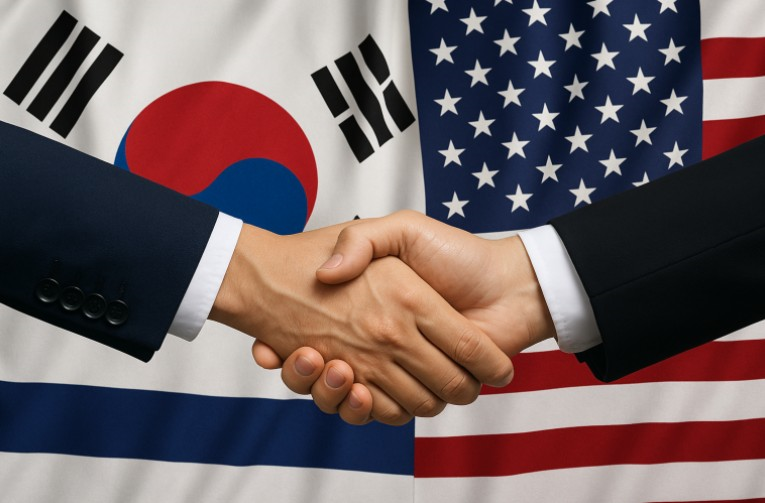
Against this backdrop of geopolitical transition, the ROK–U.S. Alliance—which has served as the cornerstone of peace and stability on the Korean Peninsula and in Northeast Asia for more than seven decades—is evolving into a comprehensive strategic partnership that extends beyond traditional military and security cooperation to include economic security, advanced science and technology, and strategic industries.
In recent years, the South Korean government has sought to broaden the scope of the alliance through closer cooperation with the United States in areas ranging from supply chain resilience and advanced technology development to defense-industrial collaboration. This evolution reflects more than a traditional security relationship between two allies; it signifies a model partnership in which countries that share the universal values of liberal democracy and market-based economies cooperate to address emerging global challenges.
At the same time, some observers have interpreted policy disagreements arising from this process of alliance evolution as evidence of “cracks” in the alliance or as signs of political decline. Criticism of the ROK–U.S. Alliance recently voiced by certain conservative commentators in the United States appears to stem, in part, from a misunderstanding of both the alliance’s evolving character and the dynamics of South Korean domestic politics.
The future of the alliance should be assessed on the basis of objective facts, institutional resilience, and accumulated achievements, rather than ideological assumptions or selective interpretations of individual developments.
Objective Facts on Issues in the ROK–U.S. Alliance
(1) Access to Information on U.S. Military Bases: Crisis Management for Joint Security, Not an Infringement on Alliance Authority
A recent commentary in the U.S. media criticized efforts to obtain information related to U.S. military bases, characterizing such measures as reckless and arguing that they endangered sensitive military and intelligence assets.
In reality, South Korea’s actions were not intended to infringe upon the sovereignty, authority, or operational security of U.S. military installations. Rather, they were aimed at addressing potential gaps in the combined defense posture through more accurate assessments of the security environment on the Korean Peninsula.
Effective information-sharing and coordination are essential components of alliance management and combined military readiness. Interpreting such efforts as evidence of alliance deterioration reflects a limited understanding of how contemporary security cooperation functions between allied states.
(2) Information on North Korean Nuclear Facilities: Strategic Communication Through Public Disclosure, Not a Violation of Guidelines
Some critics have argued that remarks made by Unification Minister Chung Dong-young regarding North Korean nuclear facilities constituted a violation of ROK–U.S. intelligence-sharing guidelines. Such claims, however, do not accurately reflect the facts.
The information referenced at the time did not originate from classified U.S. or South Korean intelligence sources, nor did it involve military secrets. Rather, it consisted of information already available to the international community through reports issued by domestic and international research institutions, commercially available satellite imagery, and open-source media reporting.
South Korea and the United States maintain one of the closest intelligence-sharing relationships in addressing the North Korean nuclear challenge. Public discussion of North Korea policy and strategic communication based on open-source information are standard practices in democratic policymaking. Characterizing such activities as intelligence leaks or violations of information-sharing agreements is therefore inconsistent with the factual record.
(3) Addressing the Coupang Data Leak: Law Enforcement to Protect Citizens, Not Discriminatory Action Against U.S. Companies
The South Korean government’s response to the Coupang personal data breach—which some critics have cited as evidence of discriminatory treatment toward U.S. companies—was a lawful measure undertaken in accordance with domestic legal requirements and the government’s responsibility to protect citizens’ personal information.
As a company conducting extensive business operations in South Korea, Coupang is subject to applicable domestic laws and regulations. When a significant personal data breach occurs, it is both appropriate and necessary for the government to investigate the incident, establish the facts, and implement measures to prevent recurrence.
Interpreting such actions as discrimination against U.S. companies risks undermining fundamental principles of the rule of law. The South Korean government seeks to maintain a level playing field for all firms operating within its jurisdiction, irrespective of nationality. Applying uniform legal standards to companies from allied nations when public rights and interests are implicated is fully consistent with established legal and regulatory norms.
(4) Middle East Policy and Cooperation with the United States: Multilateral Diplomacy and Shared Humanitarian Responsibilities
Criticism that South Korea has been insufficiently supportive of U.S. security interests related to Iran—whether through its decision not to participate directly in military operations in the Strait of Hormuz or through its criticism of Israeli military operations in Gaza—reflects an unduly narrow understanding of the role of allies in contemporary international affairs.
South Korea supports peace and stability in the Middle East and has contributed to international efforts through humanitarian assistance to Gaza and diplomatic engagement with regional actors. These initiatives are consistent with South Korea’s broader commitment to international peace and conflict management.
Such activities do not undermine U.S. security interests. Rather, they enable South Korea to contribute in diplomatic and humanitarian areas where alternative forms of engagement may be more effective. Expecting allies to adopt identical policy positions across every international issue does not reflect the realities of contemporary diplomacy. As a global pivotal state, South Korea seeks to contribute to regional stability through a multidimensional diplomatic approach while remaining aligned with the broader strategic objectives it shares with the United States.
(5) Revisiting Constitutional Reform in South Korea: Overcoming the 1987 Framework and Advancing Democratic Reform
A common misconception among some conservative commentators in the United States is the assumption that South Korea’s constitutional reform debate is primarily driven by the desire of a particular political party to secure long-term political power.
In reality, discussions on constitutional reform reflect a broader recognition that the constitutional framework established in 1987 may no longer adequately address the political, economic, and social realities of contemporary South Korea. Over the past four decades, South Korea has undergone profound transformation, accompanied by increasing social diversity and increasingly complex governance challenges.
Debates over constitutional reform—including proposals related to local autonomy, the expansion of fundamental rights, and the restructuring of political authority—have engaged not only governing and opposition parties but also academic institutions, civil society organizations, and policy experts. Evaluating these discussions solely through the lens of partisan political advantage overlooks the sophistication of South Korea’s democratic institutions and the vibrancy of its civil society. South Korea’s democracy continues to demonstrate a capacity for self-correction, adaptation, and institutional evolution.
A Future for the Alliance Based on Shared Interests, Shared Values, and Shared Facts
The ROK–U.S. alliance has evolved successfully through diverse political circumstances and changes of government over the course of its history. This resilience reflects the fact that the alliance is not contingent upon any particular administration or ideological orientation. Rather, it is an institutionalized partnership grounded in shared interests, common values, and convergent strategic objectives.
Accordingly, policy differences between allies should not automatically be interpreted as evidence of strategic divergence. Greater attention should instead be devoted to understanding how both countries continue to expand and deepen their cooperation in response to an increasingly complex international environment.
The future of the ROK–U.S. alliance must rest on a foundation of mutual understanding, trust, and respect rather than suspicion or ideological prejudice. Today, the alliance is evolving beyond its traditional military foundations into a comprehensive partnership encompassing economic security, advanced technology, supply chain resilience, and strategic-industrial cooperation.
To respond effectively to emerging geopolitical challenges and the changing international order, both countries should focus on expanding practical cooperation grounded in shared achievements and objective realities, rather than unnecessarily politicizing policy disagreements. As mutual trust deepens and strategic cooperation expands, the ROK–U.S. alliance will be well positioned to continue evolving as one of the most successful and enduring alliances of the twenty-first century.
-
PREV [Analysis of issues]
-
NEXT [Feature Article]