

Proposals for Improving Inter-Korean Relations and Advancing Peace on the Korean Peninsula:
On the Occasion of Korean Liberation Day

Hyun-kyung Youn
Research Professor
Institute for Unification Studies
Ewha Womans University
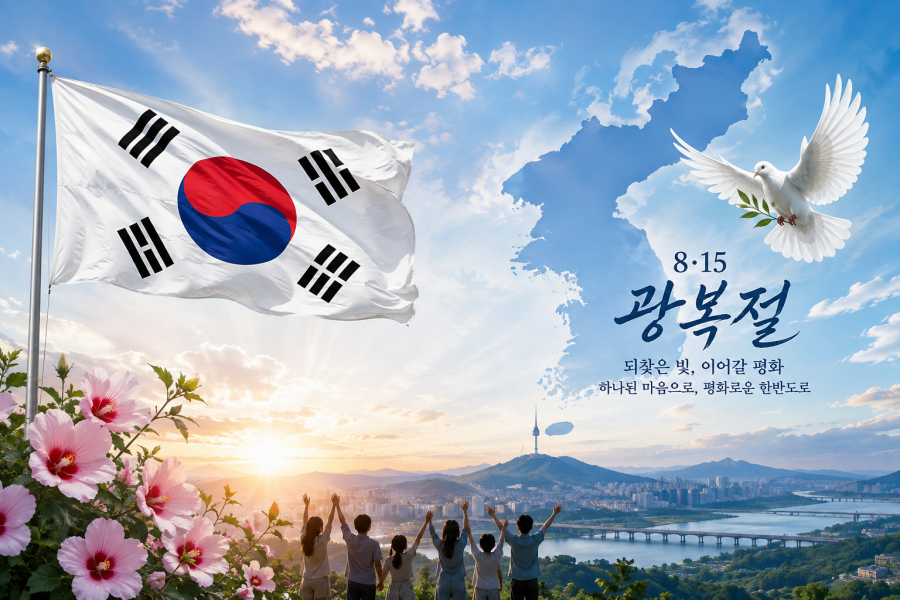
As the Korean Peninsula marks the 81st anniversary of Liberation, “peace” has once again emerged as a central topic of discussion. The Lee Jae-myung administration has designated 2026 as the “first year of peaceful coexistence on the Korean Peninsula” and announced a policy direction aimed at transforming inter-Korean hostility and confrontation into a relationship of peaceful coexistence. The Fifth Basic Plan for the Development of Inter-Korean Relations likewise identifies “peaceful coexistence and shared growth on the Korean Peninsula” as its vision and sets out the goal of institutionalizing peaceful coexistence as the new norm governing inter-Korean relations. Given the repeated cycles of confrontation and disengagement that have characterized inter-Korean relations, it is difficult to dispute the broader objective of peaceful coexistence. The more fundamental question, however, is: What exactly do we mean when we speak of “peaceful coexistence”?
Although peace may appear to be a value on which most people can readily agree, it is, in practice, a highly contested and ambiguous concept. Is a situation peaceful simply because war has not broken out? Can North and South Korea be said to coexist peacefully as long as there is no direct military conflict, even as North Korea continues to develop its nuclear and missile capabilities? Conversely, does peace become unattainable as North Korea’s nuclear capabilities advance, even in the absence of armed conflict?
Even when confronted with the same developments, some may perceive a serious security threat, while others may regard them as relatively limited. Some define peace as a condition underpinned by credible military deterrence, while others view it as a condition characterized by sustained dialogue and exchanges between the two Koreas. When the very criteria by which we assess peace differ so fundamentally, simply agreeing on the term “peaceful coexistence” does not necessarily mean that we share a common understanding of the kind of inter-Korean relationship we seek to establish.
The “Crisis of Relational Language” That Must Be Addressed Before the Inter-Korean Crisis
The “crisis of relational language” surrounding inter-Korean relations became particularly evident when Kim Jong-un began defining the relationship between the two Koreas as one between “two hostile states” in late 2023. North Korean authorities have been abandoning much of the terminology they had traditionally used to describe inter-Korean relations, including “nation,” “people,” “unification,” “reconciliation,” and “cooperation.” By contrast, South Korea continues to define inter-Korean relations as “a special relationship formed provisionally in the process of pursuing unification, rather than a relationship between states.” The gap between North Korea’s conceptualization of the relationship and the framework maintained by South Korea has therefore never been wider.
The problem, however, cannot be explained solely by North Korea’s changing definition of inter-Korean relations. The common language used to describe the relationship between the two Koreas has been eroding within South Korean society for some time. Different perspectives now coexist: some regard unification as a natural national objective, while others question its necessity; some view North Korea primarily as a partner for cooperation, while others regard it principally as a security threat; and some continue to regard inter-Korean relations as a special relationship between members of the same nation, while others increasingly perceive them as de facto relations between separate states. With each change of government, South Korea’s emphasis and policy direction toward North Korea have also shifted.
The challenge facing the Korean Peninsula today, therefore, is not simply a crisis in inter-Korean relations. It is also a crisis of language—a crisis over how inter-Korean relations should be defined and what they should ultimately become. Kim Jong-un has articulated his vision in unambiguous terms by characterizing the two Koreas as “two hostile states” and has sought to institutionalize this perspective throughout North Korean society. South Korea, while rejecting Kim’s characterization, has not yet sufficiently articulated—in terms that the broader public can readily understand—what kind of inter-Korean relationship it ultimately seeks to establish.
In this context, simply presenting “peaceful coexistence” as a policy slogan is insufficient. We need to revisit a recurring problem throughout the history of inter-Korean relations. The two Koreas have previously agreed on broad principles such as “independence,” “peace,” “national unity,” and “reconciliation and cooperation.” Yet the use of identical terminology did not mean that the two sides shared the same conceptual understanding. The North and South have long attached fundamentally different meanings to concepts such as “self-reliance” and “peace.” Even when they signed agreements using the same terminology, they often interpreted those terms differently, and language that was ostensibly agreed upon sometimes became a source of domestic political and social conflict.
“Peaceful coexistence” could face the same problem. Even if both North and South Korea adopt the term, that does not necessarily mean that they share a common understanding of what peaceful inter-Korean relations should entail. Moreover, if South Korean society itself does not first develop a sufficiently concrete understanding of peaceful coexistence, any attempt to incorporate the concept into an inter-Korean agreement risks reducing it to yet another abstract policy slogan.
From Peace as a “Value” to an Observable “Condition of Relations”
Before proposing peaceful coexistence to North Korea, South Korean society should first clarify what constitutes a peaceful inter-Korean relationship. This does not mean unilaterally determining the terms of future negotiations with North Korea. Rather, it means establishing our own policy criteria: what South Korea’s North Korea and unification policies are ultimately intended to achieve, and under what circumstances we would be able to explain to the public that inter-Korean relations have improved and that peace has advanced.
The existing National Community Unification Formula sought to explain the broad objective of unification in terms that the public could understand by identifying specific stages: reconciliation and cooperation → inter-Korean confederation → unified state. Peaceful coexistence likewise requires language that can be understood in concrete terms. This does not mean, however, that peaceful coexistence should be transformed into another stage-based theory. Instead, we should shift our understanding of peace from a singular “value” to an observable “condition of inter-Korean relations.”
If we ask the public, “Has peace been achieved on the Korean Peninsula?” many would likely find the question difficult to answer. The answer depends heavily on where one sets the threshold for peace. The question becomes more manageable if it is reframed in more concrete terms:
. Can North and South Korea communicate effectively when a crisis occurs?
. To what extent can each side anticipate the other’s actions and likely responses?
. Are communication channels and institutional mechanisms that remain operational even when political tensions escalate in place?
. Have the number and intensity of incidents that could potentially trigger military conflict been reduced?
Unlike abstract value judgments, these questions can be assessed against observable developments in inter-Korean relations. We can examine whether crisis-management mechanisms between the two Koreas actually function, whether agreed procedures and rules of conduct enhance predictability, and whether humanitarian, sociocultural, academic, sports, health-related, and civilian contacts can be sustained even when official government-to-government relations deteriorate.
Can we conclude that peace has advanced simply because a summit has taken place? The signing of a joint declaration and an increase in the frequency of inter-Korean dialogue are certainly grounds for optimism, but they do not by themselves demonstrate that peace has become firmly established. These developments and agreements are important, but we must go further and assess how they have actually changed the state of inter-Korean relations. We should ask whether the risk of military conflict has declined, whether effective crisis-management mechanisms have been established, whether the predictability of the other side’s actions and responses has improved, and whether institutionalized relationships have emerged that are resilient to changes in political circumstances.
Under such an approach, peaceful coexistence need not be defined exclusively by particular ideological positions or views on unification. Those who strongly support unification and those who question its necessity may nonetheless share an interest in a Korean Peninsula in which crises can be managed and the behavior of the other side is reasonably predictable. Likewise, while proponents of strong deterrence and advocates of dialogue and inter-Korean exchanges may differ over the means of achieving peace, they can still engage in a more concrete discussion about the type of relationship that should ultimately be established.
If efforts to build domestic consensus on peaceful coexistence begin with the broad and highly abstract question, “What is peace?”, they are likely to generate political and public fatigue. A more productive approach would be to identify the conditions that must be met for inter-Korean relations to be considered more peaceful than they are today. Rather than attempting to define peace in the abstract, we should explain what needs to be possible for a relationship to qualify as peaceful.
South and North Korea Should Agree on “Rules of Peace,” Rather Than the “Meaning of Peace”
Once South Korea has clarified the vision of peaceful coexistence it seeks, its approach to inter-Korean agreements should also evolve. The two Koreas do not necessarily need to reach agreement on the fundamental meaning of peace itself. Realistically, such an agreement may not even be possible. South Korea, for example, may regard the ROK-U.S. alliance and credible military deterrence as essential components of peace on the Korean Peninsula, while North Korea characterizes those very arrangements as threats to its security. Given these fundamental differences over how peace should be achieved, insisting that the two sides first agree on a common definition of peace could make agreement more difficult rather than less.
I therefore propose that future efforts toward peaceful coexistence focus on building a body of agreed rules of conduct, rather than attempting to reach consensus on abstract values and concepts. Paradoxically, even when the two sides have fundamentally different political systems, security perceptions, and views of unification, they may still be able to agree on rules that make each side’s behavior more predictable and help manage crises. Indeed, it is through the accumulation of such practical and incremental agreements that peaceful coexistence can acquire substantive meaning.
This approach could also help address the recurring problem of “agreed language but divergent meanings” that has characterized inter-Korean relations. Rather than assuming that we share the same vision of the future simply because we use the same terminology, we should begin by establishing concrete rules that can be observed and upheld even when the two sides maintain fundamentally different views. Peaceful coexistence should not simply be declared; it must be constructed over time through concrete practices and institutions.
On the 81st Anniversary of Liberation: We Need Language That Defines Concrete Relations, Not Grand Slogans
Since Liberation, we have often described the future of the Korean Peninsula using broad concepts such as “unification,” “nation,” “peace,” and “shared prosperity.” These values remain important. But at this juncture, simply adding another overarching slogan is no longer sufficient—particularly when North Korea is rejecting the traditional language of “nation” and “unification,” while South Korean society itself is undergoing significant changes in how it understands unification and inter-Korean relations.
What we need now is not another grand declaration, but a more concrete vocabulary for describing and defining the relationship between the two Koreas. The task is to identify what peaceful coexistence would actually look like in practice, what rules should govern the relationship, and what mechanisms should remain operational even when political relations deteriorate.
The 81st anniversary of Liberation provides an opportunity to reconsider the meaning of peace not as an abstract aspiration, but as a measurable and sustainable condition of inter-Korean relations. The objective should not be to persuade everyone to embrace a single definition of peace. Rather, it should be to establish a framework within which different political and security perspectives can coexist while reducing the risk of confrontation.
Ultimately, peaceful coexistence will become meaningful only when it is reflected in the daily management of inter-Korean relations: when communication channels remain open during crises, when military incidents can be contained, when agreed rules are respected, and when the two sides develop sufficient predictability to prevent disputes from escalating into armed conflict.
Peaceful coexistence, therefore, should not remain a slogan. It should become a relationship that can be observed, assessed, and gradually institutionalized.
As we mark the 81st anniversary of Liberation, the question we should ask ourselves may be even more fundamental than “When will unification occur?” What is needed now is for the South Korean government to develop a framework and vocabulary that enable the public to understand and assess the kind of inter-Korean relationship it seeks to establish. The same principle applies to peaceful coexistence.
It should not remain merely a declaratory value, but should instead be understood as a concrete condition of inter-Korean relations that the public can recognize and relate to in their daily lives. On that foundation, the two Koreas should work to establish rules of conduct for coexistence while acknowledging that they hold fundamentally different conceptions of peace. Peaceful coexistence can begin with agreement on specific rules governing what the two systems will refrain from doing, what they will uphold, and how they will respond when a crisis occurs.
-
PREV [Current Affairs Analysis]
-
NEXT [Feature Article]