

The Importance of the U.S.-South Korea Alliance for Peace and Stability on the Korean Peninsula

Eui-haeng Cho
Professor
Seoul Theological University
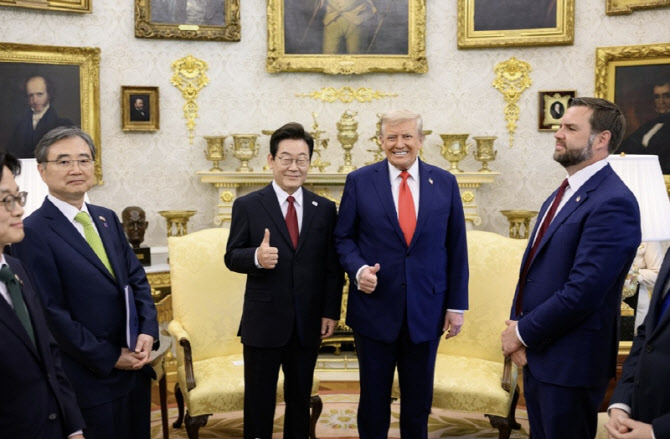
August 25, 2026, marks the first anniversary of the first summit between President Lee Jae-myung and U.S. President Donald Trump, held in Washington. As of August 2026, the ROK-U.S. alliance stands at a critical juncture, evolving into a more future-oriented partnership suited to a new era and grounded in the strong trust accumulated over more than seven decades.
Since the signing of the ROK-U.S. Mutual Defense Treaty in 1953, the ROK-U.S. alliance has served as a cornerstone of security, safeguarding peace and stability on the Korean Peninsula. Today, moving beyond the traditional framework of a military alliance, the two countries are developing a comprehensive strategic partnership by expanding cooperation across a broad range of areas, including economic security, advanced technologies, supply chains, shipbuilding, nuclear energy, and the defense industry.
In particular, it is noteworthy that sustained communication between the leaders of the ROK and the United States has continued since the inauguration of the Lee Jae-myung administration.
At the 2025 Washington summit, the two leaders agreed to modernize the ROK-U.S. alliance to make it more mutually beneficial and future-oriented in response to the evolving international security environment. President Lee articulated a vision for a new era of a “pragmatic alliance centered on national interests” and reaffirmed that the U.S. commitment to the defense of South Korea, as well as the ROK-U.S. combined defense posture, would remain firmly in place.
This reflects an evolution of the ROK-U.S. alliance from a relationship characterized by one-sided dependence toward a partnership in which both countries contribute to shared security and prosperity based on their respective capabilities.
One Year After the Summit: Expanding Cooperation from a Security Alliance to an Economic and Technological Partnership
One of the key achievements of ROK-U.S. summit diplomacy over the past year has been the establishment of a foundation for comprehensive cooperation that recognizes the increasingly inseparable relationship between security and economic prosperity.
At the second ROK-U.S. summit, held on the sidelines of the APEC Summit in Gyeongju in October 2025, the two countries established a concrete framework for security and economic cooperation, followed by the release of a joint fact sheet outlining this framework in November. The United States and South Korea have expanded cooperation by leveraging their respective strengths in sectors such as shipbuilding, defense, and advanced industries. The United States has also expressed support for strengthening South Korea’s defense capabilities and expanding cooperation in advanced defense technologies.
The expansion of South Korean investment in the United States is another key pillar of ROK-U.S. economic security cooperation. By combining South Korea’s globally competitive industries—including shipbuilding, semiconductors, batteries, and automobiles—with U.S. technological advantages and market capabilities, the two countries can contribute to the resilience of global supply chains and jointly develop new industrial ecosystems.
The shipbuilding sector, in particular, has the potential to become a defining symbol of the future of the ROK-U.S. alliance. By combining U.S. maritime security capabilities with South Korea’s advanced shipbuilding expertise, the two countries can establish a new model of cooperation that strengthens their respective security capabilities while generating broader economic benefits.
The same principle applies to the defense industry. Strengthening South Korea’s defense capabilities not only enhances its national defense capacity but also contributes to the effectiveness and sustainability of the ROK-U.S. combined defense posture. If the two countries expand cooperation in the joint development and production of advanced weapons systems and enhance their interoperability, the alliance will be better positioned to respond to the changing character of warfare and emerging security challenges.
This trend represents a significant strategic shift, demonstrating that the ROK-U.S. alliance is evolving from a traditional “security alliance” into a “future-oriented strategic alliance” encompassing security, economic, technological, and industrial cooperation.
European Visit, Engagement with President Trump, and Commitment to Cooperation for Peace on the Korean Peninsula
President Lee Jae-myung’s visit to Europe in June 2026 also provided an opportunity to broaden the international strategic framework surrounding the ROK-U.S. alliance. Lee arrived in Brussels, Belgium, on June 9 and held a ROK-Belgium summit and a ROK-EU summit, among other engagements. In Brussels, the leaders discussed a range of issues, including expanding trade, cooperation among small and medium-sized enterprises, and security cooperation.
President Trump subsequently attended the G7 Summit in Evian, France. During the summit, President Lee and President Trump exchanged views on the ROK-U.S. alliance and issues concerning the Korean Peninsula, thereby maintaining close communication and reinforcing mutual trust between the two leaders. In particular, Lee urged Trump to take an active role in advancing sustainable peace on the Korean Peninsula, while Trump expressed his willingness to play an appropriate role in promoting progress on issues concerning the Korean Peninsula.
This is significant because communication between the South Korean and U.S. leaders is not confined to formal bilateral summits but continues on the broader multilateral diplomatic stage. At a time when the international community faces increasingly complex and interconnected security challenges, the fact that the two leaders continue to reaffirm their shared commitment to peace on the Korean Peninsula and regional stability provides an important foundation for strengthening the resilience of the ROK-U.S. alliance.
Continued communication between the South Korean and U.S. leaders also carries important implications for North Korea. As North Korea’s nuclear and missile capabilities continue to advance, close coordination between South Korea and the United States, while keeping the door to diplomacy open, can help manage tensions on the Korean Peninsula and create opportunities for meaningful dialogue and peace.
At the 2025 summit, President Lee expressed his intention to work closely with President Trump toward the denuclearization of the Korean Peninsula and the establishment of lasting peace. President Trump, for his part, has consistently demonstrated an interest in issues concerning North Korea. If the two leaders can effectively combine their respective diplomatic strengths, new opportunities could emerge to reduce tensions and advance peace through dialogue with North Korea.
Ambassador Steel’s Appointment: An Opportunity to Strengthen On-the-Ground Communication Within the Alliance
The arrival of Michelle Steel, the new U.S. Ambassador to South Korea, in July 2026 is highly significant for the effective management and further development of the ROK-U.S. alliance.
The appointment of a U.S. ambassador to South Korea after the position had remained vacant for an extended period provides an important opportunity to further strengthen diplomatic communication between the two countries. In particular, Ambassador Steel—who was born in Seoul and previously served as a U.S. Representative—is well positioned to serve as a bridge between the two nations, drawing on her experience in both Korean and American societies.
In August 2026, Ambassador Steel paid a courtesy call on President Lee Jae-myung and expressed her commitment to strengthening the ROK-U.S. alliance. Her role extends beyond simply conveying U.S. government policy to South Korea. Equally important will be her efforts to expand communication and deepen mutual understanding among the governments, legislatures, businesses, experts, and civil society of both countries.
For the ROK-U.S. alliance to maintain long-term stability and resilience, these working-level and interpersonal networks must be strengthened alongside trust between the leaders. In this regard, Steel’s appointment could serve as a new starting point for elevating the Alliance to the next level.
In particular, as economic cooperation and collaboration in advanced technologies between the ROK and the United States continue to expand, the role of the U.S. Embassy in Seoul will become increasingly important. The embassy can serve as a diplomatic bridge connecting companies and governments in both countries and translating cooperation in future-oriented industries—including shipbuilding, defense, semiconductors, artificial intelligence, nuclear energy, and space—into concrete and sustainable projects.
Toward a Mature Alliance That Prioritizes Cooperation Over Disagreement
In ROK-U.S. relations, the national interests and policy priorities of the two countries will not always fully align. What matters is that when differences arise, the two sides prevent them from escalating into unnecessary friction and instead seek practical solutions through dialogue between the heads of state and consultations among diplomatic and security officials.
A mature alliance is not one in which the two countries hold identical views on every issue. Rather, it is an alliance in which institutions, mechanisms, and mutual trust are sufficiently strong to manage differences and reconcile divergent perspectives. Over the past seven decades, the ROK-U.S. alliance has accumulated extensive experience in managing such differences while jointly navigating numerous international changes and crises affecting the Korean Peninsula.
Therefore, going forward, the two countries should continue to coordinate constructively on issues arising in the fields of security, trade, and technology within the framework of the Alliance. In particular, extended deterrence and the combined defense posture remain core foundations of the ROK-U.S. alliance. If South Korea continues to strengthen its own defense capabilities while the United States further institutionalizes and strengthens its extended deterrence commitment, deterrence on the Korean Peninsula can be further enhanced.
The transfer of wartime operational control must likewise be pursued in a manner that strengthens the defense capabilities of both South Korea and the United States and reinforces the combined defense posture. The key consideration should be conditions and capabilities, rather than speed. Seoul and Washington should therefore engage in thorough and sustained consultations to establish stable conditions for a transition that is credible and enjoys public trust.
Toward a “Future-Oriented” Comprehensive Strategic Alliance for the Next 70 Years
The future of the ROK-U.S. alliance extends well beyond traditional military security. If the two countries combine their respective strengths in strategically important sectors—including artificial intelligence, semiconductors, space, nuclear energy, shipbuilding, defense, and cybersecurity—the ROK-U.S. alliance can evolve into a new form of strategic partnership encompassing both economic and technological security.
In particular, South Korea’s expanding defense cooperation with NATO and its growing role as a responsible security partner in the Indo-Pacific can contribute positively to the further evolution of the ROK-U.S. alliance. South Korea’s proposal at the 2026 NATO Summit to expand defense industry cooperation and strengthen interoperability based on NATO standards further demonstrates the country’s growing role as a global security partner.
South Korea has evolved beyond being an ally that primarily receives security support from the United States. It has become a key partner capable of contributing, alongside the United States, to international peace, security, and prosperity. The United States, in turn, has gained an important strategic partner whose industrial, technological, and defense capabilities can contribute meaningfully to shared objectives.
This relationship of interdependence and mutual complementarity gives the ROK-U.S. alliance considerable strategic potential for the future.
The first anniversary of the 2025 Washington ROK-U.S. summit, the 2026 European summit diplomacy, and the arrival of U.S. Ambassador to South Korea Michelle Steel represent important milestones in the further development of the ROK-U.S. alliance. The two countries must now prepare for the next 70 years by building on the achievements of the past seven decades. In the security domain, the two countries must maintain an ironclad combined defense posture; in the economic sphere, they must expand mutually beneficial cooperation; and in advanced technologies, they must jointly strengthen their competitiveness in the industries that will shape the future.
Above all, trust remains paramount. If sustained communication between the leaders, close consultations among diplomatic and security officials, and broad exchanges among legislators, businesses, and the expert community continue, the ROK-U.S. alliance can develop into a more mature and resilient partnership capable of withstanding changes in the international environment.
The ROK-U.S. alliance is evolving beyond a relationship forged primarily by the security needs of the past into a strategic partnership capable of jointly shaping the future of both countries. If the two countries accelerate this transformation—building on the momentum generated by the first anniversary of the summit and Ambassador Steel’s arrival—the ROK-U.S. alliance can become a model of a future-oriented alliance that contributes not only to peace and stability on the Korean Peninsula but also to a free and open international order and global peace and prosperity.