

The Mechanisms of False Consciousness in North Korea's Political System
ㅡ The Governance Mechanism of the Ruling Class and the Formation Structure of Political Consciousness in the Governed Class

Lee Seung-hyun
Ph.D in Public Administration (Research Fellow at the SAND Institute)
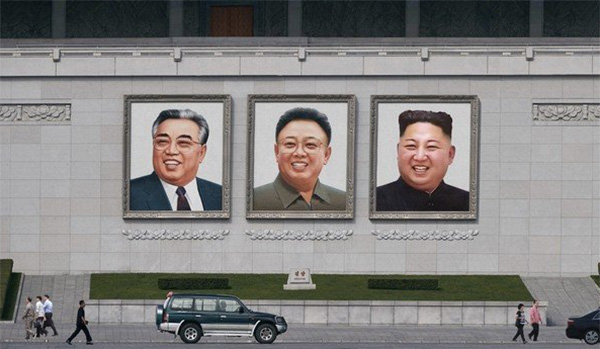
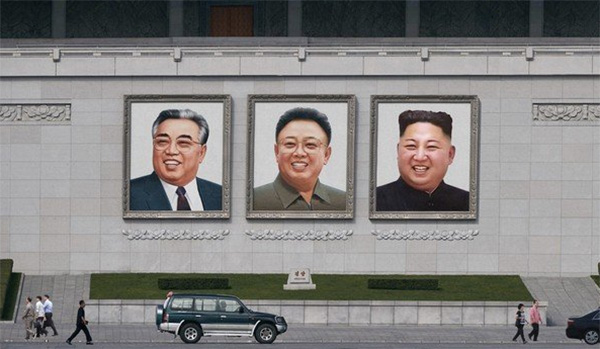
The downfall of socialist states in the Eastern Bloc during the 1990s, the dissolution of the Soviet Union in 1991, the "Arduous March" from 1995 to 1998, which led to the starvation and death of over a million people, the passing of Kim Il-sung in 1994, and Kim Jong-il's death in 2011 all posed significant challenges to North Korea's political system. These political events have sparked discussions of "regime collapse" in democratic countries, including South Korea and some Western nations. Despite the hopes for such crises, North Korea has managed to navigate through them and sustain its political system across three generations of succession.
One of the key reasons for North Korea's ability to maintain its regime despite political threats lies in the robust hegemony and governance mechanisms centered around the supreme leader. Another vital factor is the political acquiescence of the governed class, primarily influenced by the governance mechanisms employed by the ruling class. In particular, the long-established cyclical mechanism of political acquiescence within the governed class strengthens the ruling class's hegemony and consolidates its governance. This "false consciousness" within North Korea plays a pivotal role in preventing regime collapse even during times of political crisis.
To understand the formation mechanism of the "false consciousness" that upholds North Korea's political system, it is essential to grasp the political acquiescence resulting from the psychological dominance exerted by the ruling class and the governance mechanisms that drive it.
<표>
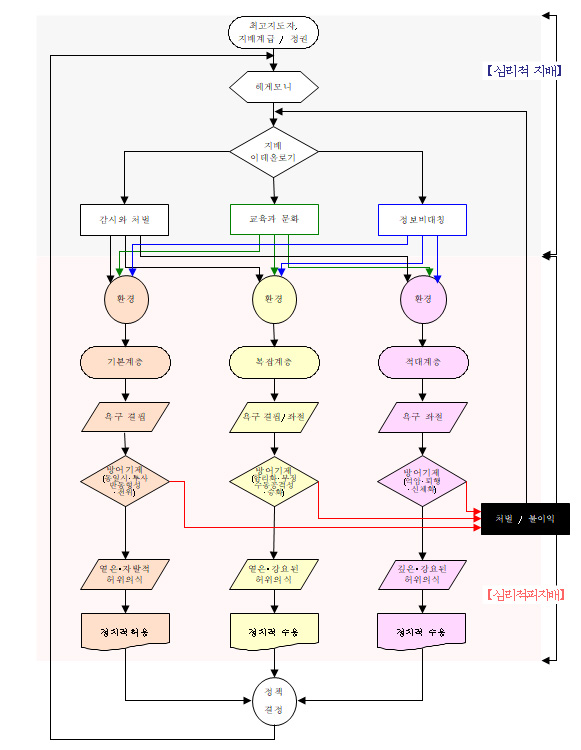
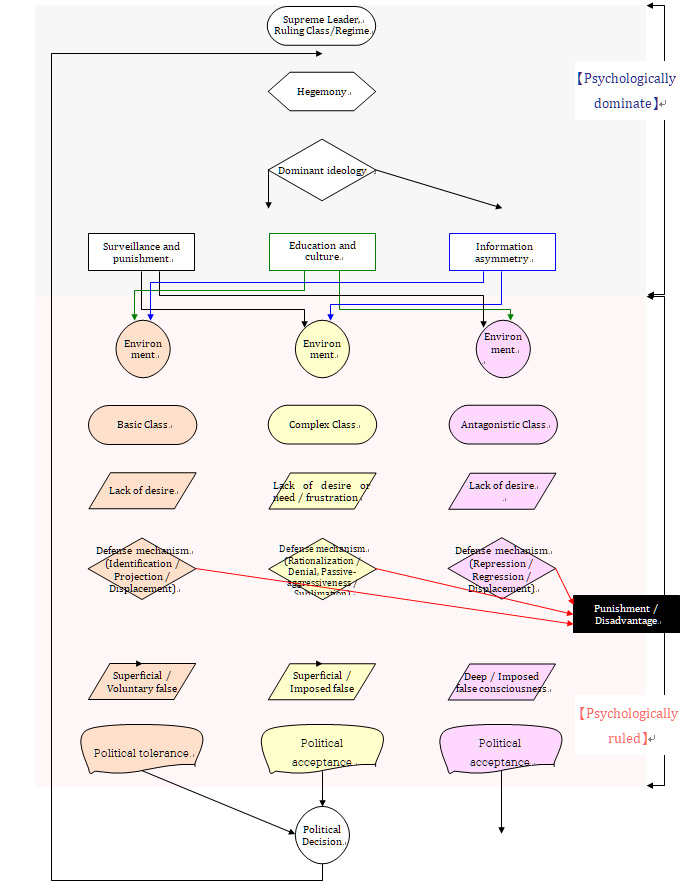
Following Japan's surrender to the United States in 1945, Kim Il-sung and the Partisans seized hegemony with the support of the Soviet Union and established a system to consolidate and strengthen their power within the socialist regime. Under Kim Jong-il's leadership, the governance mechanisms of the ruling class were systematized for the dictatorship. As depicted in Figure 1, the supreme leader, the ruling class, and the hegemony became social norms through the "Juche Idea." Through surveillance and punishment, education and culture, and information asymmetry, these governance mechanisms effectively control and monitor North Korean society. As shown in Figure 1, these mechanisms differ based on loyalty to the supreme leader and the regime, thereby exerting control over the environment and shaping consciousness according to social class "strata." Within North Korea's political system, this discriminatory control over the environment gives rise to different forms of false consciousness within the subjugated class, leading to varied types of political consent towards the supreme leader's dictatorship and the ruling class's governance.
The ruling class and the basic class both possess a voluntary but shallow form of false consciousness, yet their expressions of political consent differ. The ruling class, who shares power with the supreme leader, demonstrates political acquiescence, while the subjugated basic class exhibits a characteristic of political tolerance(허용). On the other hand, the complex class and the antagonistic class, lacking influence over political decisions, develop coerced false consciousness and engage in political acceptance(수용) through the mechanism of false consciousness.
The ruling class and the basic class both possess a voluntary but shallow form of false consciousness, yet their expressions of political consent differ. The ruling class, who shares power with the supreme leader, demonstrates political acquiescence, while the subjugated basic class exhibits a characteristic of political tolerance(허용). On the other hand, the complex class and the antagonistic class, lacking influence over political decisions, develop coerced false consciousness and engage in political acceptance(수용) through the mechanism of false consciousness.
-
PREV [Feature Article]
-
NEXT [From the Editor-in-chief]