

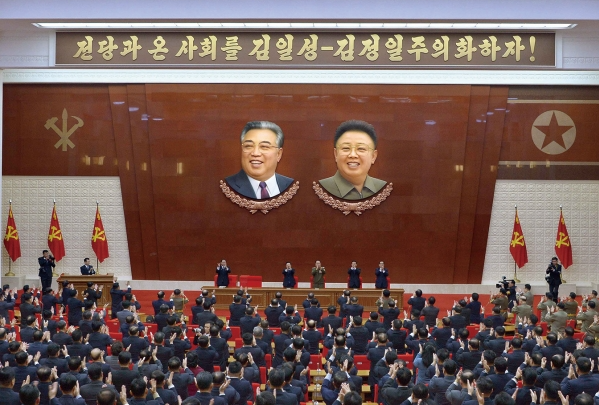
The Kim Family Regime
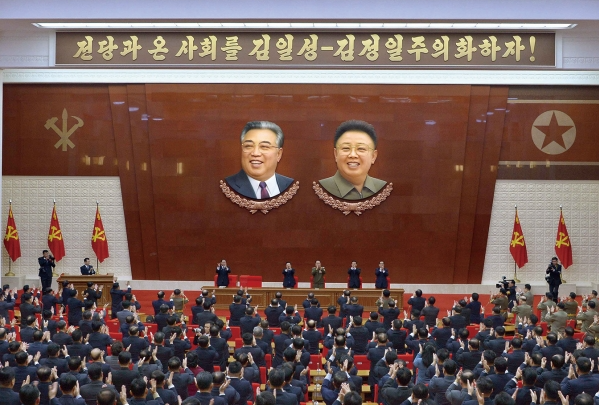
After the passing of Kim Jong-il, the current leader of North Korea, Kim Jong-un, made a declaration on April 6, 2012, during the talk with the workers of the Central Committee of the Workers' Party of Korea (WPK). He asserted that the "Kim Family Regime" is an all-encompassing regime that encompasses the Juche Idea, its theory, and methodology, symbolizing the remarkable revolutionary ideology of the Juche era. Kim Jong-un stated that the regime is deeply rooted in the principles of the Juche Idea, solidifying his own unique position in interpreting traditions and ideologies.
To cement the status of the Kim family, the Constitution was revised in 2012, explicitly naming Kim Il-sung as the 'Eternal President’, and Kim Jong-il as the 'Eternal Chairman.' The WPK Charter was also amended to make the "Kim Family Regime" the guiding principle of the WPK. In 2019, this was further enshrined through a constitutional amendment, solidifying the guiding principles, Juche Idea, and Songun(military-first) Politics as the pillars of the "Kim Family Regime."
North Korea claims that the Kim Family Regime embodies the essence of "People-First" ideology, aiming to achieve self-reliance for the people. It encompasses the organizational structure and content necessary for social transformation, while advocating for the interests of the people as agents of change. The regime particularly emphasizes the Songun revolution ideology, which views national defense as the universal weapon for realizing the people's self-reliance in revolutionary struggles. It claims to be a guiding ideology of the Juche era, emphasizing the construction of a powerful socialist nation as its core principle.
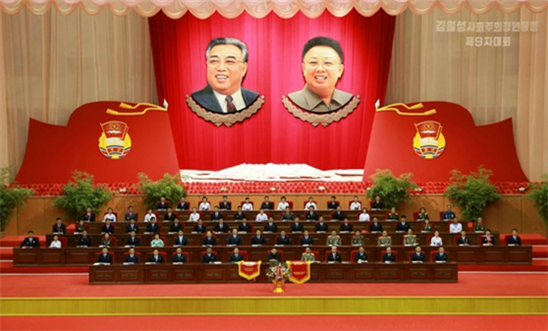
The consolidation of power around Kim Jong-un and the establishment of his leadership required the North Korean regime to adopt a new ideology. By incorporating the Kim Family Regime into the Party Charter, rooted in Juche and Songun ideologies, they ensured ideological and revolutionary continuity.
Moreover, as a practical approach to implementing the "Kim Family Regime" throughout society, Kim Jong-un introduced the concept of "Kim Jong-Il Patriotism." This notion was officially established in a discourse with the Central Committee of the WPK on July 26, 2012. "Kim Jong-Il Patriotism" revolves around the principles of loyalty exhibited by Kim Jong-il towards the nation, its people, and future generations. Kim Jong-un stressed the importance of practicing this form of patriotism in order to construct a prosperous nation (as reported by Rodong Sinmun, Aug 3, 2012). Subsequently, in his 2015 New Year's Address, Kim Jong-un further emphasized "Kim Jong-Il Patriotism" and included it as one of the "Five Major Ideological Education" pillars.
During the 7th Party Congress of the WPK, held in May 2016, North Korea placed significant emphasis on the Kim Family Regime, declaring it as the party's "highest program for all" (according to Rodong Sinmun, May 17, 2016). This regime was portrayed as the foundational principle underlying the Congress of the WPK, embodying an enduring and guiding ideology (as reported by Rodong Sinmun, May 13, 2016). Moreover, the revision of the Party Charter in 2021 solidified the WPK's explicit proclamation that the "Kim Family Regime" serves as the party's ultimate program, encompassing the entirety of society.