

Paradigm Shift and Search for a New Unification Strategy

Jinwook Choi
Center for Strategic and Cultural Strategies
⦁ Crisis of Liberal World Order
⦁ From Peace to Security
⦁ Search for a new Unification Strategy
Korean unification has been pursued on the principle of engagement and peaceful means since the end of the cold war. Such chances become less feasible, however, as the US-China strategic competition and the North Korea’s nuclear weapons pauses unprecedented security crisis to the Korean Peninsula. It is time for South Korea to search for a new unification strategy.
1. Crisis of Liberal World Order
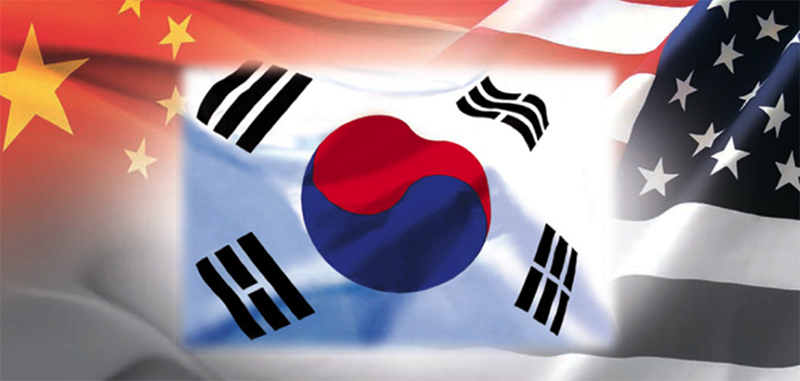
Today, the liberal world order led by the United States is faced with the crisis, which is closely related to the rise of China. The threat awareness remains controversial and the US response was not in time. The U.S. misjudged that there was a lot of hope for positive change in China. China was expected to be democratic and contribute to liberal international order as a G2 partner.
The U.S. skepticism about China's democratization began with Xi Jinping's third consecutive term as chairman in 2023, following the suppression of the pro-democracy movement triggered by the promotion of the Hong Kong repatriation law in 2019. This could not avoid being evaluated as a Chinese-style political system beyond the Chinese-style economic system. Expectations for the G2 partnership of U.S.-China and China's political change that the U.S. wants have not been realized, but there has been no trick to promote China's transition to the system other than increasing interdependence. Strictly speaking, China was not included in the US sphere of influence, so control over China was limited.
It turned out that China was the biggest beneficiary of globalization over time. The U.S.-led liberal world order, which began to decline due to the war on terror, was faced with outright challenges from China in the wake of the 2008 global financial crisis. The so-called realist strategists harshly criticized the U.S. liberal hegemony strategy, which pushed NATO's eastward movement and the war on terror, as a high-cost naive strategy without actively responding to China's challenge to the U.S.
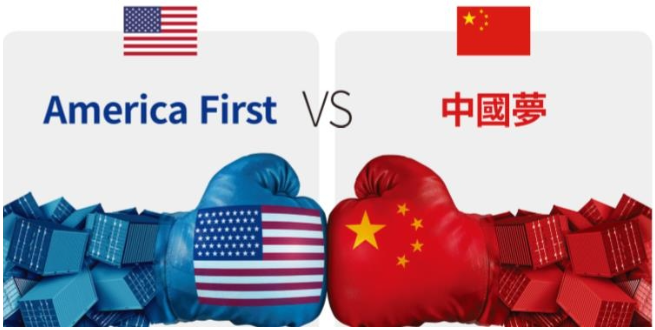
It was not until President Trump announced China the biggest security threat to the United States that the US policy towards China made a dramatic turnaround. President Trump criticized, "The U.S. has become a pushover that takes the lead in global agendas and is responsible for the security of other countries." The U.S.-China relationship is no longer an ambiguous relationship between competition and cooperation. The U.S.would reduce overseas overcommitment and extended deterrence and focus on balancing its power over China. President Trump defined globalization as a failure and declared de-globalization and "America First." The withdrawal from the Paris Climate Agreement symbolically showed a change in American interest and responsibility for leadership in the international order.
G. John Ikenberry, a professor at Princeton University and an international liberal, argues that the nature of the liberal world order crisis is that the liberal world order expanded around the world with the end of the Cold War (rather than optimistic expectations of China's rise or regime change). In other words, the crisis began when the disparate countries tied to the Soviet sphere of influence were released. With the joining of a large number of disparate countries such as Russia and China, awareness of the security community has weakened, and a crisis of governance and goal consciousness has emerged. As a result, the globalized liberal world order, which is the result of the Cold War victory, did not grow soundly as an order in name and reality. Although it was a half-world order during the Cold War, the U.S.-led liberal world order was able to grow healthy because homogeneous countries in the liberal order shared values and maintained hierarchies by thoroughly blocking expansion instead of recognizing the Soviet sphere of influence.
The Biden administration strategically conceptualized globalization based on dual vision by dividing the world in the two groups of countries: one is those who can share the vision and the other is those who cannot share the vision. There is no motivation to talk with those countries like North Korea and China. who do not share the vision.
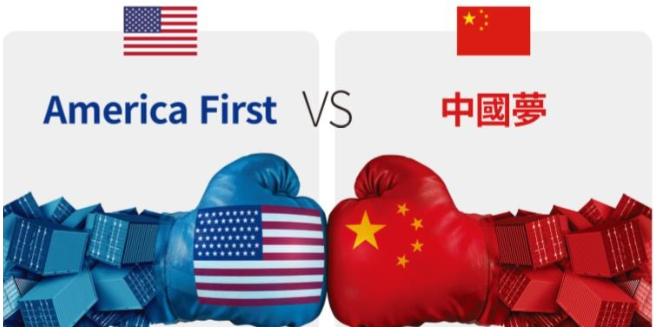
미중 무역분쟁은 변수가 아닌 상수. “미중 무역분쟁 장기화 대비한 G2 통상전략 짜야” (사진/연합뉴스, 자료/ 무협제공)
2. From Peace to Security
The unification strategy has been more of a political confrontation than efficiency or feasibility. The key to the so-called confrontation between conservatives and progressives was to expand the support base, and the "unification strategy" was a tool for this, characterized by a rosy vision of the future rather than the efficiency or reality of the strategy.
Unification strategies have been established around unification scenarios. and packaging is more important than content. Political slogans or rosy visions may be mobilized to make wishful thinking look more realistic. In fact, the unification by absorption was not the government's official policy, but it was no wonder that North Korea expected to follow in the footsteps of Eastern socialist countries in the 1990s and had to prepare for it. Rather, in the early 1990s, there were many concerns that South Korea might not be prepared for the possibility of collapse of the North, and the cost of unification or the risk of war were not an issue. However, in the face of China's aid to North Korea and the U.S. soft landing policy, the scenario of unification by absorption failed to find momentum. Meanwhile, the gradual unification scenario was based on optimism about North Korea's change, but failed to ignore the truth that large-scale inter-Korean economic cooperation is impossible without North Korea's denuclearization. Peaceful coexistence was paved with gradual unification, but North Korea's rigid system and nuclear weapons caused power loss and only security instability.
ROK’s Constitution is clear regarding what unification means: the South and the North are integrated into one system and one ideology under one government. Therefore, regardless of whether unification takes place gradually or suddenly, or whether the process of unification is short-term or long-term, unification is based on a liberal democratic order and led by the Republic of Korea. Despite this clear concept of unification, "de facto unification" in contrast to "legal unification," "peaceful coexistence without war" in contrast to "unification," and "gradual unification" in contrast to "immediate unification" are technically misuse of the concept.
Leaders should always be prepared to answer what the core interests of the country are, what external forces threaten the core interests, and what they can do to defend the core interests from external threats. Sometimes they awaken threat awareness by exaggerating potential threats or raising target standard of goals. As threat awareness increases, the need for new strategies to overcome them increases, and energy to achieve goals is charged, strengthening the adaptability and durability of the system.
Without threat awareness, the need for a strategy would not be urgent. However, in Korea's security field, there is a phenomenon of reducing or avoiding threat awareness. In particular, Korea's unification discourse presents a rosy vision of unification, but it is not very interested in how to overcome obstacles in the process of achieving its goals. The main issue of the unification discourse is to reduce concerns about ' astronomical unification cost after sudden collapse of North Korea'. The progressive camp has put "immediate unification," on the taboo at all, and presented an optimistic prospect of establishing an economic community through large-scale economic cooperation. However, the "Korean Peninsula Peace Process" did not provide a realistic method for denuclearization.
3. Search for a new Unification Strategy
Korean unification has been based on rosy scenarios regardless of reality. Few people believe that Korean unification are likely to materialize.and trust unification strategies are realistic. It is always difficult to implement unification policies. Now Koreans need to tackle substantial issues rather than discussing ambiguous plans.
First, the unification strategy must include an active response to North Korea's nuclear weapons development. North Korea's nuclear weapons program is not only a security issue that threatens the survival of South Korea, but also a problem directly related to the framework and agenda of Korean unification. Negotiations on North Korea's nuclear weapons program have already been conducted between the U.S. and North Korea, and South Korea have been ruled out. Moreover, lifting economic sanctions, suspending South Korea-U.S. military drills and declaring an end to the war at a time when North Korea has dozens of nuclear weapons is an option that cannot be chosen without giving up security and hoping for a miracle of unification.
Second, just as the division of the Korean Peninsula is a product of great power politics, unification will inevitably be affected by great power politics. Based on an objective analysis of this, overcoming obstacles and creating a friendly unification environment is an important part of the unification strategy. In particular, the recent Korean Peninsula issue and changes in the order of Northeast Asia have been increasingly closely related. South Korea often wonders which countries are friendly to inter-Korean unification and which are unfriendly. In a 1994 poll after the end of the Cold War, Koreans chose Japan (69 percent) as the most unfavorable country for reunification, while China accounted for only 5 percent. Now China (48%) is the most unfriendly country.
Third, unification awareness is not necessarily limited to the framework of 'costs and benefits', but is often a matter of values and beliefs. In particular, the view of unification of the MZ generation is more realistic than emotional. They are concerned about North Korea's nuclear weapons and support the strengthening of the Korea-U.S. alliance for South Korea's security. They have some skepticisms of neighboring countries for their support for Korean unification, and do not trust North Korea. Dialogue and negotiations with North Korea are meaningless, and Korean unification is not so feasible. Therefore, the MZ generation is not active in unification.
Fourth, state-centered unification and security-centered Republic of Korea are more important than the view of national unification today. It is important for South Korea to keep its identity as an independent country, rather than sharing a sense of community with North Korea. Unlike the past, Korean nationalism is not a strong motivation for pursuing unification. However, the Republic of Korea will not hesitate to absorb North Korea just in case and make a unified Korea more eagerly than any other country. This is duality of national identity. Therefore, how nationalism affects Korean unification is truly a puzzle.
4. Concluding remarks
The unification strategy should be focused on solving imminent problems and overcoming obstacles rather than making a vague vision. However, while pursuing a strategy unrelated to feasibility for a specific unification scenario, the strategy clearly fails. Various views should be allowed to be expressed with regard to national security, but responsible authorities and experts should establish and implement strategies based on an objective and thorough analysis of the situation, and take responsibility for their analysis.
key words:
unificatio strategy, South-South conflict, lack of a strategic thinking
-
PREV [North Korean Terminology]
-
NEXT [Feature Article]