

North Korean Attack: 17 South Korean Officials Killed in International Terror

Kim Myungsung
SAND's Secretary
General Editor for the SAND Newsletter
On October 9, 1983, a tragic incident unfolded at the Martyrs' Mausoleum in Burma (now Myanmar), where 17 South Korean dignitaries, including the Deputy Prime Minister, tragically lost their lives in a North Korean terrorist bombing. This North Korean bombing, carried out with the intention of assassinating the South Korean President four decades ago, sent shockwaves not only through Korean society but reverberated across the globe. Even though the apprehended terrorists admitted to acting on North Korean authorities' orders, North Korea not only refused to apologize for this unprecedented act of terrorism but also accused the South Korean government of orchestrating the event. While I was in North Korea (I defected in 2002), I happened to learn about the Rangoon Bombing incident from a relative who had been involved.
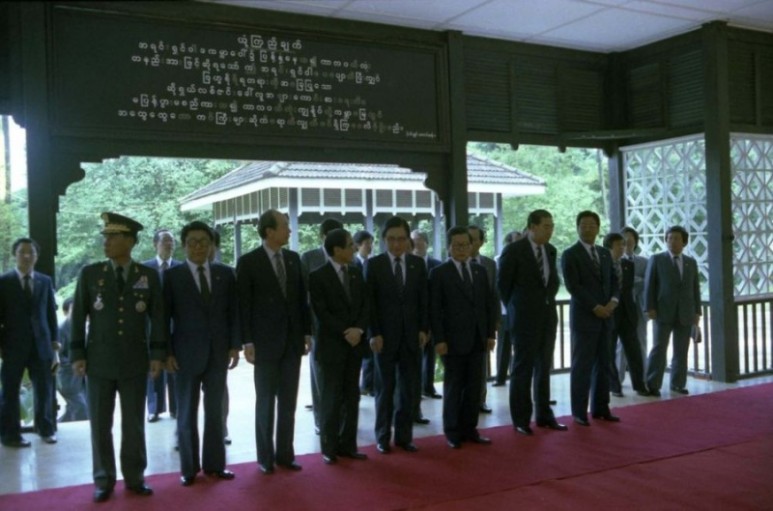
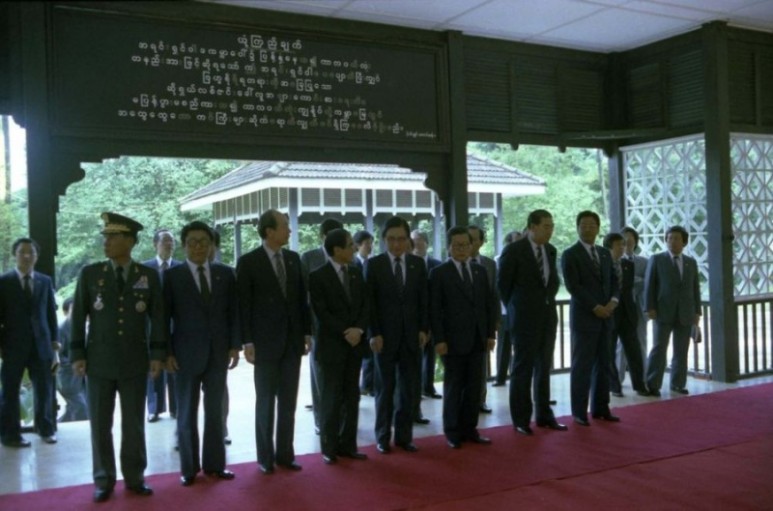
On October 9, 1983, at Myanmar's Rangoon Aung San Cemetery, South Korean government officials were awaiting President Chun Doo-hwan. This photograph captures their final moments seconds before the terror attack. (Photo by SBS 'Kkokkomu')
At that time, my uncle served as an ambassador at the North Korean embassy in Myanmar. One day, I overheard a conversation he had with other family members. It was revealed that three North Korean operatives had sought refuge in the home of a North Korean diplomat located in Rangoon, Myanmar, for two weeks while preparing for their terrorist mission. Here's a summary of what I quietly gleaned from that conversation:
The North Korean agents stayed on the embassy's second floor, and one evening, they engaged in a conversation with the ambassador over a meal. After becoming intoxicated, the North Korean ambassador and diplomats fell asleep on the first floor. However, one of the operatives couldn't sleep and was pacing around. When the ambassador asked why he couldn't sleep, the operative replied, "I can't stop thinking about my mother back home." The ambassador advised him to complete his mission and reunite with his mother upon returning.
A few days later, the North Korean agents carried out a bombing attempt aimed at assassinating President Chun Doo-hwan at the Aung San Mausoleum. After the terrorists were apprehended and their connection to North Korea was exposed, the Burmese government expelled North Korean diplomats. The North Korean ambassador hastily departed for Moscow on a Soviet plane within 48 hours, expressing regret over the belongings he couldn't take with him. Upon returning to North Korea, he even served as the chairman of the Red Cross Society of the DPR Korea. This is the extent of what I learned about the Rangoon Bombing during my time in North Korea.
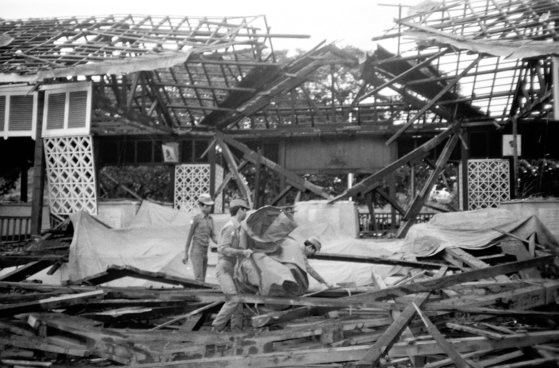
October 9, 1983, North Korean terrorists detonated a pre-installed bomb, causing the building to collapse and resulting in the deaths of 17 South Korean government officials. (Photo by SBS)
After defecting to South Korea and gaining access to the full details of the Rangoon Bombing through the internet and media outlets, I was astonished. Although the explosion occurred just before President Chun Doo-hwan's arrival at the mausoleum, averting a crisis, it resulted in the tragic deaths of 17 high-ranking South Korean officials, including the Deputy Prime Minister and the Foreign Minister, with over ten others sustaining serious injuries.
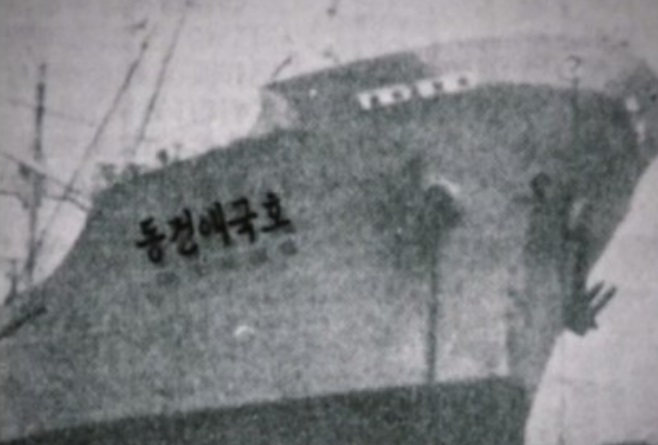
The Donggun Patriot, the ship that carried North Korean terrorists and docked at Rangoon Harbor. (Photo by SBS)
The Rangoon Bombing, orchestrated with the aim of removing the President of South Korea, was directed by North Korea's second-in-command at the time, Kim Jong-il, with the approval of Kim Il-sung. It was carried out under the command of Major Kang Chang-soo, a unit leader within North Korea's Reconnaissance General Bureau. Kang Chang-soo was the son of Kang Kon, the former Chief of the General Staff of the North Korean Army who perished during the Korean War on June 25. The leader of the three-member team responsible for explosives was Jin Seon-soo from Sariwon City in North Hwanghae Province, while the team members included Kang Min-chul from Thongchon County in Gangwon State and Shin Gi-cheol from Hamgyeong Province.
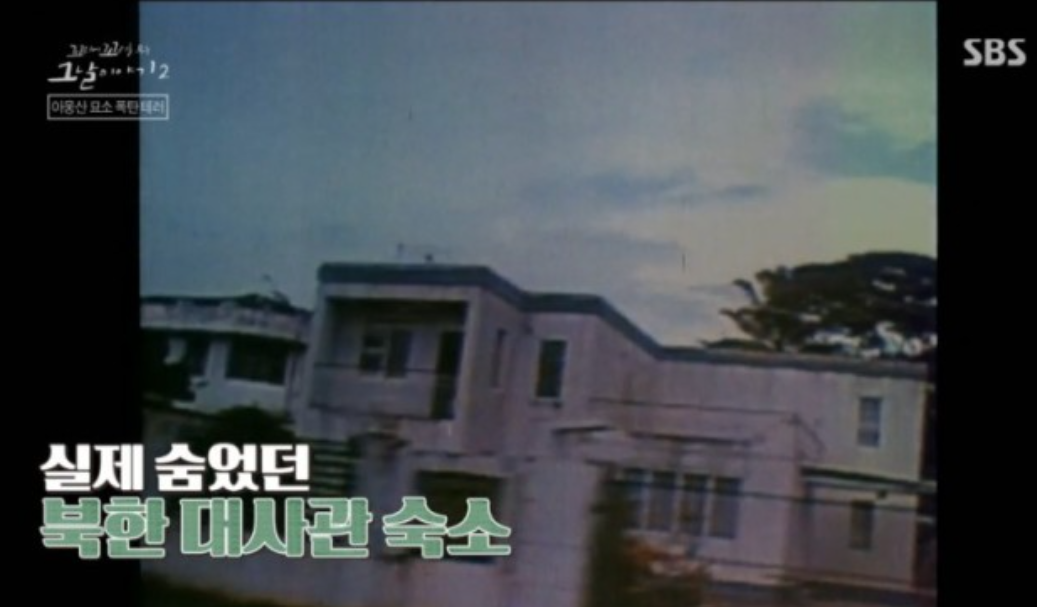
The building of the North Korean embassy in Myanmar where the North Korean terrorists hid. The address was 154/A, Tiri 2nd Street, Ahlone, Rangoon. (Photo by SBS screen capture)
The North Korean "Donggun Patriot, the ship" transporting the three terrorists and the necessary equipment, set sail from Ongjin Port in Hwanghae Province on the night of September 9, 1983, and arrived at Rangoon Port in Myanmar on the afternoon of September 17, just eight days later. Upon disembarking, the three terrorists received guidance from Ambassador Jeon Chang-hwi, who was the chief diplomat at the North Korean embassy. Their residence was located at 154/A Tiri 2nd Street, Ahlone, Rangoon. Although Jeon Chang-hwi held the position of chief diplomat, he was, in reality, a member of the Workers' Party's Liaison Department, serving as a North Korean overseas espionage coordinator. The local North Korean embassy played the role of their covert base of operations and provided support for their terrorist activities.
To transport the necessary equipment and agents for the terrorist act, they utilized official embassy vehicles with diplomatic plates, which granted them immunity. The three North Korean terrorists stayed in the embassy's second floor for two weeks, where they devised their plan and received training. Explosives and detonation devices were smuggled in using diplomatic backpacks.
On October 6, the three North Korean terrorists left their residence and, guided by Ambassador Jeon, conducted reconnaissance of the Aung San Mausoleum. The following morning, they climbed onto the roof of the mausoleum building and planted explosives (three bombs) on the ceiling. While Kang Min-chul and Shin Gi-cheol installed the explosives on the ceiling, Jin Seon-soo watched from below. These explosives were designed to be remotely detonated within a range of 1 to 2 kilometers, with an effective lethal radius of 80 meters. The three operatives spent the next two days camping in the surrounding woods.

North Korean terrorists who were either arrested or killed while attempting to escape after the attack. From left to right: Captured Jin Mo, Killed senior operative Shin Gi-cheol, Captured and confessed senior operative Kang Min-chul. (Photo by SBS)
On the morning of October 9, three terrorists detonated a bomb and scattered to make their escape to the harbor, with plans to return to North Korea aboard a ship. The leader, Jin Mo, attempted to swim across the river toward the sea on the evening of October 10 but was discovered, leading to a tightening dragnet. He detonated a grenade but survived. Kang Min-chul and Shin Gi-cheol attempted to flee on a fishing boat on the 11th but engaged in a shootout with the police. Shin Gi-cheol was killed, and Kang Min-chul managed to escape but later, on the 12th, detonated a grenade before being captured by soldiers. His left forearm was severed, but he survived. According to my uncle's account, the suicide grenades they carried, provided by North Korean authorities, were designed to explode immediately upon removing the safety pin. The operatives were unaware of this, resulting in their disfigurement and disabilities.
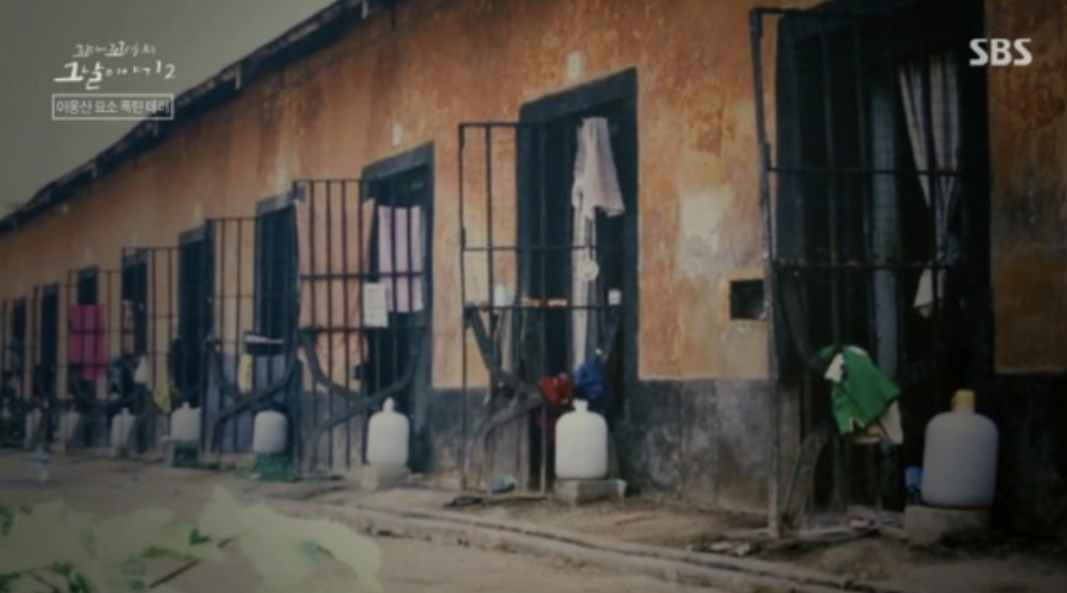
North Korean terrorist Kang Min-chul, who spent 25 years in detention, eventually met his end in Myanmar's Insane Prison. (Photo by SBS)
North Korea vehemently denied any involvement in this incident. However, on November 22, the suspects, who were arrested by Myanmar's prosecution authorities, confessed to their crimes. Subsequently, on December 9, the Rangoon People's Court's Special Tribunal issued a death sentence for the two terrorists. Jin, who remained silent until the end, was executed in April 1985, while Kang Min-chul, declared insane, served time in a Myanmar prison until his death on May 18, 2008, at the age of 53.
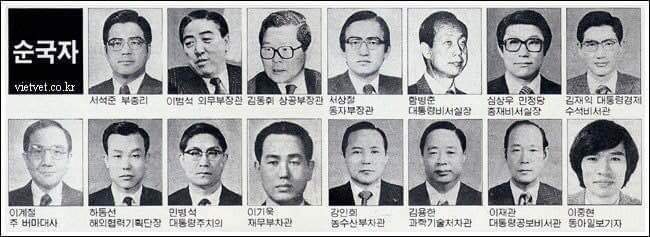
The 17 individuals who tragically lost their lives in North Korea's bomb attack on October 9, 1983.
North Korea's motive for the terrorist act was to induce social chaos and regime overthrow through the assassination of the president. The 1970s and 1980s were a period of intense Third World diplomacy between South Korea and North Korea. President Chun Doo-hwan's state visit to Myanmar, a country that shared socialist ideology with North Korea, had the potential to undermine North Korea's leadership in Third World diplomacy, leading to this act.
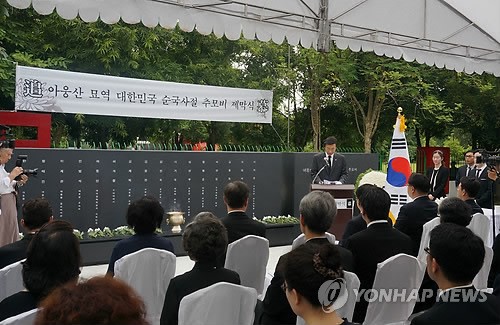
The opening ceremony of the South Korean Martyrs Memorial Monument at Aung San Cemetery in Myanmar, held on June 6, 2013. (Photo by Yonhap News)
High-ranking North Korean defector and Unification Minister Go Young-hwan remarked, "North Korea attempted to assassinate President Chun Doo-hwan in Africa in 1982 but canceled the mission under Kim Il-sung's orders, stating that Africa was not suitable. It seems they relocated the assassination attempt to Myanmar." This incident shook the international community's opinion, leading to South Korea asserting its dominance in relations with the Third World through South-South cooperation.
The Myanmar government reported the Rangoon Bombing as an act of North Korea to the United Nations and sent a delegation to apologize to the South Korean government. Additionally, 69 countries, including the United States and Japan, issued a joint statement condemning the North Korean regime. Despite diplomatic isolation, North Korea continued its acts of terror against South Korea and the international community. Incidents like the 1987 Korean Air Flight 858 bombing, the 2010 sinking of the ROKS Cheonan, the 1997 assassination of Kim Jong-il's half-nephew, Yi Han-yong, and the 2017 assassination of Kim Jong-nam show that North Korea's acts of terror persist. The international community must unite in condemning North Korea's barbaric acts of terrorism and ensure that they are not repeated.