

'12
Words that Guided My Life' by Pastor Kim Jin-hong: Episode 2
"Stop Farming Before More People Find Out"
- Pastor Kim's Story: Why He Had to Halt Successful Farming
Kim Jin-hong
Chair of Dure Cultural Foundation, Pastor at Dure Online Church
With the release of his autobiography '12 Words that Guided My Life' in October 2023, Pastor Kim Jin-hong of Dure Online Church has garnered significant attention. A prominent figure in South Korean theology and social activism, Pastor Kim is celebrated for his creation of the 'Dure Spirit' – a unique blend of church ministry, community service, and industrial innovation. His influential book, 'Wake Up The Dawn,' has reached a global audience, with translations in multiple languages, over 100 editions, and even inspiring a film adaptation.
With '12 Words that Guided My Life,' Pastor Kim shares the depth of his experiences and insights, considering it a work close to his heart, much like 'Wake Up the Dawn.' In its introductory pages, he delves into the societal and personal upheavals he has witnessed for 82 years, pointing out South Korea’s extraordinary journey. Amongst the 120 new governments established post-World War II, South Korea remarkably stands out for its triumphant stride towards industrialization, democratization, and its transformation into a knowledge-based information society. He expresses immense pride in this unique legacy, highlighting the critical tasks that lie ahead – achieving an advanced South Korea and realizing national unification.
The autobiography is brimming with personal stories, with a particular focus on Pastor Kim's dedication during the 1998 North Korean famine. He spearheaded the establishment of orphanages and Dure Farm, offering refuge to thousands of orphans in North Hamgyong Province.
The previous episode focused on his account of establishing an orphanage in North Korea. In this second episode, we delve into his narrative about <Dure Farm> in the Rajin-Sonbong area, exploring its origins and the reasons behind his decision to withdraw, which were related to the North Korean authorities."
<Episode 2>
As working on constructing the orphanage, I initiated the development of a pilot farm. Since it was a directive from the central authority, the process proceeded smoothly. The head of the agricultural department, acting on instructions from the Mayor of Rajin-Sonbong City, accompanied me to a hillside. He pointed to the fields below and said, "Mr. Kim, choose the land you want to cultivate." I hesitated and said, “what if others were already tending to these fields?”
With a solemn tone, he corrected me, saying, "Don't approach this with a capitalist mindset. All the land belongs to the nation and its people. It's the land of our great leader; why should there be separate landowners? You can have as much as you need, and we can relocate the current farmers to other areas." Their 'communistic' approach struck me as refreshingly straightforward. So, I promptly selected 30,000 to 40,000 pyeong for farming. The land was swiftly designated, and I ventured to inspect the soil. It was early November, and the autumn harvest had already concluded.
I noticed neatly arranged broomcorn plants and asked, "I see you harvested sorghum this year?" To my surprise, the reply was, "No, it's not sorghum; it's corn." I remarked, "Corn from plants this size? The harvest must not have been very successful." They explained, "You're right. We faced a prolonged drought followed by heavy rain, causing flooding. It was beyond human control. Thus, we couldn't harvest that year." As I picked up a handful of soil and saw it being carried away by the wind like powder, I realized that the problem was not divine but human. I pointed this out to the head, "This year's poor harvest wasn't due to God; it was human neglect. Look, although soil needs to clump together to retain organic matter for a successful harvest, it's blowing away like powder in the wind, isn't it? It's because the soil hasn't been fertilized or manured for a long time, causing it to dry out, which is why there's no harvest."
The head seemed momentarily at a loss for words but eventually said, "Well, you're the expert. Please cultivate it diligently. You can use it as an educational facility for our people, and we will fully support your efforts."
This was how Rajin-Sonbong Dure Farm began. After returning home, I recruited three dedicated workers to the farm, along with seeds and a few farming tools, all determined to create a thriving farm within three years. The main challenge was the scarcity of fertilizer to enrich the soil there. While contemplating various options, we stumbled upon a remarkable solution—a vast peat deposit beneath the hill near our field. Knowing that properly fermented peat could serve as excellent fertilizer, I brought microorganisms to ferment the peat and generously spread it across the fields in North Korea. The transformation of the soil began.
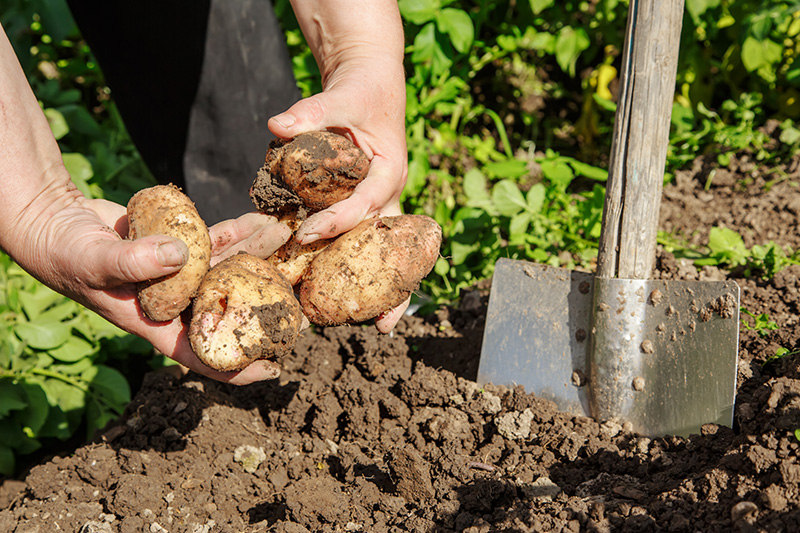
From that year, we started planting potatoes. North Korean potato seeds were of low quality, plagued by viral infections and low yields, often referred to as "ugly" potatoes. We recognized the importance of seed improvement and procured 40,000 seeds of a new potato variety developed by scientists at Daedeok Science Town. We also shared some with Pyongyang Kim Il Sung University's agricultural department when they expressed interest. As planned, within three years, we achieved bountiful harvests. On the day of the potato harvest, collective farm workers came to assist, and the women marveled, "Eight potatoes from one plant!" "Look, there are ten here!" However, a State Security Department official seemed uneasy about our remarkable success and cautioned, "Please work quietly."
Yet, the problem arose the following week; we received orders from the authorities to halt all farming activities. I couldn't comprehend why, so I visited the Mayor of Rajin-Sonbong City and inquired, "Why are they instructing us to stop when our farming was finally thriving?" His response was hushed but revealing, "Mr. Kim, you succeeded too quickly. It was supposed to take time, but you accomplished it in just three years. The administration doesn't want ordinary people to know about this. You should cease before the news spreads. I'm sorry, but you'll have to wait for another opportunity."
I was left speechless and decided to comply.
Understanding that they had to follow orders from Pyongyang, I had no choice. The city mayor, feeling apologetic, invited me to a restaurant for lunch, where they served Dangogi (dog meat, a North Korean dish).
I guess the meat had spoiled due to frequent power outages in the refrigerator because that night, I suffered severe food poisoning, with vomiting and diarrhea. In agony, I prayed, "Please help me, God. Dying from eating dog meat wouldn't be martyrdom, would it? I want to live and continue the work I must do in South Korea. Please spare me from this fate."
Upon hearing of my critical condition, personnel from the city transported me to what appeared to be a clinic nearby. In a neighboring room, I could hear a patient undergoing an appendectomy without anesthesia, causing them great distress. It felt more like a slaughterhouse than a hospital. Doctors and nurses came to attend to me and suggested an IV injection. However, the injection didn't resemble conventional medication; it came in a container resembling a beer bottle, which made me uneasy. I feared that a medical accident might result in my death, so I refused the injection and chose to travel to Yanji City, China, for treatment and eventual recovery.
Even to this day, I have sleepless nights when I think of the people in North Korea. We are all one people, but they suffer under the wrong regime, deprived of proper healthcare, leading to preventable deaths. Starvation prevails while Kim Jong-un focuses on missile and nuclear investments, despite their futility. The day he employs these weapons, he and his regime will vanish from this planet. In the 1960s, South Korea had a per capita income of $78, while North Korea's stood at $242. North Korea enjoyed a significantly better standard of living back then. However, today, South Korea's national power is more than 60 times greater than that of North Korea. When it comes to reunification and aiding North Korea, there may be differing opinions, but there is only one path ahead to save our people: dismantling the Kim Jong-un regime and achieving reunification. I am convinced that this day is drawing closer.