

Exploring South Korea's Response to North Korea's "Two-State" Policy: Vision for New Peninsula Unification and Creative Engagement (Part 1
[Academic Article] North Korea's Declaration of a "Two-State" System and Efforts to Eradicate the Concepts of 'Unification' and 'Nationalism'

Kim Philo
Associate Professor at the Institute for Peace and Unification Studies (IPUS),
Seoul National University
North Korea has shocked South Korea's government and academia with a bombshell declaration to completely reverse its policy toward the South, starting in 2024. By declaring South Korea as its "enemy" and pledging hostile actions over the past two years, North Korea has firmly established the inter-Korean relationship as "two hostile states at war." This marks a departure from the 70-year-old "One Korea" policy, signaling a fundamental shift towards the "Two-State" doctrine."
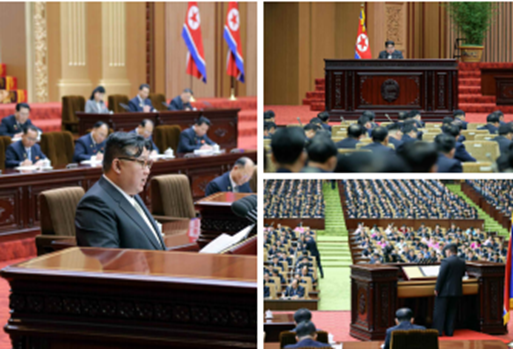
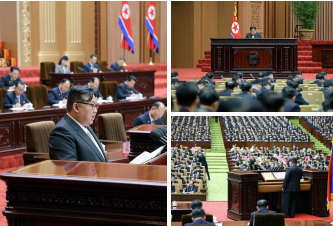
The 10th Session of the 14th Supreme People's Assembly of the DPRK took place on January 15, 2024. (Image: Rodong Sinmun)
North Korea swiftly implemented its new policy towards the South by reorganizing related organizations, amending certain constitutional provisions, and abolishing the Committee for the Peaceful Reunification of the Fatherland (CPRF), the National Economic Cooperation, and the Mount Kumgang Tourist during the January 15, 2024 Supreme People's Assembly session. Subsequently, entities engaged in inter-Korean exchanges, such as the CPRF and the Korean Council for Reconciliation and Cooperation (KCRC), including the Kaesong Industrial Region, were dissolved, likely absorbed by the Ministry of Foreign Affairs, signifying a shift in inter-Korean dynamics.

A decision to abolish the Committee for the Peaceful Reunification of the Fatherland (CPRF), the National Economic Cooperation Bureau, and the Mount Kumgang Tourist Bureau." (Image: Rodong Sinmun)
North Korea's resolve was firm, erasing '"unification," "reconciliation," and "same ethnicity" from its history, and ordering the removal of "Independence, peaceful reunification and great national unity" from the constitution. He ordered the abandonment of the July 4 South-North Joint Statement and the Monument to the Three-Point Charter for National Reunification, swiftly demolishing the latter on Reunification Street. This brings to mind the ruthless demolition of the Inter-Korean Joint Liaison Office in Kaesong.
North Korea severed the Gyeongui Line, symbolizing inter-Korean exchanges, to an irreversible extent. It has begun implementing measures to thoroughly separate all aspects of inter-Korean relations in border areas. Furthermore, it has banned the use of any words, such as "North Korea" or "8 million Korean," that characterize the North and South as "the same ethnicity" or share a common heritage.
This declaration of a shift in the South-North strategy encompasses two key aspects: redefining South-North relations as national rather than ethnic and addressing the antagonistic facet of these relations. Firstly, North Korea acknowledges the disparity between its pursuit of ethnic-based unification and the prevailing reality, advocating for a bold departure from the "One People, One State, Two Systems" principle of the past 80 years. They stated that South Korea's pursuit of "unification under the democratic system" or "absorption unification" renders true unification unattainable. They also added, "After ending the 80-year history of North-South relations and recognizing two coexisting states on the Korean Peninsula, we have redefined our republic's policy toward the South."
In terms of the antagonistic aspect, recent tensions indicate extreme anti-South sentiments, as seen in Kim Yo-jong's harsh rhetoric and resentment towards South Korea and its President. North Korea emphasizes South Korea's labeling of North Korea as an "enemy" and expresses anger over the termination of the "9.19 South-North Korea’s Military Agreement." Therefore, it declares its intention to legally classify South Korea as "the unwavering primary hostile state, the immutable enemy.
-
PREV [Issue Brief]
-
NEXT [Academic Article]