

Kim Jong-un's 'Two Hostile States' Theory and Confusion Among Zainichi Koreans

Lee Ki-tae
Director, Global Strategy Research Division
at the Korea Institute for National Unification
North Korea's Reclassification of Inter-Korean Relations
In January 2024, North Korean leader Kim Jong-un took a bold step by ordering a constitutional amendment during his Supreme People's Assembly speech, classifying South Korea as the "primary hostile nation." This marked a significant shift in inter-Korean relations, changing the narrative from "kinship" to a "hostile state relationship." Historically, North Korea, under Kim Il-sung, pursued a policy aimed at reunifying with South Korea. However, the recent surge in popularity of South Korean culture among North Korean residents, posing a threat to internal stability, has prompted this policy shift.
As part of this new direction, North Korea has begun to distance itself from South Korea by limiting the use of terms or symbols associated with unification. Kim Jong-un's move to abandon the reunification-based policy of his predecessors indicates his growing concern about the admiration for South Korea within North Korea and a diminished confidence in achieving reunification under North Korean terms.
Policy Shift of the General Association of Korean Residents in Japan (Chongryon). and Korean Schools
North Korea's policy shift has had a profound impact on the General Association of Korean Residents in Japan (Chongryon). Historically, Chongryon has promoted education in its schools aimed at "independent and peaceful reunification of the homeland." However, following the policy change, Chongryon has instructed its schools to ban terms like "independent unification" and "one nation." Teachers were specifically directed to avoid expressions such as "independent, peaceful unification" or "national unity" during their lessons.
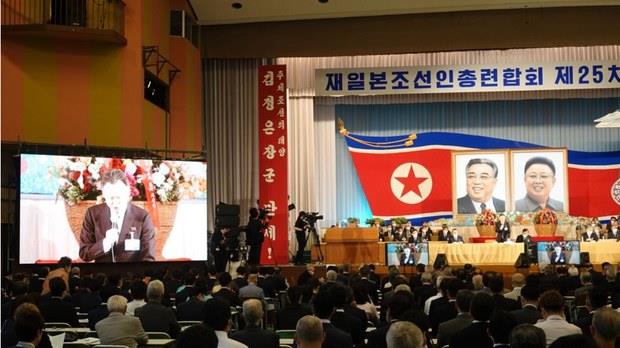
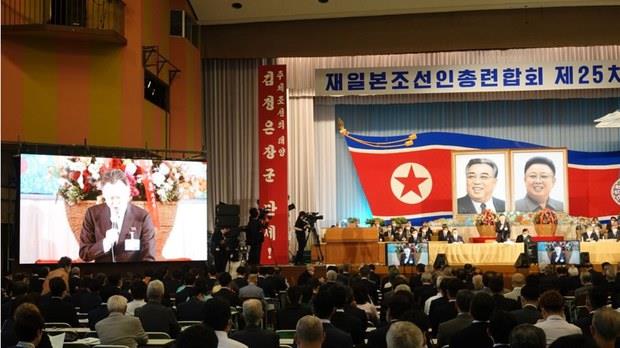
The General Association of Korean Residents in Japan is holding the 25th General Assembly at the Tokyo Korean Cultural Center
in Kita City, Tokyo, on May 28, 2022. /Radio Free Asia(RFA)
A directive titled "On the Execution of Policy Line Changes" further stated: “We will change all phrases, slogans, propaganda posters, and artworks that contain words or expressions that could be mistaken for considering the puppets (South Korea) as compatriots.” They also emphasized that “flags, hats, T-shirts, and marks depicting the entire Korean Peninsula should not be used at all, especially during soccer matches.”
Additionally, the directive indicated that existing materials related to reunification would not be used in education and would be fully revised for future publications. This shift reaffirms North Korea's substantial control over these schools through Chongryon. Japanese conservative forces, which have opposed financial support for Chosen gakko, may now have more justification for their stance, highlighting the connections between North Korea, Chongryon, and Chosen gakko. This move is likely to cause significant confusion and unrest among Zainichi Koreans who have long hoped for the reunification of the Korean Peninsula.
Visits to North Korea by General Association of Korean Residents in Japan Officials and Korea University Students, and Issues of Sanctions
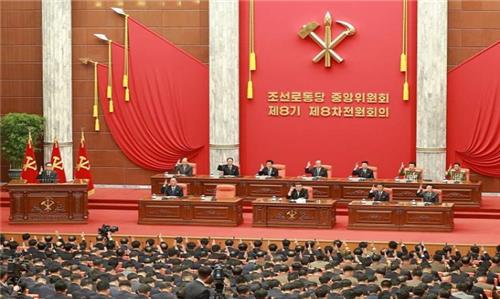
The 8th Plenary Meeting of the 8th Central Committee of the Workers' Party of Korea took place from June 16th to 18th
at the Office Building of the Central Committee of the WPK in Pyongyang, as reported by Rodong Sinmun on the 19th.
/ Rodong Sinmun
On July 24, the financial chairman of Chongryon visited North Korea, marking the first visit by a senior official since 2019. The Japanese government, which has imposed sanctions on North Korea since 2006, restricts travel to North Korea for some senior Chongryon officials. However, the financial chairman who visited was not subject to the travel ban.
In addition, Kim Jong-un granted special permits for around 140 fourth-year students from Japan’s Korea University, affiliated with Chongryon, to visit North Korea. These students will visit North Korea from August to November, each staying for about a month. Reports indicate that North Korea allowed these students to check in up to 50kg of luggage for free when boarding the Air Koryo flight from Beijing to Pyongyang.
North Korea, which had banned visits from abroad since the COVID-19 outbreak, has begun accepting foreign tourists and students again. The visits by Chongryon officials and Korea University students raise concerns about how North Korean authorities will explain their new policy to the Zainichi Korean community and the potential violation of sanctions through indirect remittances resulting from these visits.
Response Measures by the South Korean Government
North Korea’s denial of Korean ethnic homogeneity and its two-state theory is an anti-nationalistic act, causing shock both on the Korean Peninsula and among Zainichi Koreans. The Zainichi community, sharing a common ethnic identity and aspiring for reunification, is particularly unsettled. In response, the South Korean government should strengthen efforts to promote unification policies that emphasize Korean unity. Highlighting that North Korea’s two-state theory fosters ethnic division, South Korea should advocate for peaceful reunification, which would benefit North Korean residents and contribute to regional peace, including in Japan.
-
PREV [North Korea in History]
-
NEXT [Feature Article]