

Shifting Mindsets of North Korean Youth:
From Collectivism to Self-Centeredness

Choi Kyong-hui
President of SAND Institute
August 28 marks Youth Day in North Korea, a day established in 1991 to boost the ideology and pride of young people during the decline of the socialist and communist bloc. On this occasion, let's delve into the evolving characteristics of North Korean youth amid the country's societal changes.
By 2024, the "market" has become crucial for sustaining North Korea's socialist system, giving rise to a "market political culture." Since the formal recognition of general markets in 2003, the intertwining of the Workers' Party of Korea (WPK) and Jangmadang (markets) has reshaped social order over the past two decades.
This shift reflects a move from the vertical governance of collectivism and totalitarianism to the horizontal dynamics of market-driven individualism and self-interest. Central to this transformation is the "Jangmadang Generation," those born or raised during the "Arduous March" period in the 1990s.
The term "North Korean youth generation" refers to individuals in their 20s and 30s who grew up in an environment where Juche ideology and marketization coexist. This article examines how this generation, which plays a pivotal role in the stability of the North Korean system, is gravitating toward a self-centered mindset and lifestyle amidst this dual ideological backdrop. The main traits of this generational shift are highlighted below.
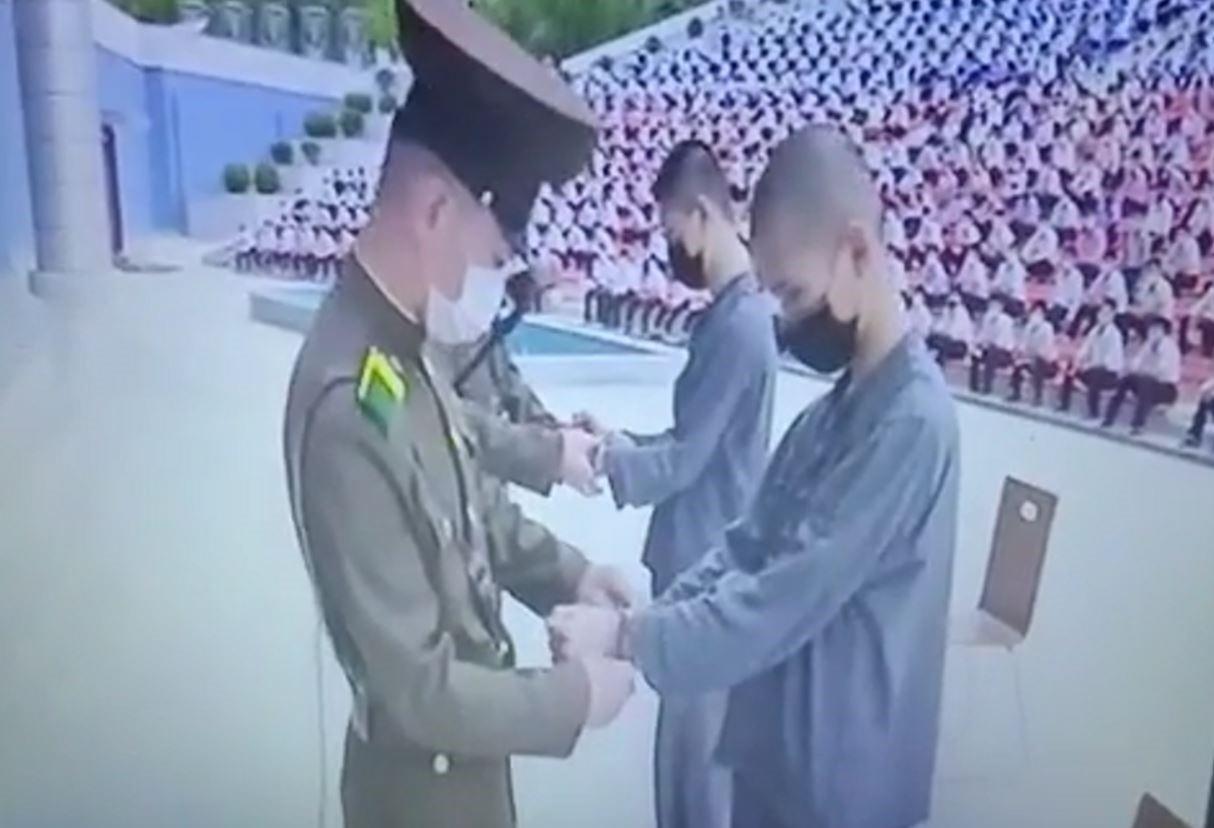
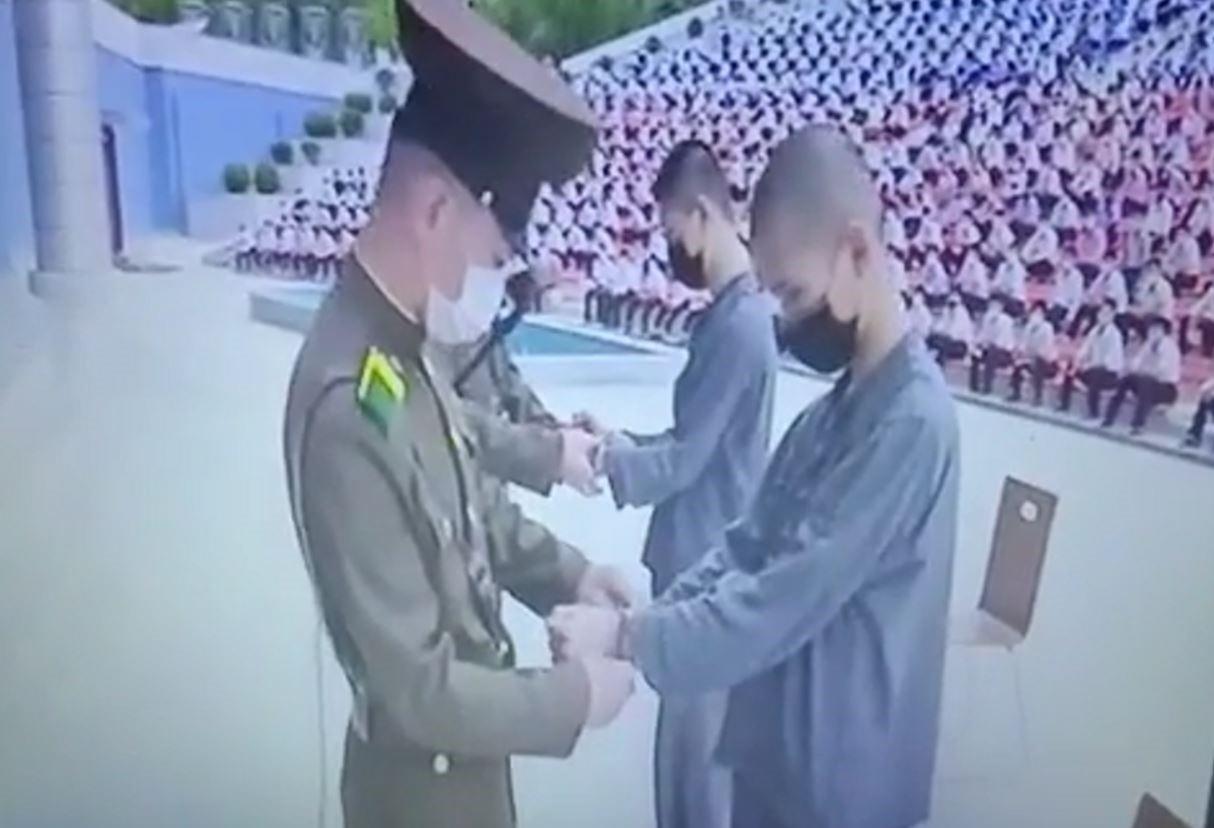
A 2022 North Korean internal education video shows Pyongyang middle school students publicly tried for
watching and sharing South Korean dramas. /SAND Institute English Newsletter Team
Firstly, the current generation exhibits a greater sense of autonomy and rationality in their thinking. While previous generations adhered to a vertical, passive relationship between the leader and the individual, today's youth are adopting a more horizontal and active mindset through their market interactions. This represents a shift from the command-obedience hierarchy of Juche ideology to a focus on self-centeredness. Unlike their predecessors, who were confined to the public sphere, the youth today value and seek to expand their private lives.
The Kim Jong-un regime labels these market-driven changes as the "Yellow Wind of Capitalism" and Hallyu culture. According to an internal video released by SAND Institute earlier this year, the regime enforces strict legal measures against youth who embrace these influences. The government views the enjoyment of capitalist and individual pleasures by the youth, who are expected to be the revolution's driving force and future leaders, as bourgeois and toxic, thus intensifying control measures.
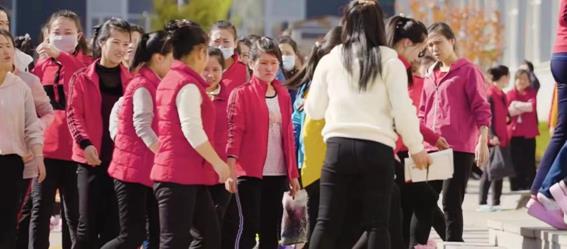
In September 2022, North Korean female workers at a garment factory in Helong, Jilin Province, China.
They protested unpaid wages in January. / SAND Institute English Newsletter Team
Secondly, there is a notable duality and quick cost-benefit analysis in their survival strategies. The ideology of North Korean youth in their 20s and 30s blends elements of the WPK and Jangmadang. They turn to the WPK for socio-political matters and rely on Jangmadang for economic survival. While older generations depended entirely on the WPK, the youth now find their own space in the market.
The pervasive duality in society, such as control versus corruption, organizational life versus market activities, official versus market prices, official economy versus black market, and ideological education versus Hallyu experiences, cultivates dual personalities among the youth. In any society, youth challenge the stability and legitimacy of the existing order, dreaming of an ideal state. However, North Korean youth exhibit a dual attitude of enforced loyalty in public and self-interest.
Thirdly, this generation has the least pride in ideology and the system. Unlike the older generations, who received comprehensive education on Juche ideology and communist principles during their childhood, North Koreans in their 20s and 30s missed out on universal education opportunities during chaotic times, leading to relatively low ideological consciousness. The ideological confusion during the Kim Jong-il era, marked by the emergence of Songun politics, also played a role. Consequently, loyalty is perceived merely as a social achievement, and what they value most is money.
They are highly calculative and exhibit selfish tendencies (distinct from individualism). This normalization of resignation fosters extreme selfishness, leading society into stagnation and decline. The individualistic and selfish tendencies derived from the market culture of the North Korean youth generation are also seen as a measure of the stability of the Kim Jong-un regime.
North Korea has viewed the youth period, marked by loyalty, love, solidarity, communal consciousness, and peer intimacy, as a means to demonstrate loyalty and self-sacrifice for Kim Il-sung, Kim Jong-il, and Kim Jong-un. Since its inception in 2012, the Kim Jong-un regime has recognized youth work as crucial to the regime's fate (Youth work is a critical issue related to the future of the revolution and the fate of the nation, 'Political and Legal Research', 2012, No. 2).
Recently, under the concept of a 'one big family' with Kim Jong-un as the father, the regime has urged youth to show loyalty, devotion, camaraderie, and a collective spirit. This focus is because the youth are expected to be Kim Jong-un's companions throughout his rule.
At the WPK Cell Secretaries' Conference in April 2021, Kim Jong-un acknowledged the significant changes in the youth's ideological and mental state, highlighting the need for intervention and even mentioning the 'theory of human reform,' reflecting the regime's concerns. The 'Youth Education Guarantee Law' was adopted in September 2021, and the 'Pyongyang Cultural Language Protection Law' was enacted in 2023 to control the Hallyu culture among the youth.
The revised Administrative Penalty Law of 2020 mandates at least three months of labor training for anyone who avoids military service, falsifies health certificates to evade enlistment, or harbors deserters. This highlights the widespread issue of draft evasion. The 20s and 30s age group, which forms the bulk of the military, poses a significant social challenge in North Korea. Having been raised with individualistic and free-spirited values, they struggle to adapt to the strict military environment. Consequently, draft evasion, health certificate forgery, and frequent desertions are common.
North Korea sees the decline in ideological consciousness and the resurgence of individual selfishness as internal threats to its system, while externally, it guards against capitalist cultural infiltration. Despite strict measures to block external influences using the COVID-19 pandemic as a pretext, the internal ideological changes continue unabated. The Kim Jong-un regime is focused on restoring the original consciousness that has already transformed.
However, expecting only positive outcomes from these changes is unrealistic. When Juche ideology encounters market liberalization, it tends to produce selfish behavior rather than pure individualism. The youth, who frequently engage with and spread market and Hallyu culture, become increasingly aware of the absurdities and irrationalities in North Korean society and worry about the future. Faced with overwhelming political power, their dissatisfaction and desire for change often feel futile, leading them to prioritize personal interests over political engagement, which fosters selfishness.
North Korean youth, caught between the extremes of dictatorship and the market, the WPK and Jangmadang, are developing pronounced dualities and selfish tendencies. They are shifting from a mindset of self-sacrifice for the leader, the collective, and the nation to one that prioritizes their own needs and desires.
-
PREV [Issue Brief]
-
NEXT [Feature Article Series]