

North Korea 30 Years After Kim Il-sung's Death: Past, Present, and Future (5)
Seoul Olympics 1988 and North Korea's Defeat
in the South-North System Competition

Kang In-deok
Former Minister of Unification of the Republic of Korea
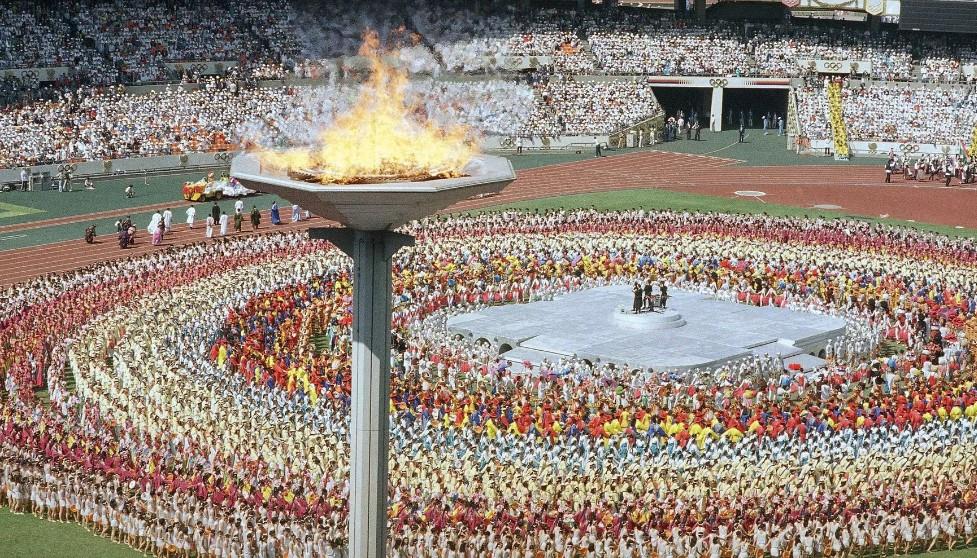
After securing his position as successor, Kim Jong-il officially took leadership following the 6th Congress of the Workers' Party of Korea in 1980. However, he faced a major challenge: competing with South Korea's rising influence. This was highlighted by the upcoming Games of the XXIV Olympiad Seoul 1988, which offered South Korea a prime opportunity to showcase its growing power and international standing, further cemented by the fact that the event was being held in Seoul.
By this time, China had shifted under Deng Xiaoping’s leadership towards economic reform and opening up to the outside world, marking a clear divergence from North Korea's path. The Soviet Union, under Mikhail Gorbachev, had also embarked on a course of reconstruction (Perestroika) and openness (Glasnost). Socialist nations in Eastern Europe had long moved away from their traditional systems of one-party rule and state-controlled economies. In this evolving global context, it became clear that the Soviet Union, China, and Eastern European socialist nations would undoubtedly participate in the Games of the XXIV Olympiad Seoul 1988.
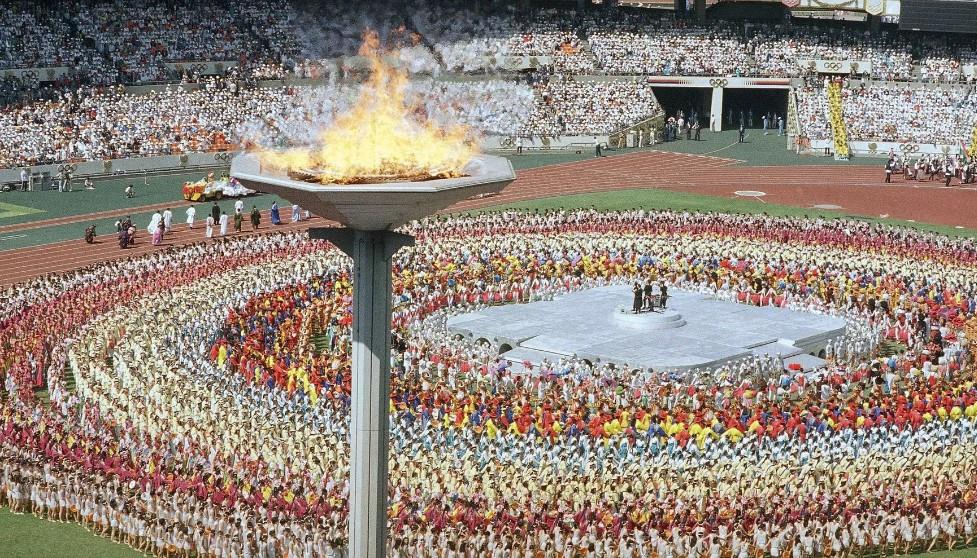
Opening ceremony of the Games of the XXIV Olympiad Seoul 1988 / AP
On November 29, 1987, Korean Air Flight KAL858, carrying 113 passengers, including South Korean workers returning from the Middle East, was bombed mid-flight over Myanmar by a North Korean agent.
How was North Korea to respond? Their primary goal was to prevent the Olympics from being held in Seoul, or, if that failed, to co-host with Pyongyang to save face. They pursued both domestic and international strategies, including an attempt to destabilize the Chun Doo-hwan government. This led to the October 8, 1983, bombing at the Aung San Mausoleum in Rangoon, Burma (Myanmar), targeting a South Korean delegation. While 17 key Cabinet members were killed, President Chun narrowly escaped as he had not yet arrived.
Kim Il-sung attempted to negotiate with the International Olympic Committee (IOC), proposing a co-hosting arrangement for the Olympics, with Pyongyang hosting key events like soccer. However, these talks broke down due to disagreements. Undeterred by this setback, Kim continued his efforts to undermine the Games. On October 24, 1986, despite his aversion to air travel, he flew to Moscow to ask Gorbachev to boycott the Olympics, arguing that it was an imperialist scheme aimed at cementing the division of the Korean Peninsula. Gorbachev dismissed this idea as outdated, encouraging Kim to adopt a new perspective in line with Perestroika. Kim then proposed a 50-50 split in hosting the Games between Seoul and Pyongyang, but this was also rejected.
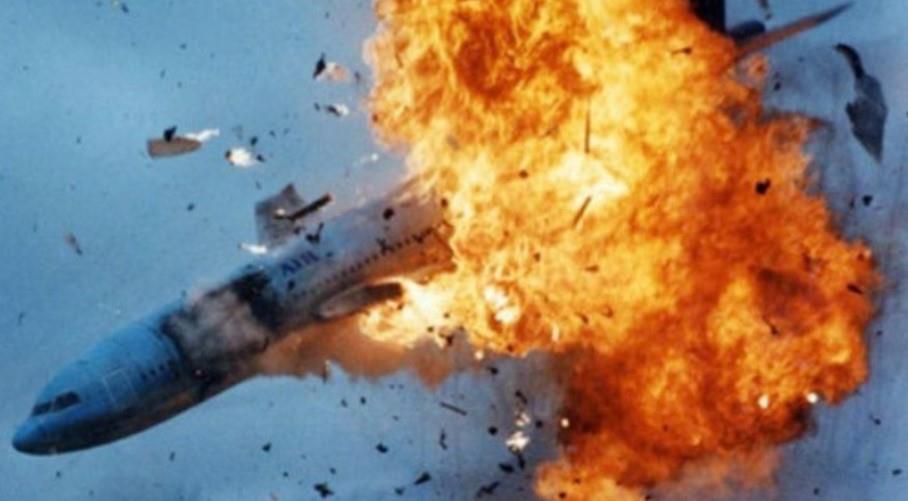
A scene from the movie Mayumi depicting the bombing of Korean Air Flight KAL858 on November 29, 1987
/ Movie still from Mayumi
When it became clear North Korea's allies wouldn't boycott the Olympics, Kim Il-sung resorted to more drastic actions. On November 29, 1987, a North Korean agent bombed Korean Air Flight 858, killing 115 people, including South Korean workers returning from the Middle East. South Korean authorities later revealed that Kim Jong-il had ordered the attack, further isolating North Korea internationally as it was labeled a terrorist state.
Despite North Korea's violent attempts to disrupt the Game, the event proceeded with athletes from over 180 countries. As the international tide turned against North Korea, Kim Jong-il sought to overshadow the Seoul Olympics by hosting the 13th World Festival of Youth and Students in Pyongyang. At a February 20, 1988 meeting, Kim launched a "200-day battle" to prepare for the event, setting a deadline of September 9, the 40th anniversary of North Korea's founding, and allocated a staggering $10 billion to ensure its success.
The World Festival of Youth and Students opened on July 1, 1989, with North Korean media proudly reporting participation from 180 countries, over 16,000 youth representatives, 1,245 youth and student organizations, and 470 honorary guests. North Korea covered all expenses except airfare. However, the festival's excessive costs further crippled the economy, leaving the "Ten-Year Economic Development Goals" set in 1980 less than half accomplished. As a result, the once fiercely contested North-South system competition could no longer be sustained.
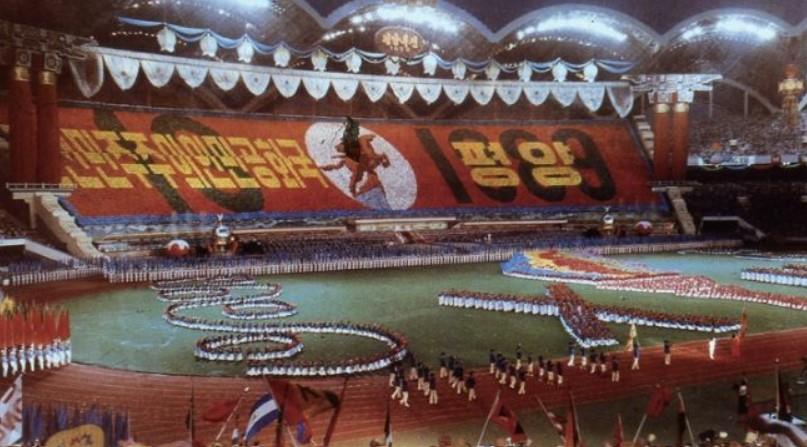
Opening ceremony of the World Festival of Youth and Students held in Pyongyang, July 1989 / Ministry of Foreign Affairs
-
PREV [Analysis of issues]
-
NEXT [Interview]